Skip to content / Đến nội dung
SachHeCam.com

Cambridge Secondary (7-9). Stage 8. Science. Learner's Book - Unit 4: Ecosystems

Question 1

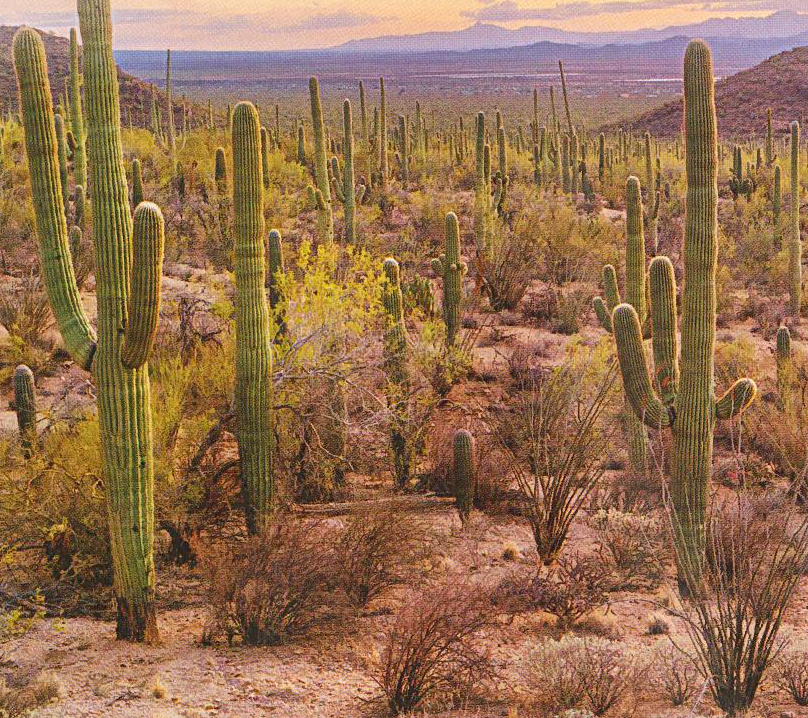
Cacti (the plural of cactus) are plants that are adapted to live in deserts.
Look at a cactus, or a picture of one.
With a partner, discuss these questions.

Question illustration

Why is a desert a difficult place to live?

Question 2

Cacti (the plural of cactus) are plants that are adapted to live in deserts.
Look at a cactus, or a picture of one.
With a partner, discuss these questions.

Question illustration

How are cacti adapted to live in a desert?

Question 3

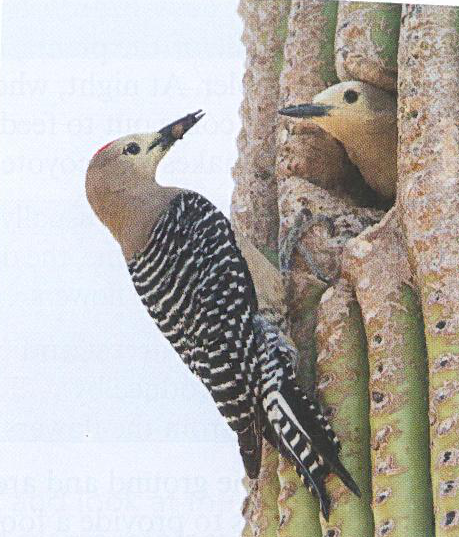
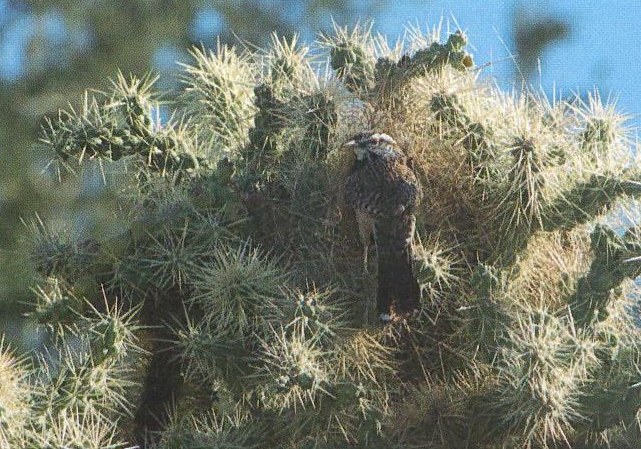
Gila woodpeckers make holes in the cacti, to make their nests. Other birds also visit these holes. Cactus wrens often use a different kind of cactus, called a teddy bear cholla, to make their nests. Teddy bear chollas are so spiky that very few other animals will get close to them. So the cactus wren’s eggs and young ones are protected from predators.
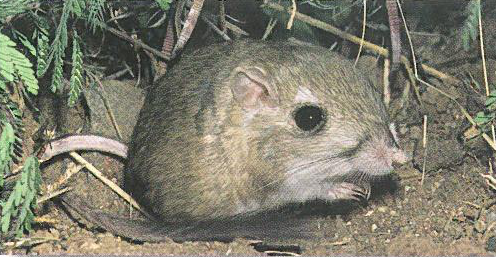
During the hot days, lizards, tortoises and other animals rest in the shade of the plants, or burrow into the soil where it is cooler. At night, when the temperature falls, kangaroo rats come out to feed, wary of their predators such as rattlesnakes and coyotes.
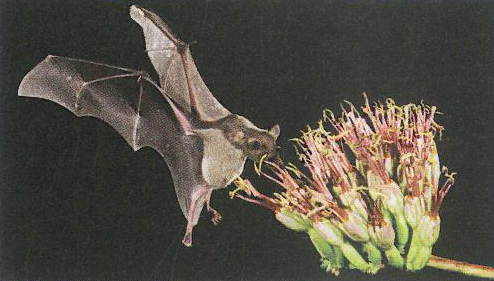
Insects feed on the nectar and pollen in the flowers, helping the plants to reproduce by pollinating them. At night, bats feed on nectar from the flowers of agave plants.
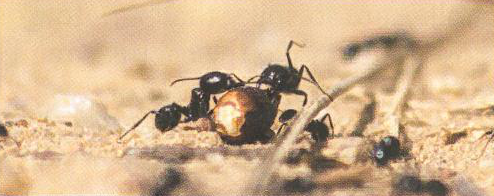
Seeds fall to the ground and are collected by ants, to take into their nests to provide a food store. Many months or years later, some of the uneaten seeds may germinate to produce new plants.

Question illustration Question illustration Question illustration Question illustration Question illustration

Interactions between organisms in the desert
Work with a partner.
You will need:
• a large sheet of paper • coloured pens
• (optional) pictures of the animals and plants in the desert, that you can cut out
• (optional) scissors and glue
Read the information about life in the Arizona Sonoran Desert, and look at the photographs. Make a list of different ways that the animals and plants interact with one another.
Now think about how you could show these interactions in a picture.
On a piece of rough paper, make a rough sketch of the design for your picture.
Build up your picture on a large sheet of paper. You could draw pictures of the organisms, or stick cut-out pictures of them onto the paper.
Write descriptions about how they interact with each other.

Question 4

Question illustration

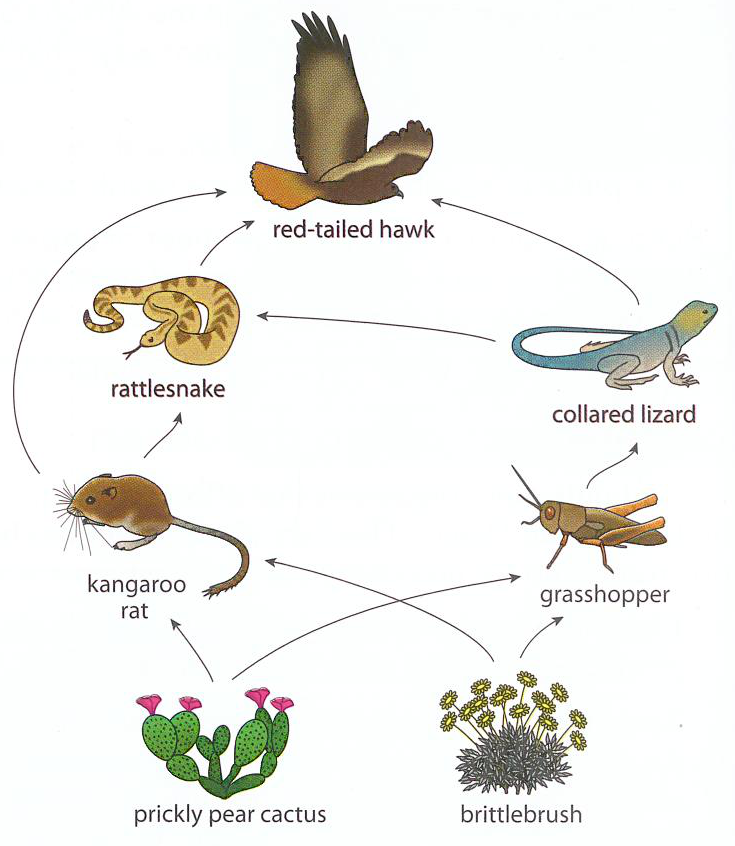
Name the two producers in the diagram of a food web in the Sonoran Desert.

Question 5

Question illustration

Explain why the food web could not exist without the producers.

Question 6

Question illustration

What do the arrows in the food web represent?

Question 7

Give two examples of interactions between organisms in the desert that are not to do with feeding.

Question 8

Explain the difference between an ecosystem and habitat.

Question 9

How a species fits into the desert ecosystem
Work in a group of three or four for this activity.
You are going to choose one species that lives in the desert. You could continue to think about the Sonoran Desert in Arizona, or you could choose a different desert.
Investigate how your species interacts with other organisms, and with the non-living things around it. You could choose one of the species mentioned in this topic, or a completely different species.
Use the internet and the library to find out as much as you can about your species. Concentrate especially on how your species interacts with other organisms, and with its environment. For example, you could try to find out:
• what it eats, and what eats it
• the habitat it lives in within the desert ecosystem
• how the species is adapted to survive in its habitat
• how its actions (other than feeding) affect other organisms, or non-living parts of the ecosystem
• how other organisms and non-living things affect it (other than feeding).
Use your information to make an illustrated poster or presentation that you can share with the rest of your class.

Question 10

Activity 4.1.2: How a species fits into the desert ecosystem. Answer about the research for your chosen desert species.

Where did you find the best and most interesting information?

Question 11

Activity 4.1.2: How a species fits into the desert ecosystem. Answer about the research for your chosen desert species.

When you used the internet to find information about your species:
a which websites were most relevant for your research?

Question 12

Activity 4.1.2: How a species fits into the desert ecosystem. Answer about the research for your chosen desert species.

When you used the internet to find information about your species:
b how did you choose websites that were most likely to provide correct information?

Question 13

Work with a partner.
Marcus says that an ecosystem is a place.
Sofia says that an ecosystem is not just a place – it is more than that.
Who is correct? Think about this on your own, then share your ideas with your partner.

Question 14

Habitats in an ecosystem

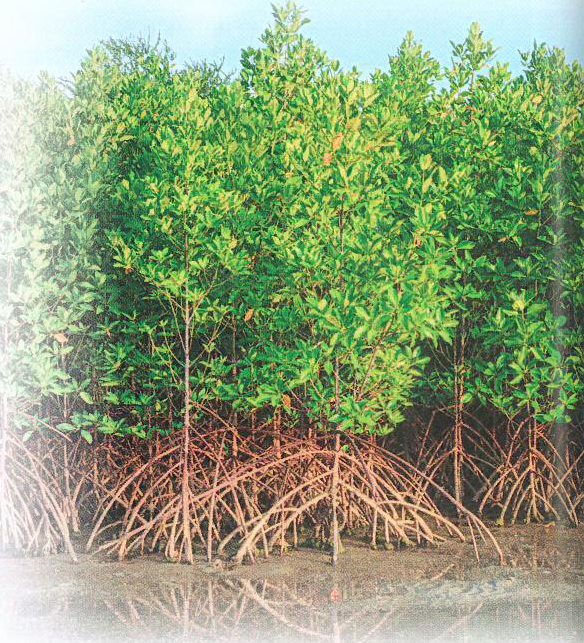
Choose one of the ecosystems shown in the photographs. Use the internet to find out more about your chosen ecosystem.
Make a list of the different habitats in this ecosystem, and some of the organisms that live in each of the habitats in your list.

Question illustration

Question illustration

Question illustration

Question 15

Investigating a local ecosystem

You are going to investigate an ecosystem near your school. For example, you could investigate: a garden area; part of the playing field; a group of trees; a pond.

Safety
You will be working outside. It is important to stay in the same area as the rest of your class. Always stay with a partner.

You will need: a selection of the apparatus and materials shown; choose what is suitable for the ecosystem you are studying. These items are not drawn to scale.

It is important to remember that, if you catch any animals, you must take great care of them. Do not take them away from their habitat. Release them exactly where you found them.

Equipment guidance: This is a pitfall trap. This one is made from a plastic cup which has been set into the ground as shown. Small animals that crawl or run over the surface of the ground – such as beetles – fall in and cannot get out.
It is important to check your pitfall trap regularly. If not, you may find just one extremely fat carnivorous beetle in it, and nothing else.

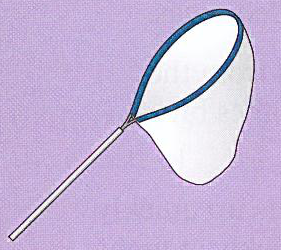
This is a sweep net. It has a large net on the end of a long pole. It is useful for catching insects. You can sweep it through long grass. You can also use it to catch organisms in a pond or small stream.

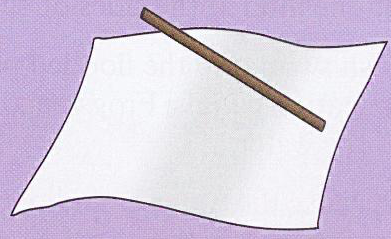
You can use this apparatus to find insects living in the lower branches of trees. Gently hit a branch with the stick, as your friends hold the large piece of material or a sheet underneath. If you haven’t got any material, you can use an upside-down umbrella.

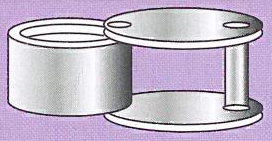
A hand lens is useful for looking at very small organisms.

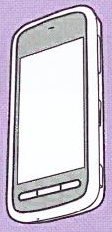
A camera is useful for taking photographs of organisms, especially if you do not know their names. You can use your photos to try to identify the organisms later.

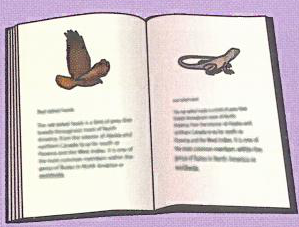
You can use books to try to identify the animals and plants that you find. Quick identification keys are also very useful.

Look all around the area you are studying. What kind of ecosystem is it? Write a short description of it or draw a picture. For example:
• How big is it?
• What kind of plants grow there?
• Is there a lot of light, or is it shady?
• Is it damp or dry?

Question illustration

Question illustration

Question illustration

Question illustration

Question illustration

Question illustration

Question 16

Investigating a local ecosystem

You are going to investigate an ecosystem near your school. For example, you could investigate: a garden area; part of the playing field; a group of trees; a pond.

Safety
You will be working outside. It is important to stay in the same area as the rest of your class. Always stay with a partner.

You will need: a selection of the apparatus and materials shown; choose what is suitable for the ecosystem you are studying. These items are not drawn to scale.

It is important to remember that, if you catch any animals, you must take great care of them. Do not take them away from their habitat. Release them exactly where you found them.

Equipment guidance: This is a pitfall trap. This one is made from a plastic cup which has been set into the ground as shown. Small animals that crawl or run over the surface of the ground – such as beetles – fall in and cannot get out.
It is important to check your pitfall trap regularly. If not, you may find just one extremely fat carnivorous beetle in it, and nothing else.

This is a sweep net. It has a large net on the end of a long pole. It is useful for catching insects. You can sweep it through long grass. You can also use it to catch organisms in a pond or small stream.

You can use this apparatus to find insects living in the lower branches of trees. Gently hit a branch with the stick, as your friends hold the large piece of material or a sheet underneath. If you haven’t got any material, you can use an upside-down umbrella.

A hand lens is useful for looking at very small organisms.

A camera is useful for taking photographs of organisms, especially if you do not know their names. You can use your photos to try to identify the organisms later.

You can use books to try to identify the animals and plants that you find. Quick identification keys are also very useful.

Find different habitats in the ecosystem. For example, if you are studying a garden, habitats could include underneath stones, in the soil, on the soil surface, on leaves, in flowers, on tree trunks and in the air.

Question illustration

Question illustration

Question illustration

Question illustration

Question illustration

Question illustration

Question 17

Investigating a local ecosystem

You are going to investigate an ecosystem near your school. For example, you could investigate: a garden area; part of the playing field; a group of trees; a pond.

Safety
You will be working outside. It is important to stay in the same area as the rest of your class. Always stay with a partner.

You will need: a selection of the apparatus and materials shown; choose what is suitable for the ecosystem you are studying. These items are not drawn to scale.

It is important to remember that, if you catch any animals, you must take great care of them. Do not take them away from their habitat. Release them exactly where you found them.

Equipment guidance: This is a pitfall trap. This one is made from a plastic cup which has been set into the ground as shown. Small animals that crawl or run over the surface of the ground – such as beetles – fall in and cannot get out.
It is important to check your pitfall trap regularly. If not, you may find just one extremely fat carnivorous beetle in it, and nothing else.

This is a sweep net. It has a large net on the end of a long pole. It is useful for catching insects. You can sweep it through long grass. You can also use it to catch organisms in a pond or small stream.

You can use this apparatus to find insects living in the lower branches of trees. Gently hit a branch with the stick, as your friends hold the large piece of material or a sheet underneath. If you haven’t got any material, you can use an upside-down umbrella.

A hand lens is useful for looking at very small organisms.

A camera is useful for taking photographs of organisms, especially if you do not know their names. You can use your photos to try to identify the organisms later.

You can use books to try to identify the animals and plants that you find. Quick identification keys are also very useful.

Look for organisms living in each habitat. Make a list of them. If you don’t know their names, take a picture or make a drawing. You might find some fungi, as well as plants and animals. If there are animals, what are they doing?

Question illustration

Question illustration

Question illustration

Question illustration

Question illustration

Question illustration

Question 18

Investigating a local ecosystem

You are going to investigate an ecosystem near your school. For example, you could investigate: a garden area; part of the playing field; a group of trees; a pond.

Safety
You will be working outside. It is important to stay in the same area as the rest of your class. Always stay with a partner.

You will need: a selection of the apparatus and materials shown; choose what is suitable for the ecosystem you are studying. These items are not drawn to scale.

It is important to remember that, if you catch any animals, you must take great care of them. Do not take them away from their habitat. Release them exactly where you found them.

Equipment guidance: This is a pitfall trap. This one is made from a plastic cup which has been set into the ground as shown. Small animals that crawl or run over the surface of the ground – such as beetles – fall in and cannot get out.
It is important to check your pitfall trap regularly. If not, you may find just one extremely fat carnivorous beetle in it, and nothing else.

This is a sweep net. It has a large net on the end of a long pole. It is useful for catching insects. You can sweep it through long grass. You can also use it to catch organisms in a pond or small stream.

You can use this apparatus to find insects living in the lower branches of trees. Gently hit a branch with the stick, as your friends hold the large piece of material or a sheet underneath. If you haven’t got any material, you can use an upside-down umbrella.

A hand lens is useful for looking at very small organisms.

A camera is useful for taking photographs of organisms, especially if you do not know their names. You can use your photos to try to identify the organisms later.

You can use books to try to identify the animals and plants that you find. Quick identification keys are also very useful.

If possible, visit the ecosystem at different times of day – or even at night. How does it change?

Question illustration

Question illustration

Question illustration

Question illustration

Question illustration

Question illustration

Question 19

Investigating a local ecosystem

You are going to investigate an ecosystem near your school. For example, you could investigate: a garden area; part of the playing field; a group of trees; a pond.

Safety
You will be working outside. It is important to stay in the same area as the rest of your class. Always stay with a partner.

You will need: a selection of the apparatus and materials shown; choose what is suitable for the ecosystem you are studying. These items are not drawn to scale.

It is important to remember that, if you catch any animals, you must take great care of them. Do not take them away from their habitat. Release them exactly where you found them.

Equipment guidance: This is a pitfall trap. This one is made from a plastic cup which has been set into the ground as shown. Small animals that crawl or run over the surface of the ground – such as beetles – fall in and cannot get out.
It is important to check your pitfall trap regularly. If not, you may find just one extremely fat carnivorous beetle in it, and nothing else.

This is a sweep net. It has a large net on the end of a long pole. It is useful for catching insects. You can sweep it through long grass. You can also use it to catch organisms in a pond or small stream.

You can use this apparatus to find insects living in the lower branches of trees. Gently hit a branch with the stick, as your friends hold the large piece of material or a sheet underneath. If you haven’t got any material, you can use an upside-down umbrella.

A hand lens is useful for looking at very small organisms.

A camera is useful for taking photographs of organisms, especially if you do not know their names. You can use your photos to try to identify the organisms later.

You can use books to try to identify the animals and plants that you find. Quick identification keys are also very useful.

Draw a diagram to show some of the interactions you have seen between the organisms, and between organisms and the non-living parts of the environment. For example, if you were looking at a garden:
• Did you see any insects visiting flowers?
• Did you see any animals eating anything?
• Did you find anything hiding from predators or the hot Sun underneath part of a plant?
• Had anything made a burrow in the soil?
• Did you see any decomposers?

Question illustration

Question illustration

Question illustration

Question illustration

Question illustration

Question illustration

Question 20

Work in a group of three.
Think about the saguaro cacti in the Sonoran Desert.
Now imagine that someone brings a new species of cactus that can grow and reproduce faster than the saguaro cactus.
What might happen to the saguaro cacti?
Make a list of your ideas, ready to share.
0
0
GIỎ HÀNG
Empty CartGIỎ CHƯA CÓ GÌQUAY LẠI SHOP