Primary Checkpoint. 2024. Mathematics (0096). April - Paper 2 · Calculator Next → Calculate.
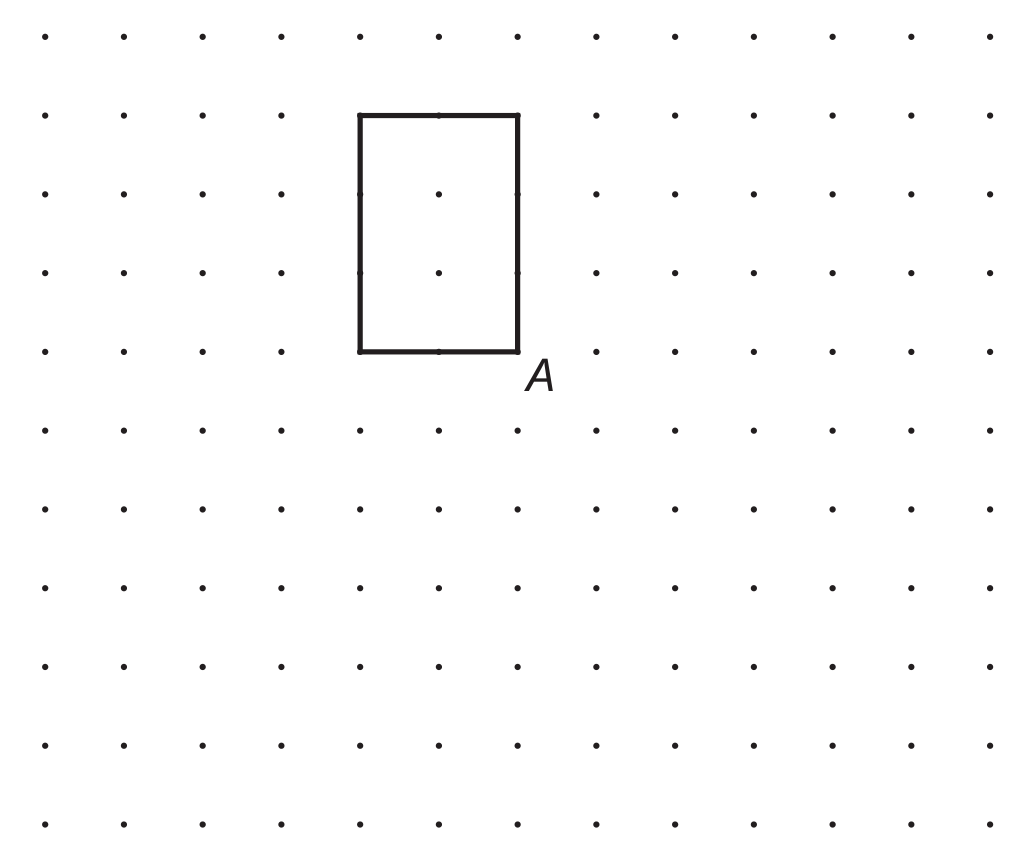
Here is a rectangle drawn on a dotted grid of squares.
One of the vertices is labelled *A*.
The rectangle is rotated 90 degrees clockwise around vertex *A*.
Draw the rectangle in its new position.
Here are some numbers.
Pierre has six cats.
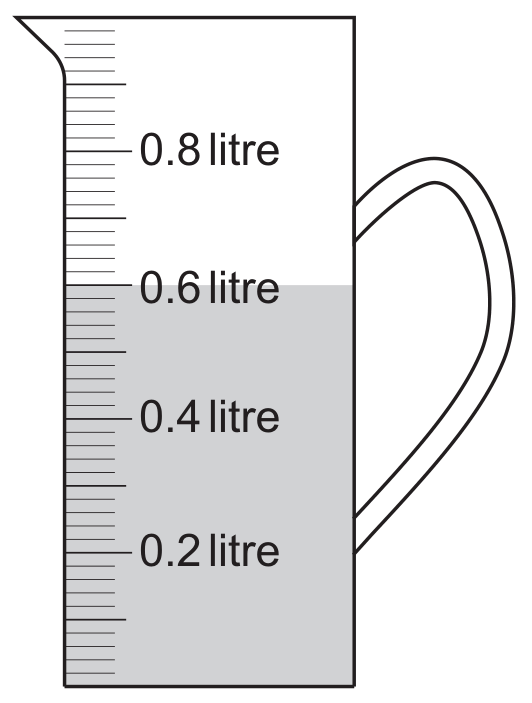
Here is a picture of a jug with water inside.
Write the word **capacity** or **volume** in each space to complete the sentences.
The ______ of the jug is greater than the ______ of water.
The ______ of water is 0.6 litre.
The ______ of the jug is 1 litre.
Here is some data about the number of books the children in two classes read in a month.
Data from Class R is recorded in a table.
**Number of books read by children in Class R**
| Number of books read | 0 | 1 | 2 | 3 or more |
|---|---|---|---|---|
| Number of children | 3 | 8 | 12 | 7 |
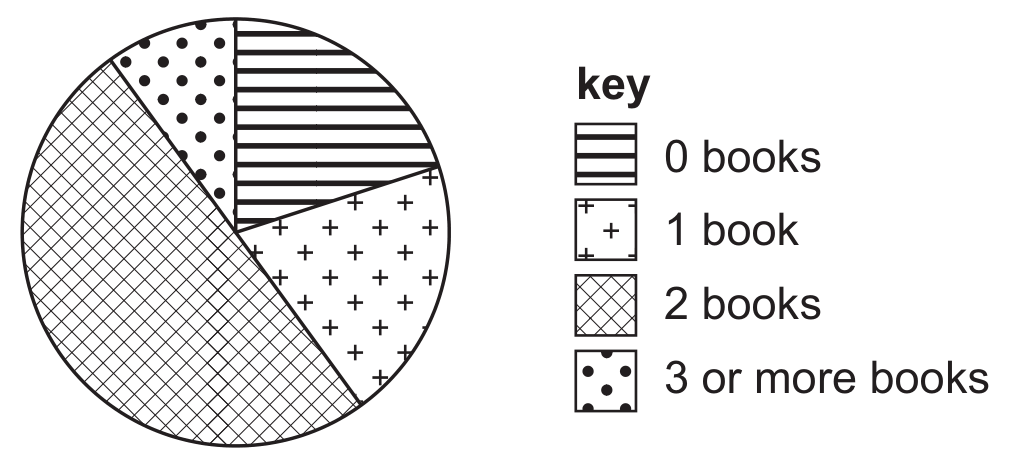
Data from Class T is recorded in a pie chart.
**Number of books read by children in Class T**
Gabriella wants to compare the number of children in each class who read 2 books in a month.
Write **one** extra piece of information Gabriella needs to know.
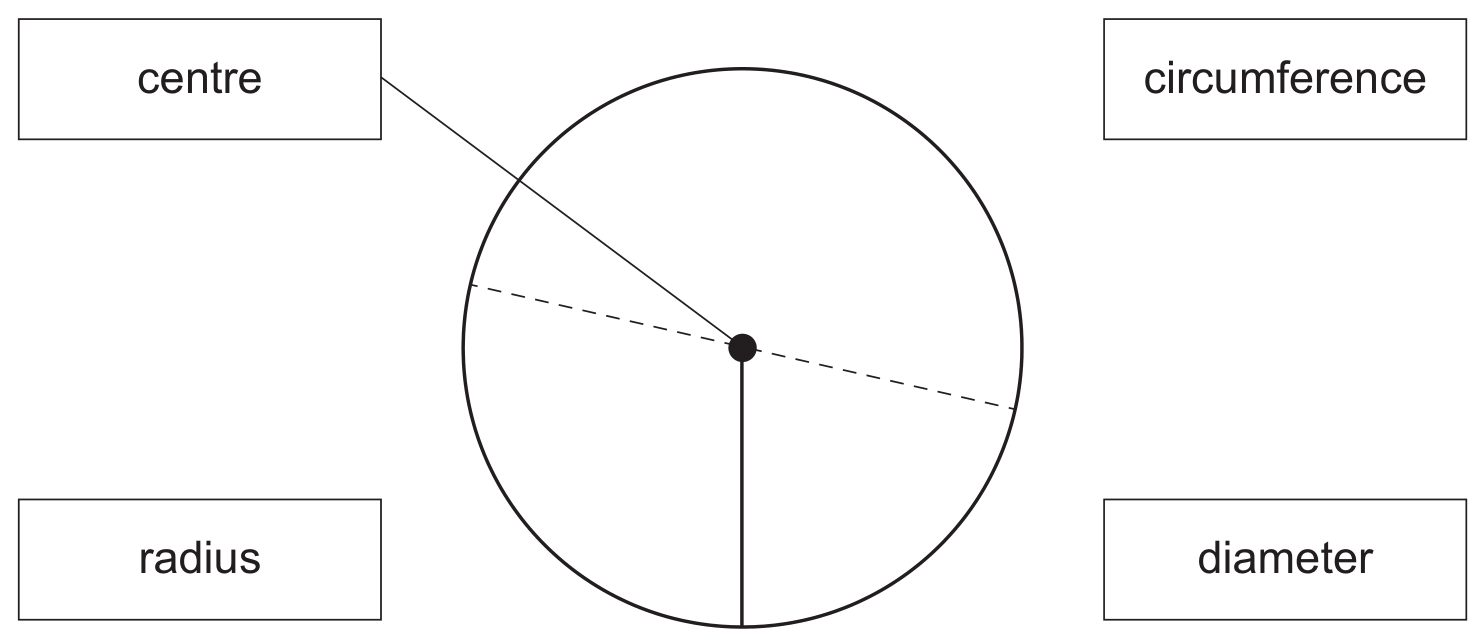
Here is a circle.
The centre is marked.
Draw a line to match each label to the correct part of the circle.
Write the correct number in each box to complete the calculation.
Some children try to describe pairs of mutually exclusive events.
Write a two-digit number ending in 7 that is a prime number.
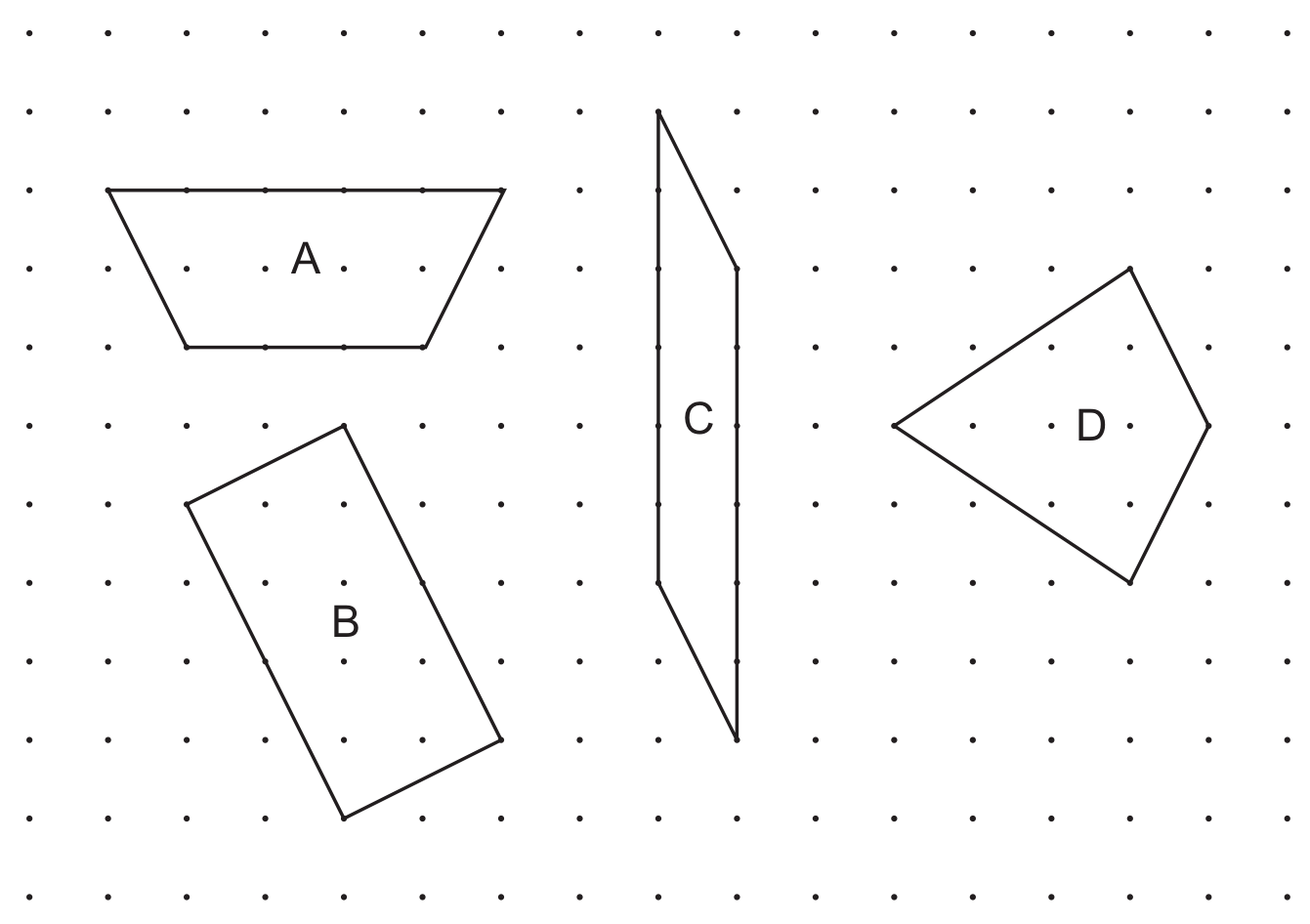
Here are four quadrilaterals drawn on a dotted grid of squares.
The quadrilaterals are labelled A, B, C and D.
Write the letter of the correct quadrilateral next to each statement.
| Statement | Letter |
|---|---|
| The shape has **no** lines of symmetry. | |
| The shape has **no** parallel lines. | |
| The shape has 1 pair of parallel lines. | |
Safia collects information about each child in her class.
number of days until next birthday
colour of eyes
height in centimetres
number of pets
Safia collects information about each child in her class.
Tick (✓) **all** the statements that are equivalent to 42.573
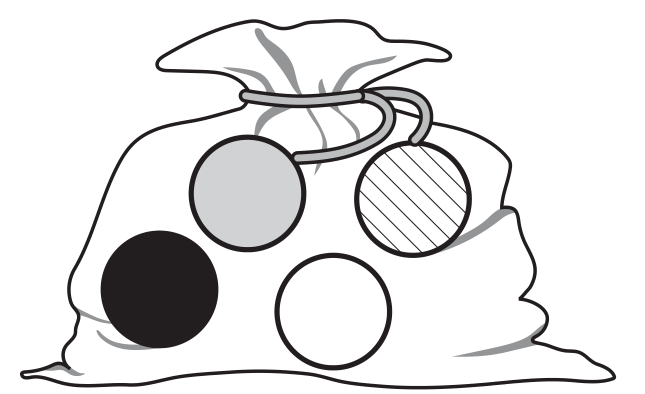
A bag contains exactly 1 white ball, 1 grey ball, 1 black ball and 1 striped ball.
Eva picks one ball at random.
Draw a line to match each event to the correct probability.
| Event | Probability |
|---|---|
| The ball is white. | 75% |
| The ball is **not** striped. | 0% |
| The ball is either grey or white. | 1 out of 4 |
| The ball is yellow. | 1 out of 2 |
**Two** horses need 36000 kg of hay each year.
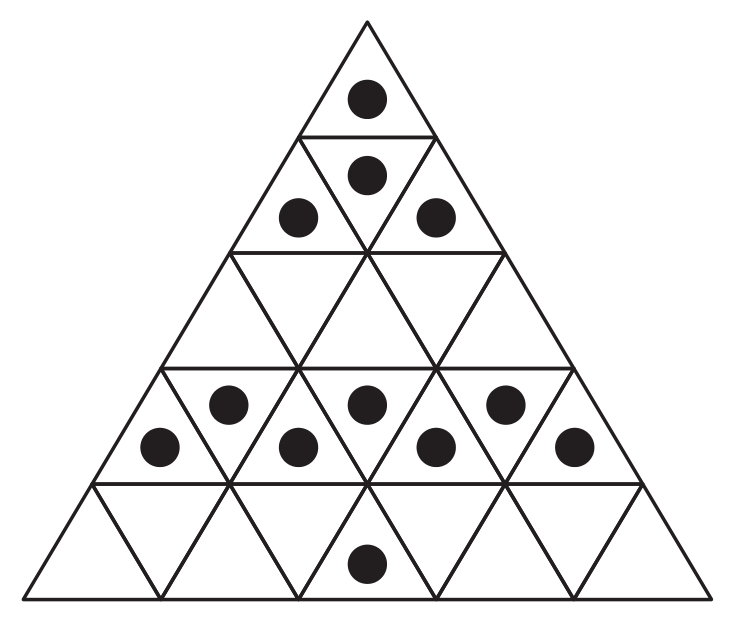
Here are 25 small triangles.
A fraction of the small triangles have a dot inside.
Draw a ring around **each** number that is equivalent to this fraction.
0.48 $\quad$ 12% $\quad$ 0.12 $\quad$ $\frac{12}{13}$ $\quad$ 48% $\quad$ $\frac{12}{25}$
Hassan makes a sequence by halving square numbers.
Write **two** common multiples of 12 and 30
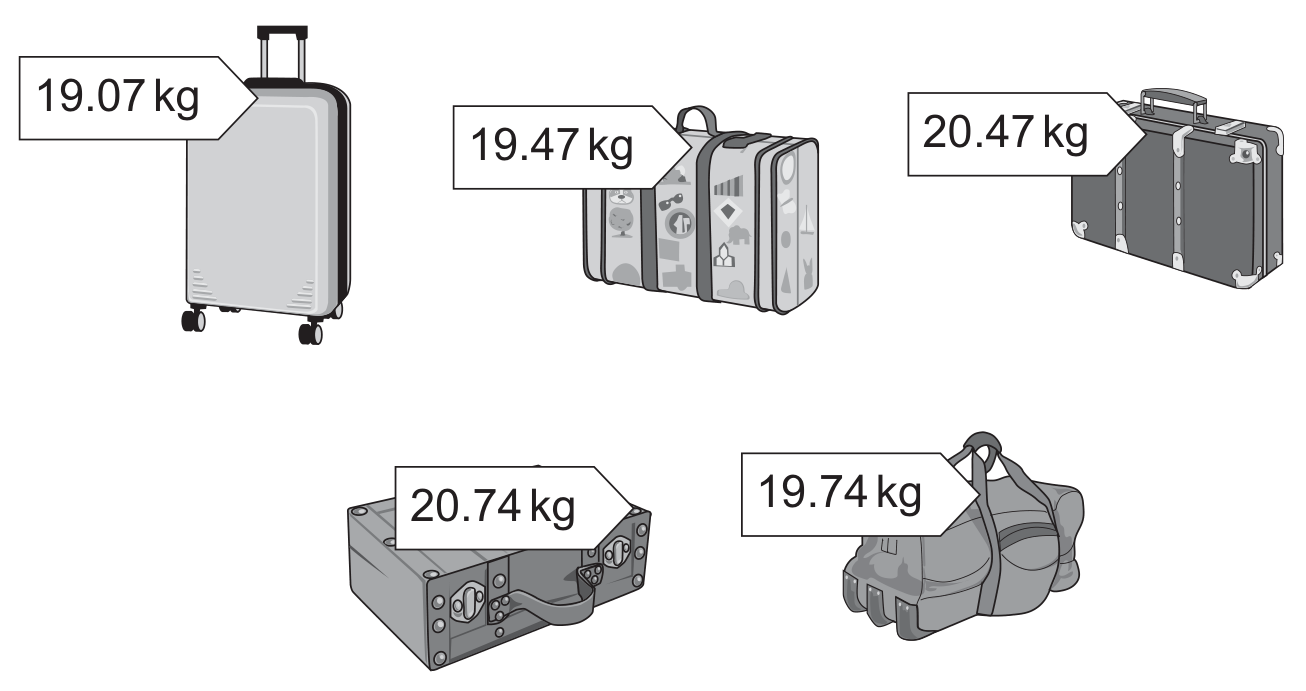
Here are some suitcases.
The mass of each suitcase is shown on the label.
Oliver rounds each mass to the nearest kilogram.
Draw a ring around **each** suitcase with a mass that rounds to 20 kilograms.
Next →