In this experiment, 10 g of sodium hydrogen carbonate (baking soda) is added to 20 ml of hydrochloric acid in a beaker and stirred gently. Wear safety goggles and disposable gloves; follow the teacher’s instructions for handling the acid. Observe the reaction. Record and explain what you see.
In this experiment, 10 g of sodium hydrogen carbonate (baking soda) is added to 20 ml of hydrochloric acid in a beaker and stirred gently. Wear safety goggles and disposable gloves; follow the teacher’s instructions for handling the acid. After the reaction subsides, touch the outside of the container carefully. What do you notice? Explain why.
In this experiment, 10 g of sodium hydrogen carbonate (baking soda) is added to 20 ml of hydrochloric acid in a beaker and stirred gently. Wear safety goggles and disposable gloves; follow the teacher’s instructions for handling the acid. What type of chemical reaction takes place between sodium hydrogen carbonate and hydrochloric acid?
In this experiment, 10 g of sodium hydrogen carbonate (baking soda) is added to 20 ml of hydrochloric acid in a beaker and stirred gently. Wear safety goggles and disposable gloves; follow the teacher’s instructions for handling the acid. After the reaction, the mixture is filtered through filter paper in a funnel. Why is it necessary to filter the solution after the reaction?
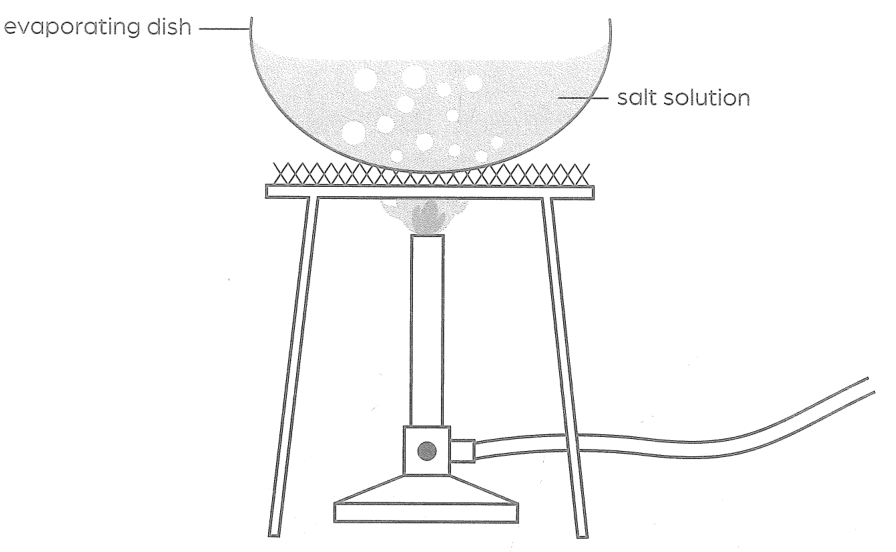
In this experiment, 10 g of sodium hydrogen carbonate (baking soda) is added to 20 ml of hydrochloric acid in a beaker and stirred gently. Wear safety goggles and disposable gloves; follow the teacher’s instructions for handling the acid. The filtrate is transferred to an evaporating dish and heated gently to evaporate most of the water and leave solid sodium chloride behind. Why is it important to heat the evaporating dish gently during the final step?
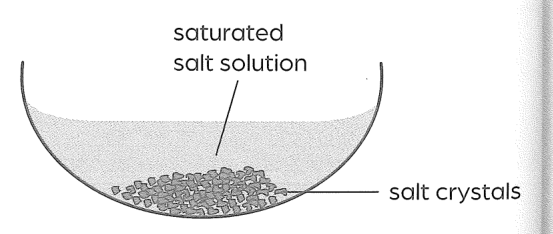
To purify an impure salt sample (e.g. table salt or Epsom salt), approximately 50 g of the sample is mixed with 100 ml of distilled water and stirred. The solution is heated gently to near boiling, without boiling, then allowed to cool slowly at room temperature. As the solution cools, crystals of pure salt will start to form. Continue to let it cool until no more crystals form. Record your observations.
To purify an impure salt sample (e.g. table salt or Epsom salt), approximately 50 g of the sample is mixed with 100 ml of distilled water and stirred. The solution is heated gently to near boiling, without boiling, then allowed to cool slowly at room temperature. What is the purpose of heating the solution during the purification process?
To purify an impure salt sample (e.g. table salt or Epsom salt), approximately 50 g of the sample is mixed with 100 ml of distilled water and stirred. The solution is heated gently to near boiling, without boiling, then allowed to cool slowly at room temperature. Why is it important to cool the solution slowly rather than rapidly?
To purify an impure salt sample (e.g. table salt or Epsom salt), approximately 50 g of the sample is mixed with 100 ml of distilled water and stirred. The solution is heated gently to near boiling, without boiling, then allowed to cool slowly at room temperature. After cooling, the solid crystals are separated using a funnel and filter paper. What role does filtration play in the purification process?
To purify an impure salt sample (e.g. table salt or Epsom salt), approximately 50 g of the sample is mixed with 100 ml of distilled water and stirred. The solution is heated gently to near boiling, without boiling, then allowed to cool slowly at room temperature. The collected crystals are rinsed with a small amount of cold distilled water. Why is it necessary to rinse the purified salt crystals with cold distilled water?
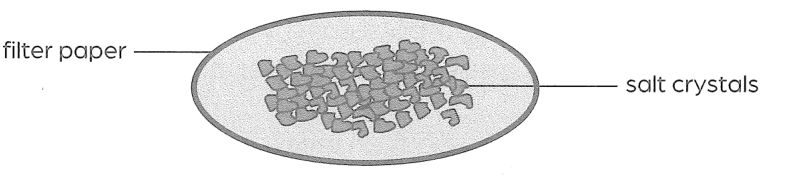
To purify an impure salt sample (e.g. table salt or Epsom salt), approximately 50 g of the sample is mixed with 100 ml of distilled water and stirred. The solution is heated gently to near boiling, without boiling, then allowed to cool slowly at room temperature. The purified salt crystals are transferred onto clean filter paper and allowed to air dry. Why is it important to dry the purified salt crystals before storage?
In Activity 7C, 50 cm³ of dilute sulfuric acid is warmed gently without boiling. Copper carbonate is added half a spatula at a time and stirred. Record your observations.
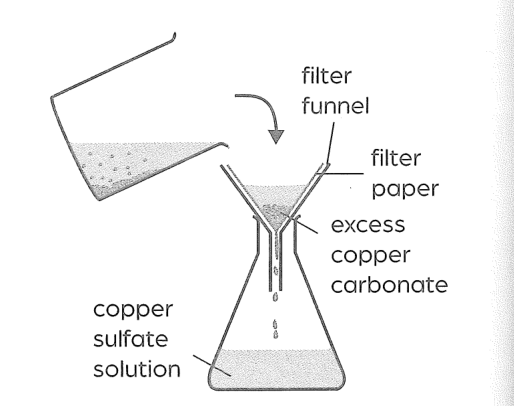
In Activity 7C, 50 cm³ of dilute sulfuric acid is warmed gently without boiling. Copper carbonate is added half a spatula at a time and stirred. Copper carbonate is added until a solid remains. The beaker is cooled and the mixture is filtered to remove the excess copper carbonate. What is the colour of the filtrate?
In Activity 7C, 50 cm³ of dilute sulfuric acid is warmed gently without boiling. Copper carbonate is added half a spatula at a time and stirred. After filtering, heat the filtrate gently until most water has evaporated; leave it in a safe place to cool. Dry the salt crystals on a piece of filter paper. Identify the salt crystals.
In Activity 7C, 50 cm³ of dilute sulfuric acid is warmed gently without boiling. Copper carbonate is added half a spatula at a time and stirred. Why is it important to wear safety goggles and gloves during the experiment?
In Activity 7C, 50 cm³ of dilute sulfuric acid is warmed gently without boiling. Copper carbonate is added half a spatula at a time and stirred. Why was sulfuric acid warmed in step 2?
In Activity 7C, 50 cm³ of dilute sulfuric acid is warmed gently without boiling. Copper carbonate is added half a spatula at a time and stirred. Step 4: Continue adding copper carbonate and stirring until a solid is observed at the bottom of the beaker. Why was the purpose of step 4?
In Activity 7C, 50 cm³ of dilute sulfuric acid is warmed gently without boiling. Copper carbonate is added half a spatula at a time and stirred. Step 5: Cool the beaker and filter the mixture through filter paper into a conical flask. Which components were separated in step 5?
In Activity 7C, 50 cm³ of dilute sulfuric acid is warmed gently without boiling. Copper carbonate is added half a spatula at a time and stirred. The filtered copper sulfate solution is heated gently until most of the water evaporates, then cooled. Why was the mixture not evaporated to dryness?
In Activity 7C, 50 cm³ of dilute sulfuric acid is warmed gently without boiling. Copper carbonate is added half a spatula at a time and stirred. Name the ions that replaced the hydrogen ions in the sulfuric acid to form the salt.