Question 32
Work in groups of two or three.
You will need: needle or thin iron nail; bar magnet; light string or thread; paper and scissors; adhesive tape; non-magnetic bowl of water; wooden clamp stand or non-magnetic support; piece of cork or polystyrene on which the needle or nail will float.
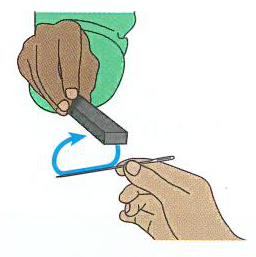
5 Hold the needle or nail and gently stroke the bar magnet along it several times, as shown in the diagram.
6 Record: which pole of the magnet was in contact with the needle; which direction the magnet moved along the needle.
7 Move the magnet away from where you are working.
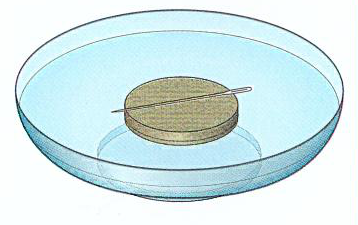
8 Cut a disc from the cork or a circle from the polystyrene. Set the needle on the disc and float the disc in the water, in a non-magnetic bowl, as shown.
9 As in Method: Part 1, make sure there are no other magnets or large magnetic objects close by.
10 Allow the needle to come to rest and record the direction it is pointing.
11 Carefully move the equipment to another part of the room and record the direction the needle is pointing.
You will need: needle or thin iron nail; bar magnet; light string or thread; paper and scissors; adhesive tape; non-magnetic bowl of water; wooden clamp stand or non-magnetic support; piece of cork or polystyrene on which the needle or nail will float.
5 Hold the needle or nail and gently stroke the bar magnet along it several times, as shown in the diagram.
6 Record: which pole of the magnet was in contact with the needle; which direction the magnet moved along the needle.
7 Move the magnet away from where you are working.
8 Cut a disc from the cork or a circle from the polystyrene. Set the needle on the disc and float the disc in the water, in a non-magnetic bowl, as shown.
9 As in Method: Part 1, make sure there are no other magnets or large magnetic objects close by.
10 Allow the needle to come to rest and record the direction it is pointing.
11 Carefully move the equipment to another part of the room and record the direction the needle is pointing.
