Question 28
Activity 6.2.1: Refraction effects
Effect 2: Broken pencil in water
Pour water into a transparent drinking glass until it is about three-quarters full.
Place a pencil into the glass so it is resting at an angle.
View the glass and pencil from the side.
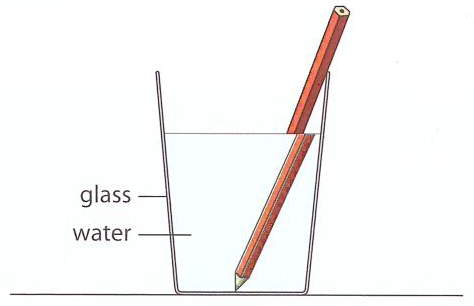
The pencil appears to be broken at the surface of the water.
Activity 6.2.1: Refraction effects
Effect 3: Broken pencil in water and oil
Repeat the demonstration in Effect 2, but this time put water into the glass until it is only half full. Now, gently pour cooking oil on top of the water until the glass is about three-quarters full.
View the glass and pencil from the side again.
What can you conclude about the speed of light in water and in cooking oil?
Effect 2: Broken pencil in water
Pour water into a transparent drinking glass until it is about three-quarters full.
Place a pencil into the glass so it is resting at an angle.
View the glass and pencil from the side.
The pencil appears to be broken at the surface of the water.
Activity 6.2.1: Refraction effects
Effect 3: Broken pencil in water and oil
Repeat the demonstration in Effect 2, but this time put water into the glass until it is only half full. Now, gently pour cooking oil on top of the water until the glass is about three-quarters full.
View the glass and pencil from the side again.
What can you conclude about the speed of light in water and in cooking oil?
