Question 17
Investigating a local ecosystem
You are going to investigate an ecosystem near your school. For example, you could investigate: a garden area; part of the playing field; a group of trees; a pond.
Safety
You will be working outside. It is important to stay in the same area as the rest of your class. Always stay with a partner.
You will need: a selection of the apparatus and materials shown; choose what is suitable for the ecosystem you are studying. These items are not drawn to scale.
It is important to remember that, if you catch any animals, you must take great care of them. Do not take them away from their habitat. Release them exactly where you found them.
Equipment guidance: This is a pitfall trap. This one is made from a plastic cup which has been set into the ground as shown. Small animals that crawl or run over the surface of the ground – such as beetles – fall in and cannot get out.
It is important to check your pitfall trap regularly. If not, you may find just one extremely fat carnivorous beetle in it, and nothing else.
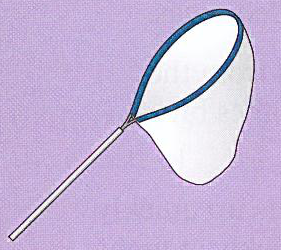
This is a sweep net. It has a large net on the end of a long pole. It is useful for catching insects. You can sweep it through long grass. You can also use it to catch organisms in a pond or small stream.
You can use this apparatus to find insects living in the lower branches of trees. Gently hit a branch with the stick, as your friends hold the large piece of material or a sheet underneath. If you haven’t got any material, you can use an upside-down umbrella.
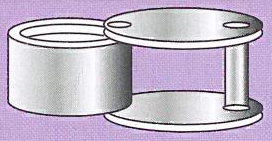
A hand lens is useful for looking at very small organisms.
A camera is useful for taking photographs of organisms, especially if you do not know their names. You can use your photos to try to identify the organisms later.
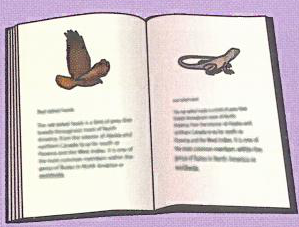
You can use books to try to identify the animals and plants that you find. Quick identification keys are also very useful.
Look for organisms living in each habitat. Make a list of them. If you don’t know their names, take a picture or make a drawing. You might find some fungi, as well as plants and animals. If there are animals, what are they doing?



You are going to investigate an ecosystem near your school. For example, you could investigate: a garden area; part of the playing field; a group of trees; a pond.
Safety
You will be working outside. It is important to stay in the same area as the rest of your class. Always stay with a partner.
You will need: a selection of the apparatus and materials shown; choose what is suitable for the ecosystem you are studying. These items are not drawn to scale.
It is important to remember that, if you catch any animals, you must take great care of them. Do not take them away from their habitat. Release them exactly where you found them.
Equipment guidance: This is a pitfall trap. This one is made from a plastic cup which has been set into the ground as shown. Small animals that crawl or run over the surface of the ground – such as beetles – fall in and cannot get out.
It is important to check your pitfall trap regularly. If not, you may find just one extremely fat carnivorous beetle in it, and nothing else.
This is a sweep net. It has a large net on the end of a long pole. It is useful for catching insects. You can sweep it through long grass. You can also use it to catch organisms in a pond or small stream.
You can use this apparatus to find insects living in the lower branches of trees. Gently hit a branch with the stick, as your friends hold the large piece of material or a sheet underneath. If you haven’t got any material, you can use an upside-down umbrella.
A hand lens is useful for looking at very small organisms.
A camera is useful for taking photographs of organisms, especially if you do not know their names. You can use your photos to try to identify the organisms later.
You can use books to try to identify the animals and plants that you find. Quick identification keys are also very useful.
Look for organisms living in each habitat. Make a list of them. If you don’t know their names, take a picture or make a drawing. You might find some fungi, as well as plants and animals. If there are animals, what are they doing?
