Think of an electrical device or appliance you use at home. Explain where on or in the device or appliance you will find materials that are electrical conductors or electrical insulators.
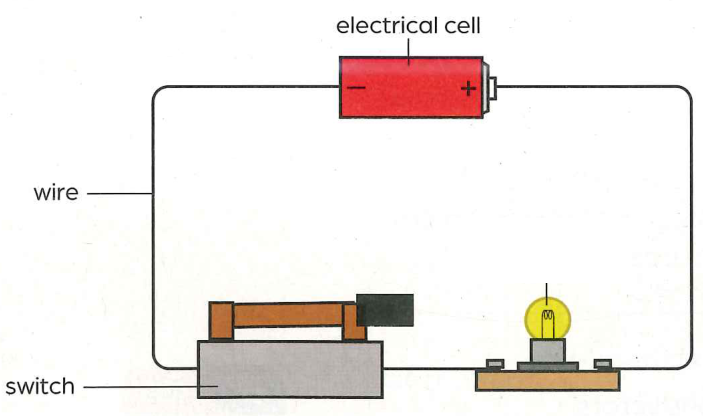
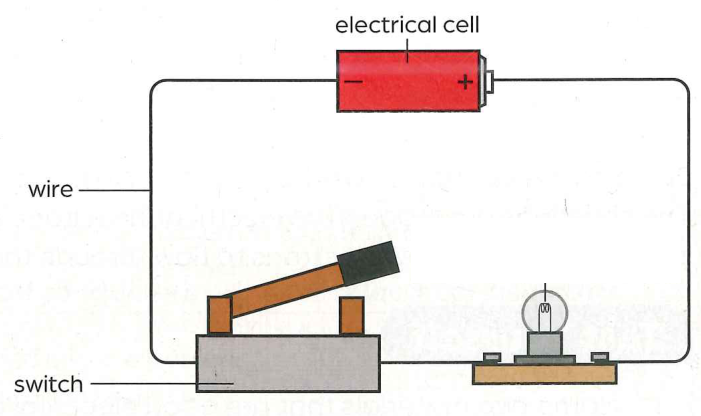
Although switches can look very different from one another, they all have the same function. What do the switches in your home look like (see Figure 12.5)?
Your teacher will demonstrate how to make a physical model to show the flow of current in a circuit. For example, a loop of rope can be used to represent the wires. Discuss the following: How well does the model show the flow of current in a circuit?
Your teacher will demonstrate how to make a physical model to show the flow of current in a circuit. For example, a loop of rope can be used to represent the wires. Discuss the following: What are some limitations of the model?
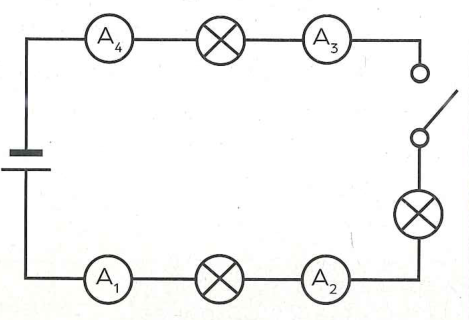
Look at Figure 12.11. It shows a circuit with three lamps. In groups, build the circuit based on the circuit diagram. Make sure you connect the ammeters A₁, A₂, A₃ and A₄ correctly. Discuss whether you think the current measured by each ammeter will be the same.
Look at Figure 12.11. It shows a circuit with three lamps. In groups, build the circuit based on the circuit diagram. Make sure you connect the ammeters A₁, A₂, A₃ and A₄ correctly. Now close the switch. Do the readings verify your predictions?
Look at Figure 12.11. It shows a circuit with three lamps. In groups, build the circuit based on the circuit diagram. Make sure you connect the ammeters A₁, A₂, A₃ and A₄ correctly. Now close the switch. Are there any unexpected results?
Look at Figure 12.11. It shows a circuit with three lamps. In groups, build the circuit based on the circuit diagram. Make sure you connect the ammeters A₁, A₂, A₃ and A₄ correctly. In your own words, describe what happens to the current as it flows through each lamp.