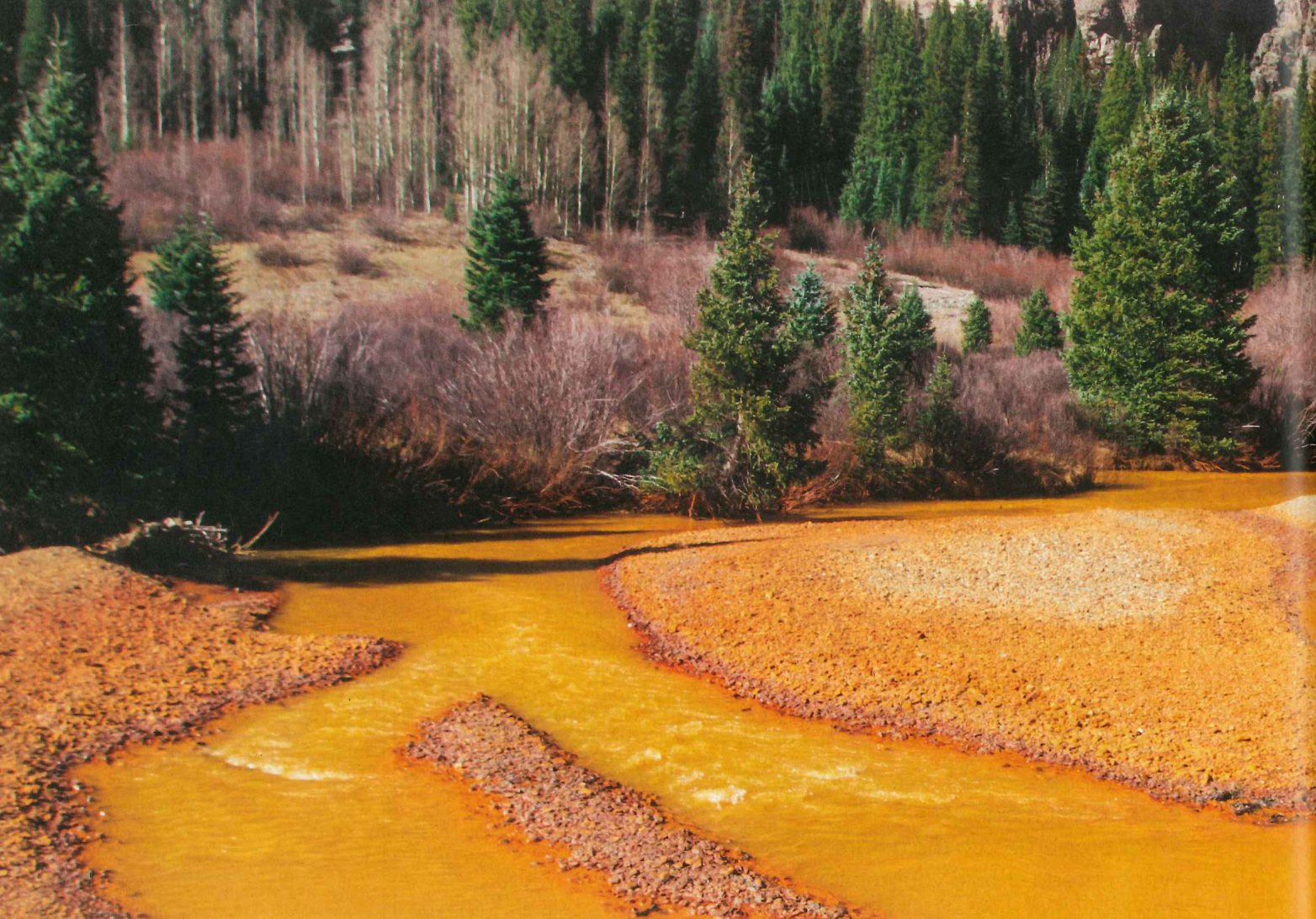
During coal and metal mining, waste water can flow from the mine into nearby rivers. Sometimes this waste water is highly acidic. It pollutes the river and kills aquatic plants and animals. It also corrodes buildings and bridges along the river. This photograph shows how a mine spill has polluted the Animas River in Colorado.
Do you think coal and metal mining is environmentally sustainable?
During coal and metal mining, waste water can flow from the mine into nearby rivers. Sometimes this waste water is highly acidic. It pollutes the river and kills aquatic plants and animals. It also corrodes buildings and bridges along the river. This photograph shows how a mine spill has polluted the Animas River in Colorado.
How can we reduce the acidity of the river water so that aquatic life is not further harmed?
Some people suffer from heartburn. In fact, although the pain is near the heart, it has nothing to do with the heart. It is caused by stomach acid bubbling into the oesophagus (the gullet), which creates a burning sensation. We usually treat it by eating or drinking an antacid (Figure 8.6). Work in small groups. Try this activity to see how an antacid works. Antacid tablets typically contain a lot of calcium carbonate, along with other substances such as binders that hold the tablet together, and flavourings. Vinegar is a common household acid.
Predict what will happen if you drop an antacid tablet into a mixture of vinegar and water.
Some people suffer from heartburn. In fact, although the pain is near the heart, it has nothing to do with the heart. It is caused by stomach acid bubbling into the oesophagus (the gullet), which creates a burning sensation. We usually treat it by eating or drinking an antacid (Figure 8.6). Work in small groups. Try this activity to see how an antacid works. Antacid tablets typically contain a lot of calcium carbonate, along with other substances such as binders that hold the tablet together, and flavourings. Vinegar is a common household acid.
Predict what will happen if you drop an antacid tablet into a mixture of vinegar and water. Explain your prediction.
Fill half a beaker or clear plastic cup with water. Fill one quarter of another beaker or clear plastic cup with vinegar. Add water until it is half full.
Do you think adding water to the vinegar affects its acidity?
Fill half a beaker or clear plastic cup with water. Fill one quarter of another beaker or clear plastic cup with vinegar. Add water until it is half full.
Link this back to the human body. What does the cup with the diluted vinegar represent?
Fill half a beaker or clear plastic cup with water. Fill one quarter of another beaker or clear plastic cup with vinegar. Add water until it is half full.
Drop one antacid tablet into each cup at the same time. Observe what happens.
Describe what you observe. Are there similarities or differences between the observations about both cups? Explain what happens in each cup.
Fill half a beaker or clear plastic cup with water. Fill one quarter of another beaker or clear plastic cup with vinegar. Add water until it is half full.
Drop one antacid tablet into each cup at the same time. Observe what happens.
Mariam mixed up the labels for a bottle of vinegar, a bottle of window cleaner and a bottle of rose water. The bottles and the liquids in them look identical. Without smelling or tasting them, how can she identify the liquid in each bottle?