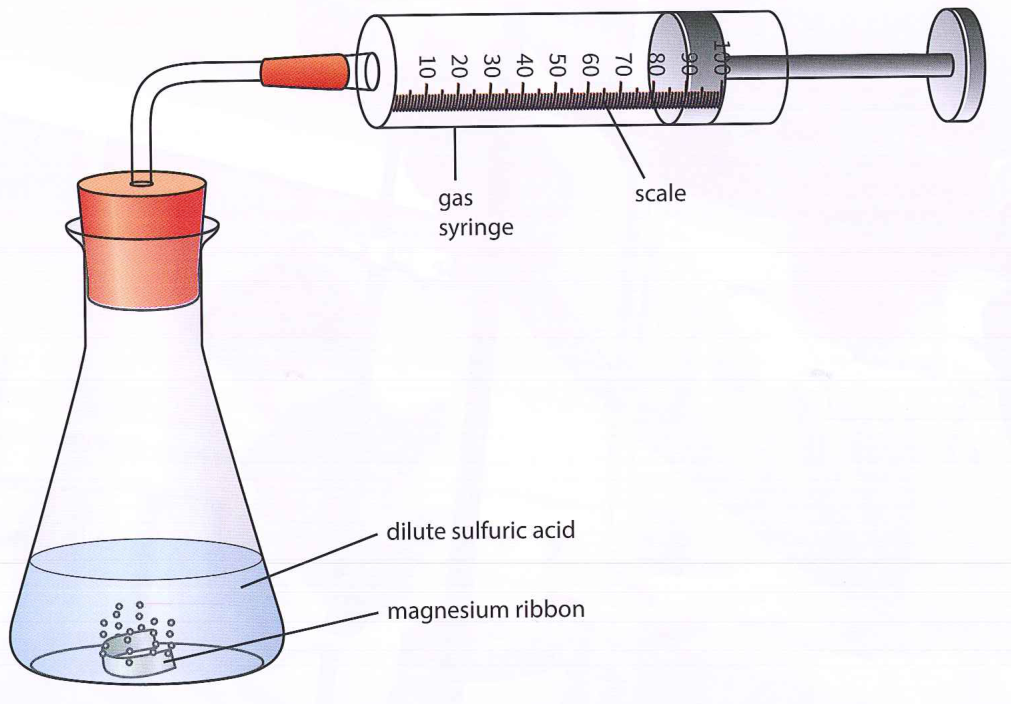
This table shows results from magnesium reacting with dilute sulfuric acid in the gas-syringe apparatus. How can you tell from the table that the reaction has finished at 270 seconds?
The gas syringe has a capacity of 100 cm³. Suggest what might happen if you used a lot more magnesium and acid, so that more than 100 cm³ of hydrogen gas was formed. What could be done to reduce the risk of an accident?
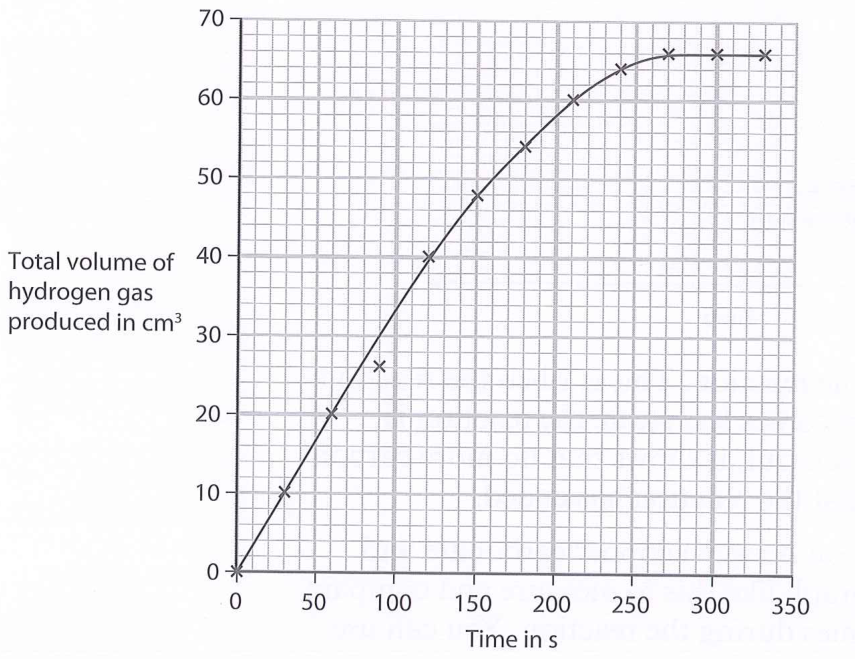
The graph shows the hydrogen results from the magnesium–sulfuric acid reaction. Which result is anomalous? Explain how you identified it, and say what you would expect the result to be.
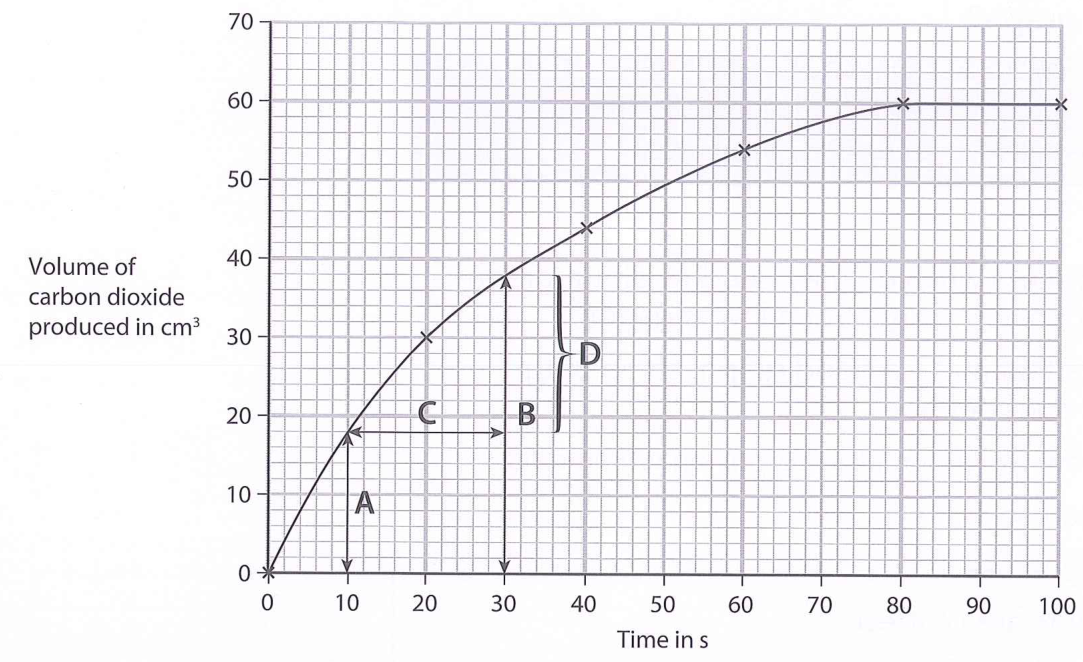
Use the graph of carbon dioxide volume from copper carbonate and hydrochloric acid to find the average rate of reaction between 60 and 80 seconds. How does this compare with the rate between 10 and 30 seconds (1 cm³/s)?
Make a poster, slide presentation or another presentation to illustrate how you produce the best possible graphs. Present it to another group or the whole class. You will need poster materials and/or access to computers.
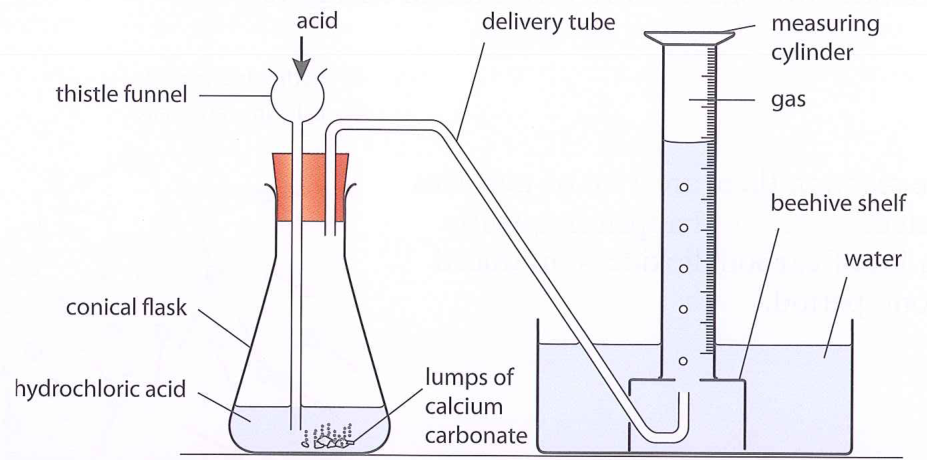
Investigate calcium carbonate reacting with hydrochloric acid. You may measure mass of carbon dioxide lost using a balance, gas volume using a gas syringe, or gas collected over water. Answer questions 1–3 before starting. Assemble the equipment and place calcium carbonate in the flask. Add hydrochloric acid, start a timer and record the initial mass or volume. Measure every 30 seconds until three consecutive readings are the same.
Investigate calcium carbonate reacting with hydrochloric acid. You may measure mass of carbon dioxide lost using a balance, gas volume using a gas syringe, or gas collected over water. Make a list of the equipment you will need.
Investigate calcium carbonate reacting with hydrochloric acid. You may measure mass of carbon dioxide lost using a balance, gas volume using a gas syringe, or gas collected over water. Write a risk assessment for your investigation.
Investigate calcium carbonate reacting with hydrochloric acid. You may measure mass of carbon dioxide lost using a balance, gas volume using a gas syringe, or gas collected over water. Prepare a table for your results.
Investigate calcium carbonate reacting with hydrochloric acid. You may measure mass of carbon dioxide lost using a balance, gas volume using a gas syringe, or gas collected over water. Plot a graph of your results and describe how the rate of reaction changes over time.
Investigate calcium carbonate reacting with hydrochloric acid. You may measure mass of carbon dioxide lost using a balance, gas volume using a gas syringe, or gas collected over water. What problems did you have when you carried out this reaction? How might these have affected your results?
Investigate calcium carbonate reacting with hydrochloric acid. You may measure mass of carbon dioxide lost using a balance, gas volume using a gas syringe, or gas collected over water. How could you improve the reliability of your results?