Skip to content / Đến nội dung
SachHeCam.com

Cambridge Secondary (7-9). Stage 8. Science. Learner's Book - Unit 5: Materials and cycles on Earth

Question 1

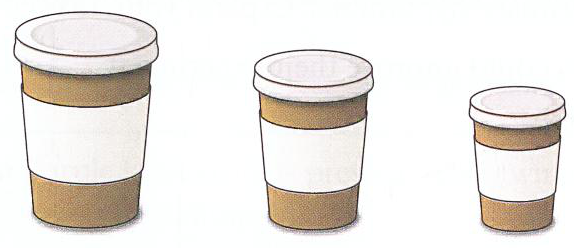
These three cups have been filled with water.
Would you expect these three cups to have:
a exactly the same mass
b masses that were nearly the same
c masses that were very different?
Discuss this with a partner. Give reasons for your choice.

Question illustration

Question 2

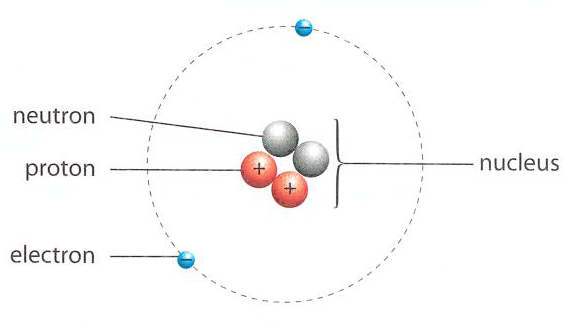
Which sub-atomic particle has a positive electrical charge?

Question 3

Which sub-atomic particle has the smallest mass?

Question 4

Which sub-atomic particles make up the nucleus of an atom?

Question 5

The size of the negative charge of an electron is exactly the same as the size of the positive charge on a proton. What is the overall charge of the helium atom shown in the diagram?

Question illustration

Question 6

How are the individual atoms held together?

Question 7

Explain how Thompson’s model of the atom is different from the one scientists use today.

Question 8

Who discovered the electron? When did they discover it?

Question 9

Who proved that the neutron existed? When did they do this?

Question 10

What two things did Rutherford discover about the structure of the atom?

Question 11

How is Rutherford’s model different from the model scientists use today?

Question 12

An atomic timeline
In a group of three, make a time line of the discoveries that have led to the model of the atom we use today. Do some research on the three scientists J. J. Thompson, Ernest Rutherford and James Chadwick. Find out where and when they worked and some personal details; add this to your time line.

Question 13

Answer the three questions on your own and then check with a partner. Be ready to share your answers with the class.

What does it mean if a substance is pure?

Question 14

Answer the three questions on your own and then check with a partner. Be ready to share your answers with the class.

Which of these items are pure substances?
sodium chloride; oxygen; sea water; gold; orange juice; copper oxide; silver nitrate; soil; black ink; potassium.
Question 15

Answer the three questions on your own and then check with a partner. Be ready to share your answers with the class.

Of the items in question 2, which are elements, mixtures and compounds?
sodium chloride; oxygen; sea water; gold; orange juice; copper oxide; silver nitrate; soil; black ink; potassium.
Question 17

What percentage of silver is in silver marked 900?

Question 18

Which element mixed with carbon in diamonds makes them blue?

Question 19

Which elements may cause a diamond to be green?

Question 20

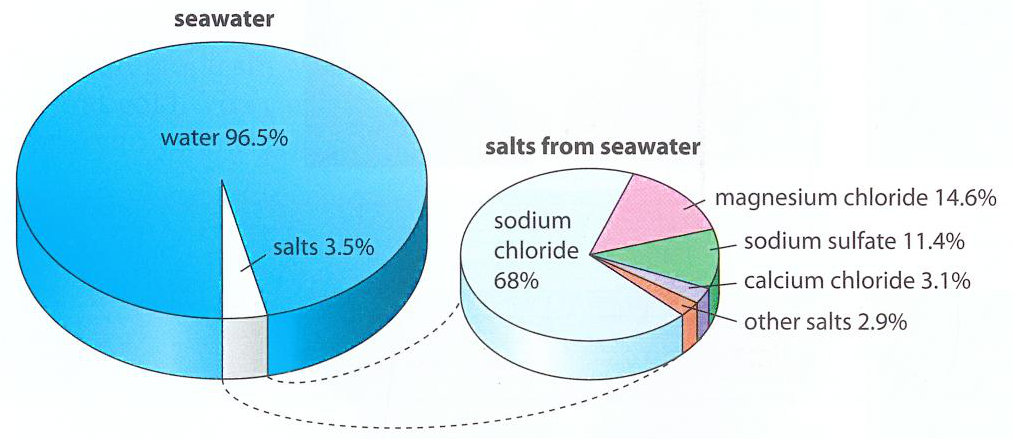
If you take 1000 g of seawater, about 35 g (or 3.5%) of it is made up of salts.

Question illustration

Draw up a table to show the percentage of salts found in seawater.
0
0
GIỎ HÀNG
Empty CartGIỎ CHƯA CÓ GÌQUAY LẠI SHOP
