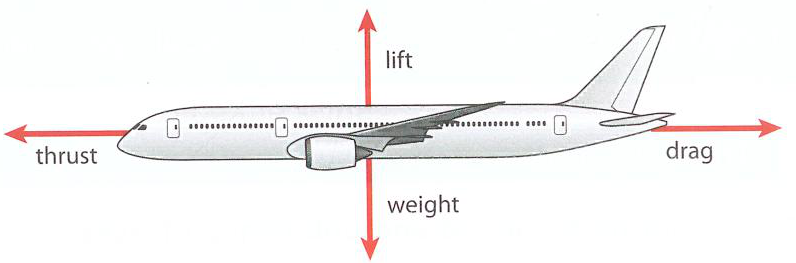
Arun pushes the box sideways. The box does not move. Draw another labelled force diagram to show all the forces acting on the box when Arun is pushing.
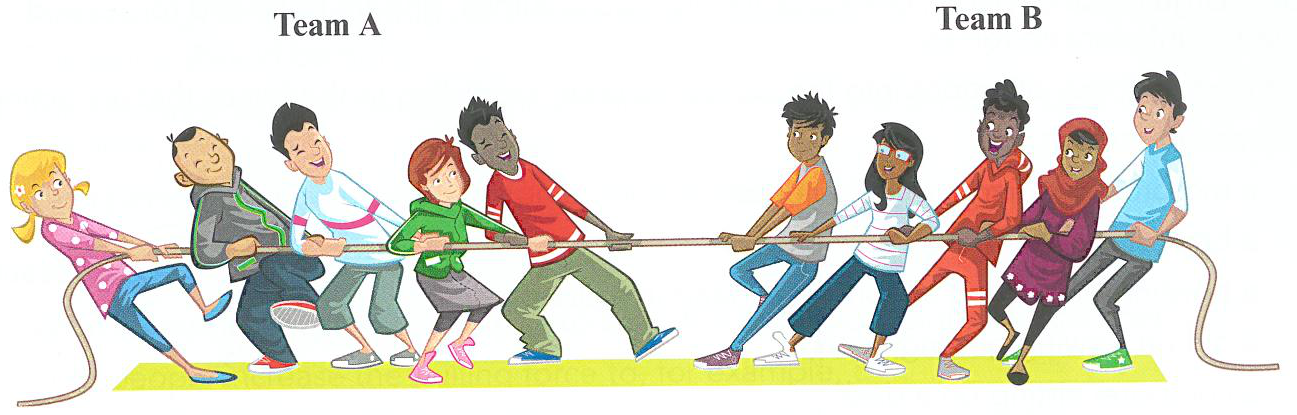
A tug of war is a game played by two teams of people, each pulling on the same rope. The team that pulls the rope to their side wins. The picture shows a tug of war. The teams in this game are called Team A and Team B. Both Team A and Team B are pulling on the rope. The rope is not moving. Use ideas about forces to answer these questions.
A tug of war is a game played by two teams of people, each pulling on the same rope. The team that pulls the rope to their side wins. The picture shows a tug of war. The teams in this game are called Team A and Team B. Both Team A and Team B are pulling on the rope. The rope is not moving. Use ideas about forces to answer these questions.
The rope starts to move towards Team B. Give two changes that could make the rope move towards Team B.
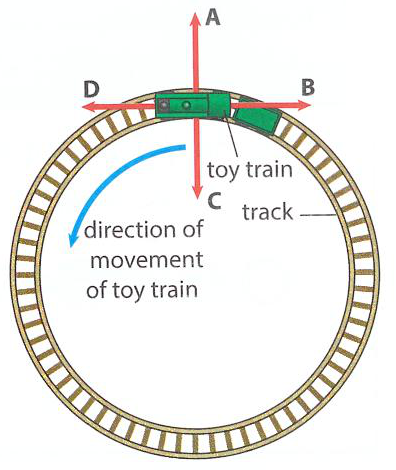
The picture shows a toy train moving around a circular track. The locomotive contains an electric motor that drives the train. The train moves in a circle at a constant speed. Give the letter of the arrow that shows the direction of:
The picture shows a toy train moving around a circular track. The locomotive contains an electric motor that drives the train. The train moves in a circle at a constant speed. Give the letter of the arrow that shows the direction of:
The picture shows a toy train moving around a circular track. The locomotive contains an electric motor that drives the train. The train moves in a circle at a constant speed. Give the letter of the arrow that shows the direction of:
the force that keeps the train moving in a circle.
Balanced or unbalanced forces?
On a large piece of paper, draw a table with two columns: one for balanced forces and one for unbalanced forces. Put each of these situations into the correct column, according to the forces that are acting. The situations are:
- a motorcycle going around a corner
- a boy on a skateboard slowing down
- a bowling ball rolling at constant speed in a straight line
- a girl on a swing getting faster
- a computer sitting on a desk
- a helicopter going straight upwards at a constant speed
- a coconut falling from a tree and getting faster.
Think like a scientist: Measuring balanced and unbalanced forces. You will investigate the effects of balanced and unbalanced forces. Work in pairs. You will need: two forcemeters, piece of string, coloured tape, scissors. Set up the equipment as shown in the diagram. Each person in the pair holds one forcemeter (also known as a newton meter). The string should be tight. The coloured tape on the string should be lined up with the coloured tape on the desk. Each person pulls with an equal force, for example, 4 N.
What directions must you both pull to keep the pieces of coloured tape lined up?
Think like a scientist: Measuring balanced and unbalanced forces. You will investigate the effects of balanced and unbalanced forces. Work in pairs. You will need: two forcemeters, piece of string, coloured tape, scissors. Set up the equipment as shown in the diagram. Each person in the pair holds one forcemeter (also known as a newton meter). The string should be tight. The coloured tape on the string should be lined up with the coloured tape on the desk. Each person pulls with an equal force, for example, 4 N.
Both people increase the pulling force to, for example, 8 N. Explain why the string does not move, even when the force is increased.