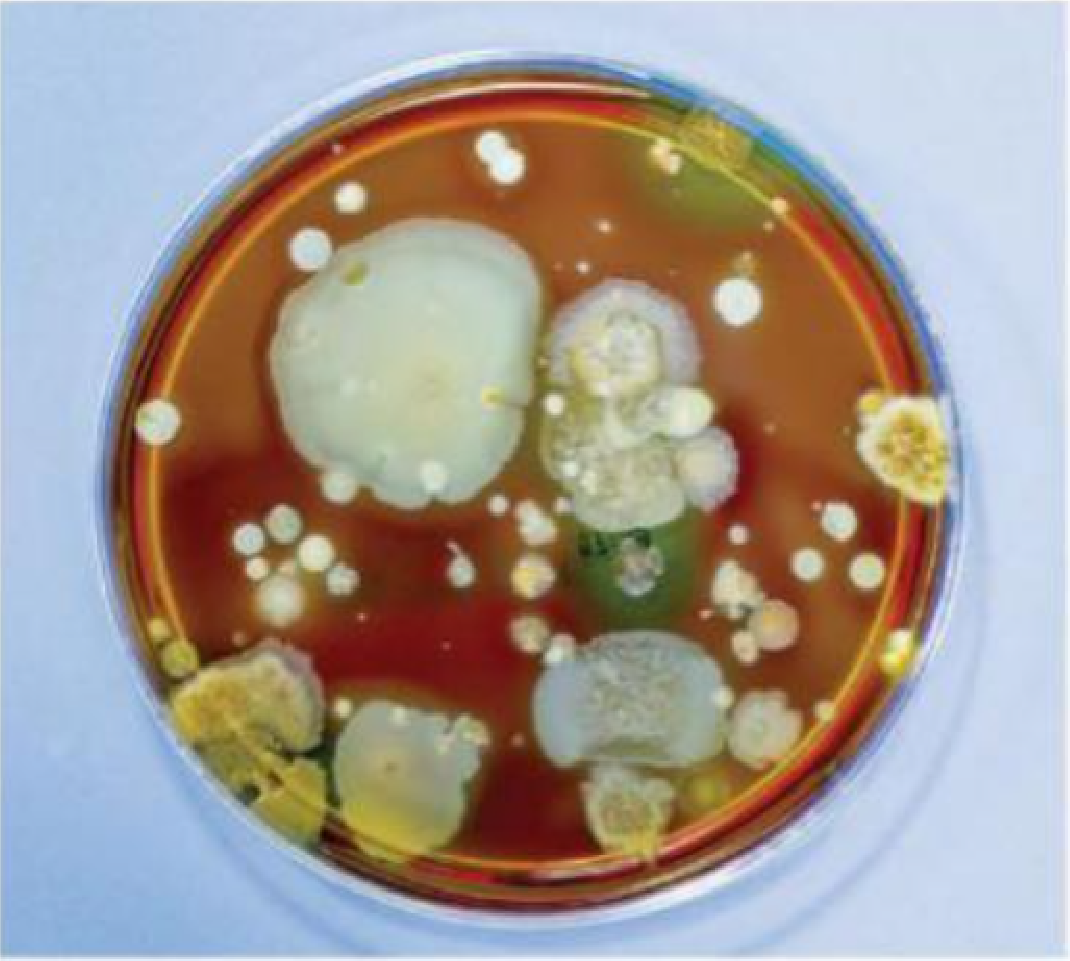
Safety adaptation: This is an observation-only version of the book’s classroom practical. The source activity grows microorganisms from the air on sterile agar in a sterile Petri dish, then keeps the lid fastened and observes the closed dish. It lists safety glasses, tape and a plastic-writing pen, and warns not to breathe or talk over the agar and not to remove the lid after closure. The source also describes turning the dish upside down to keep condensation off the agar, labelling it with a name and date, and observing it after a few days. Those culture-setup steps are replaced here by observation of an already prepared resource. Do not carry out environmental culturing at home. Use teacher-provided photographs or a prepared closed specimen under the teacher’s safety rules. Do not open, touch, smell or taste the contents; leave handling and disposal to trained staff.
Observe the teacher-provided photograph or prepared closed specimen. Record the visible shapes, sizes, colours and positions of any colonies. If no colonies are visible, record that instead.
The jelly contains nutrients for the microorganisms. Can you suggest what the word ‘nutrients’ means? (You will find out more about nutrients in Topic 7.4.)
Make a drawing of the colonies of microorganisms on the surface of the jelly. You may have some colonies of bacteria, and some colonies of fungi. Label them.
Safety adaptation: draw from the provided photograph or a teacher-prepared closed specimen; do not open or handle the contents.
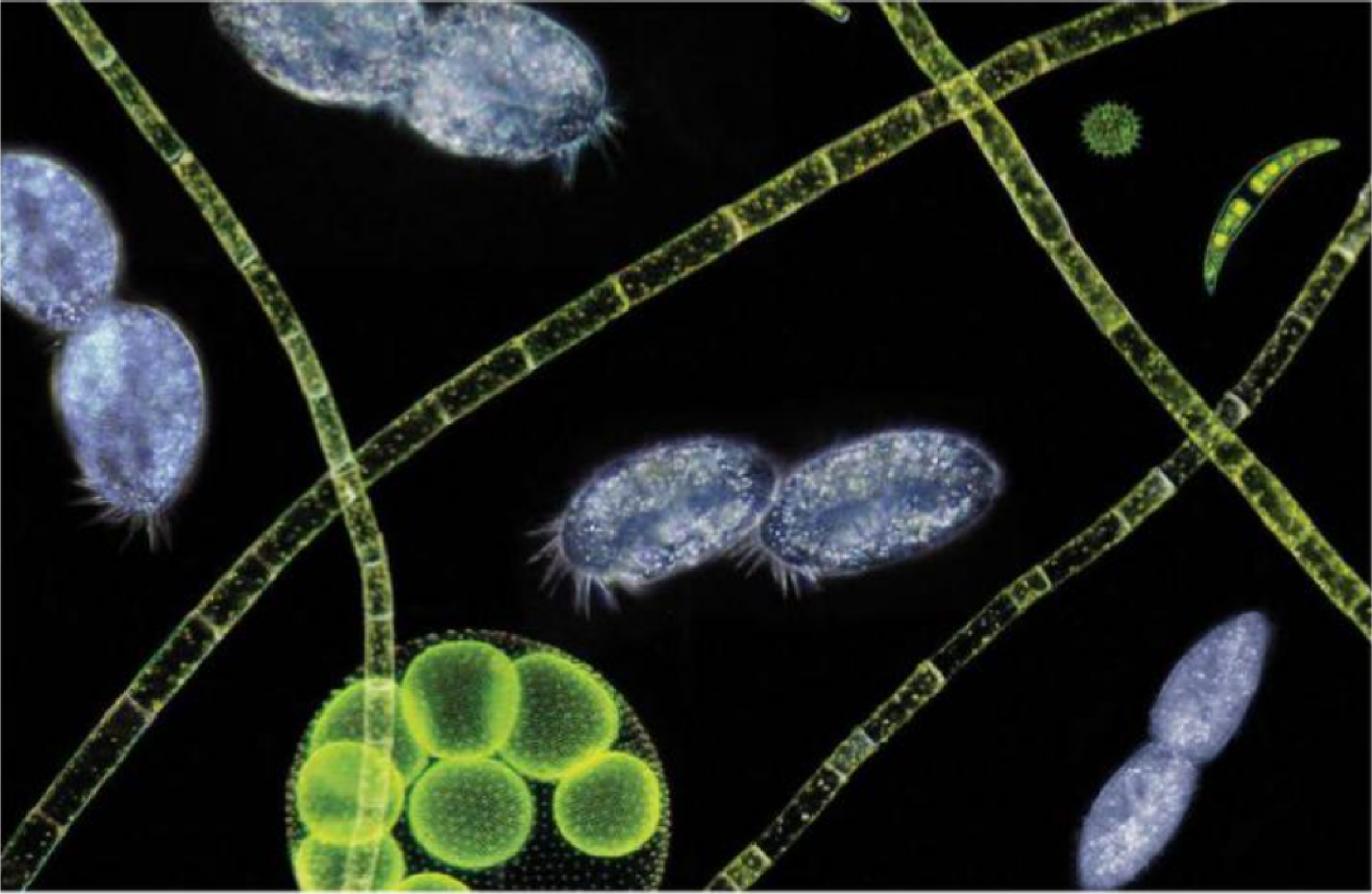
Some of these microorganisms have cells like animal cells, and some have cells like plant cells. Make a simple drawing of one of the microorganisms that has cells like animal cells.
Some of these microorganisms have cells like animal cells, and some have cells like plant cells. Make another simple drawing of one of the microorganisms that has cells like plant cells.
Some of these microorganisms have cells like animal cells, and some have cells like plant cells. Label your drawings to explain the differences between them.
The chicken that Arun ate for lunch ate wheat. Wheat is a plant. Draw a food chain showing how the energy passed from the Sun to Arun when he ate the chicken.
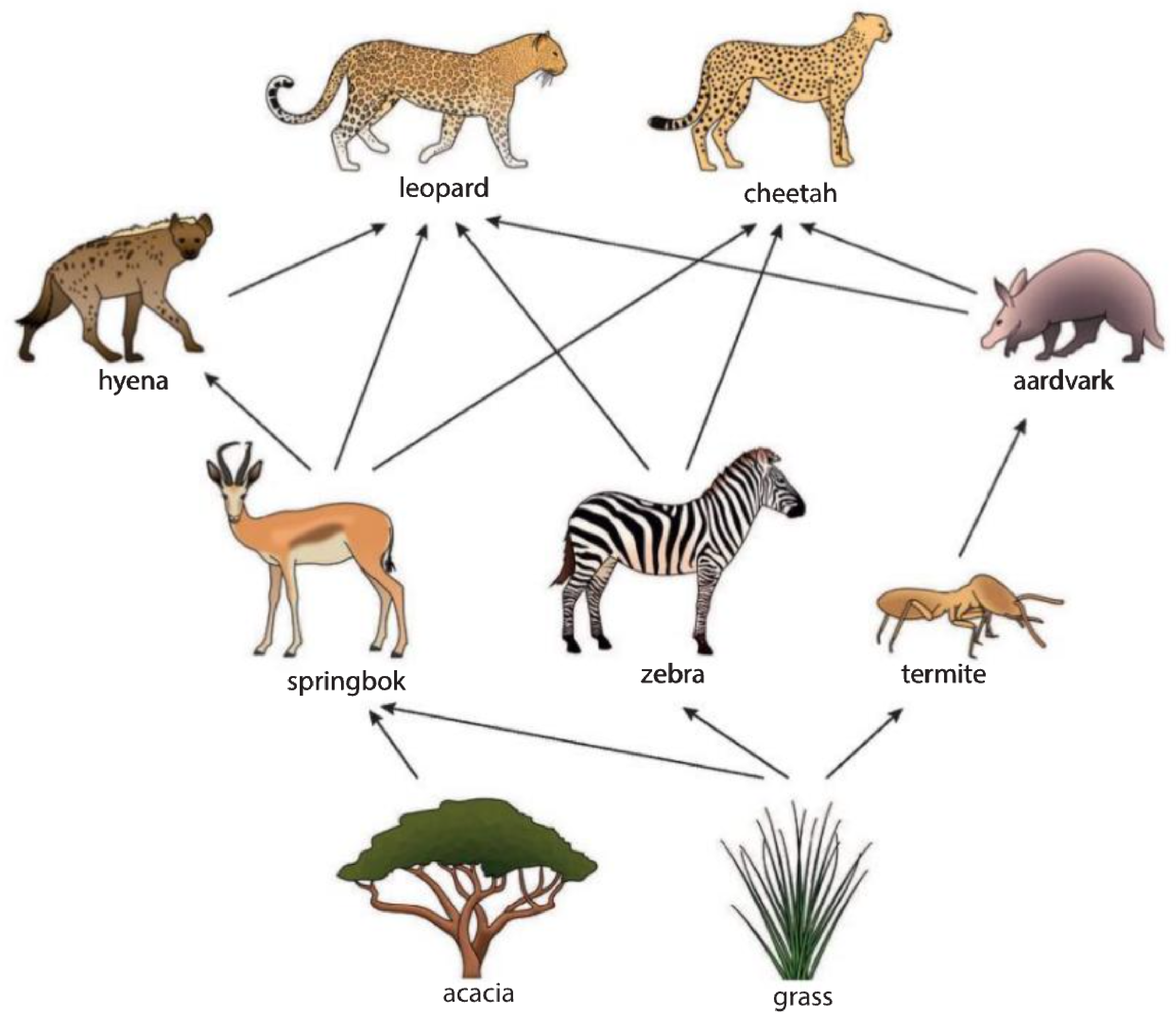
The two food chains already given are acacia tree → springbok → cheetah and grass → termite → aardvark → leopard. Write down two more food chains that you can find in the food web diagram.