You will need:
a darkened room, a powerful flashlight, a plane mirror, a sheet of white paper, a piece of black plastic or black paper, a pin, masking tape
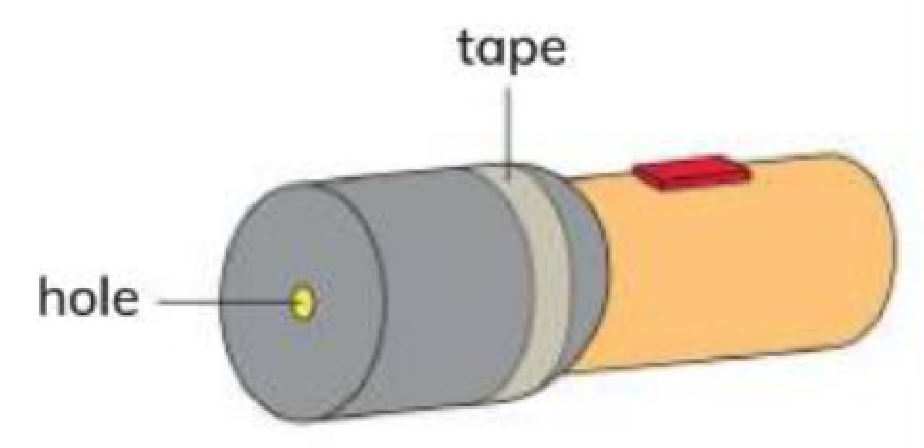
1 Make a small hole with a pin in the black plastic. Cover the flashlight glass with the black plastic so that the pin hole is in the middle of the flashlight glass. Secure with masking tape.
2 One person should hold the mirror (or you can fix the mirror to the wall).
3 Hold the white paper in front of the mirror, about 50 cm away from it. The mirror must be upright.
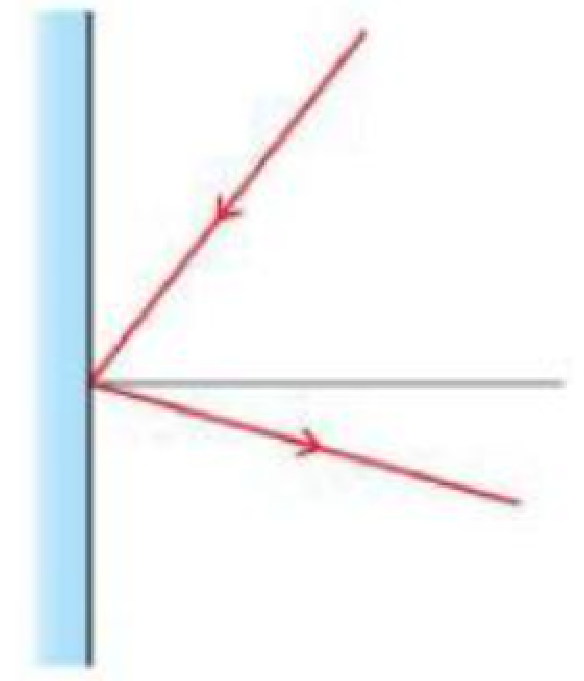
4 Shine your flashlight at the mirror. You will get a thin ray of light passing through the pin hole.
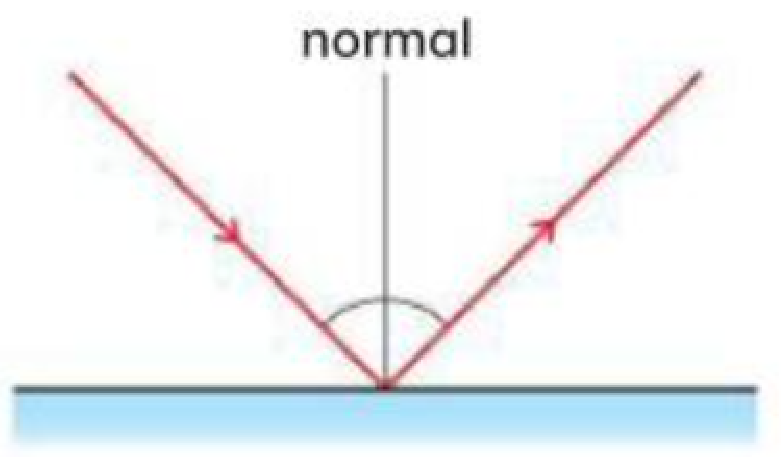
5 Observe the angle at which the ray of light from the flashlight reaches the mirror.
6 Observe the angle at which the light reflects off the mirror.
7 Observe the point at which the reflected light falls on the white paper.
8 Shine your flashlight at different angles from the mirror. Observe the rays of light that arrive at the mirror and reflect off the mirror onto the paper.
Draw the path of the ray of light you observed. Show the directions the light rays travelled with lines and arrows. Label the incident ray and the reflected ray.
You will need:
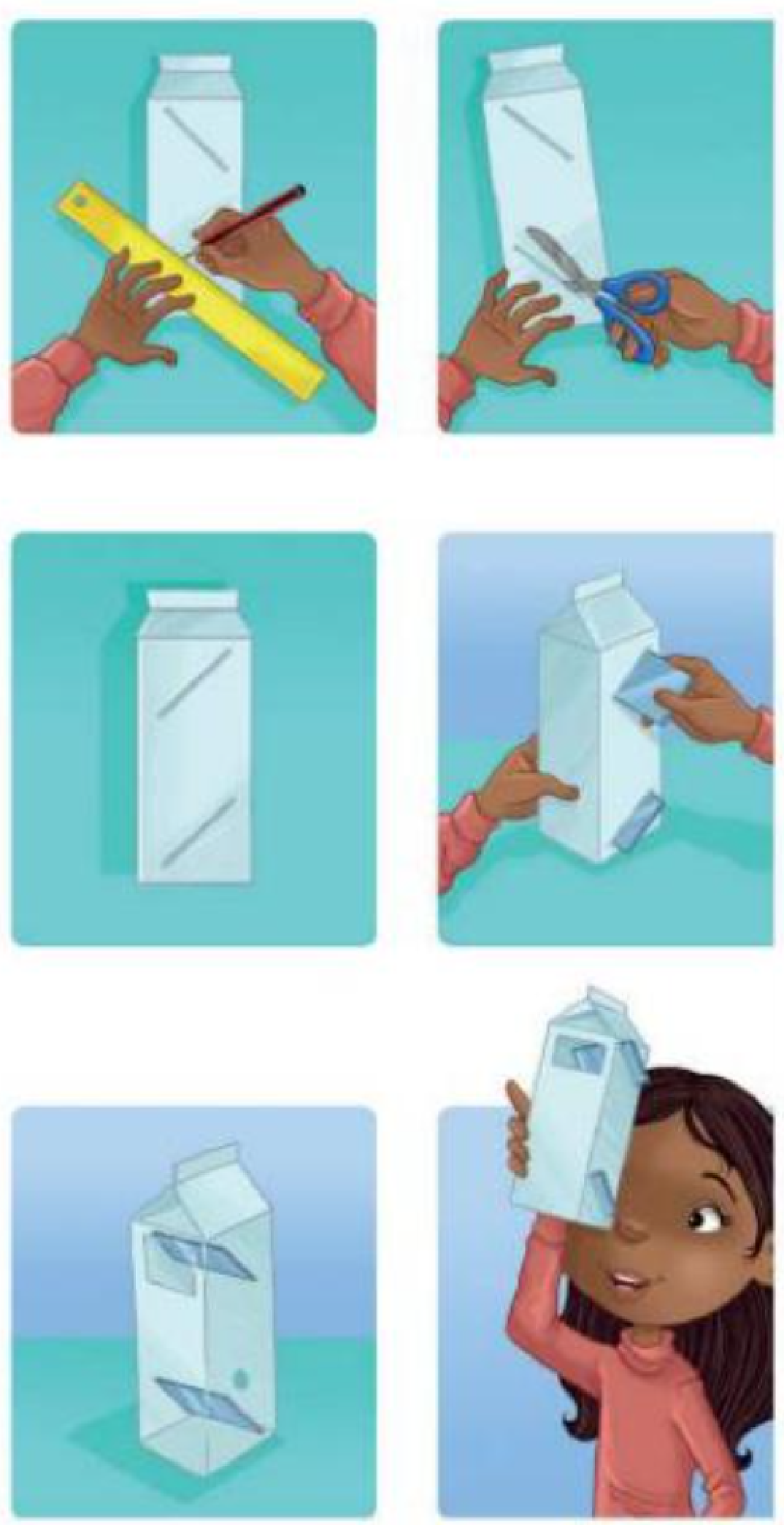
a tall box or carton, two small square plane mirrors, a pencil, a ruler, a protractor to measure the angles, scissors, tape
1 Draw a sloping line across the top half of the box at 45° to the horizontal. Draw another sloping line across the bottom half of the box at the same angle. Make the lines the same length as the mirrors.
2 Cut along the top line and the bottom line. Make each cut wide enough and long enough for the mirror to slide in.
3 Draw and cut slits on the opposite side of the box in line with the cuts you have already made.
4 Push a mirror through each pair of slits. The top mirror must have its reflecting surface facing down. The bottom mirror must have its reflecting surface facing up.
5 Cut a square window in front of the top mirror. This is so that light can enter and reach the top mirror.
6 On the other side of the carton cut a small hole in front of the bottom mirror. This one is your viewing window.
7 Test your periscope.