Skip to content / Đến nội dung
SachHeCam.com

Cambridge Primary (1-6). Stage 6. Science. Learner's Book - Unit 1: The human body

Question 1

The parts inside your body are called organs. The body organs do different jobs to keep you alive and healthy. Discuss these questions with a partner. Be prepared to share your ideas with the class.

Which organ is found in the head?

Question 2

The parts inside your body are called organs. The body organs do different jobs to keep you alive and healthy. Discuss these questions with a partner. Be prepared to share your ideas with the class.

Which organs are found in the chest?

Question 3

The parts inside your body are called organs. The body organs do different jobs to keep you alive and healthy. Discuss these questions with a partner. Be prepared to share your ideas with the class.

Which organ pumps blood around the body?

Question 4

The parts inside your body are called organs. The body organs do different jobs to keep you alive and healthy. Discuss these questions with a partner. Be prepared to share your ideas with the class.

Name two organs in the digestive system.

Question 5

Put your hand on your chest. Can you feel your heart beating? Why does your heart beat?

Make a fist with your hand. That’s how big your heart is.

Question 6

Why must the heart pump blood around the body?

Question 7

Look at the inside of your wrist. Sometimes you can see the blood vessels through your skin.

Question 9

The heart pumps blood around the body.

Why does it do this?

Question 11

Why does the heart pump blood to the lungs before it pumps blood to the rest of the body?

Question 12

Why do we need three different types of blood vessels?

Question 13

Describe to your partner the pathway of blood around the body. Make a cycle diagram to show this pathway.

Question 14

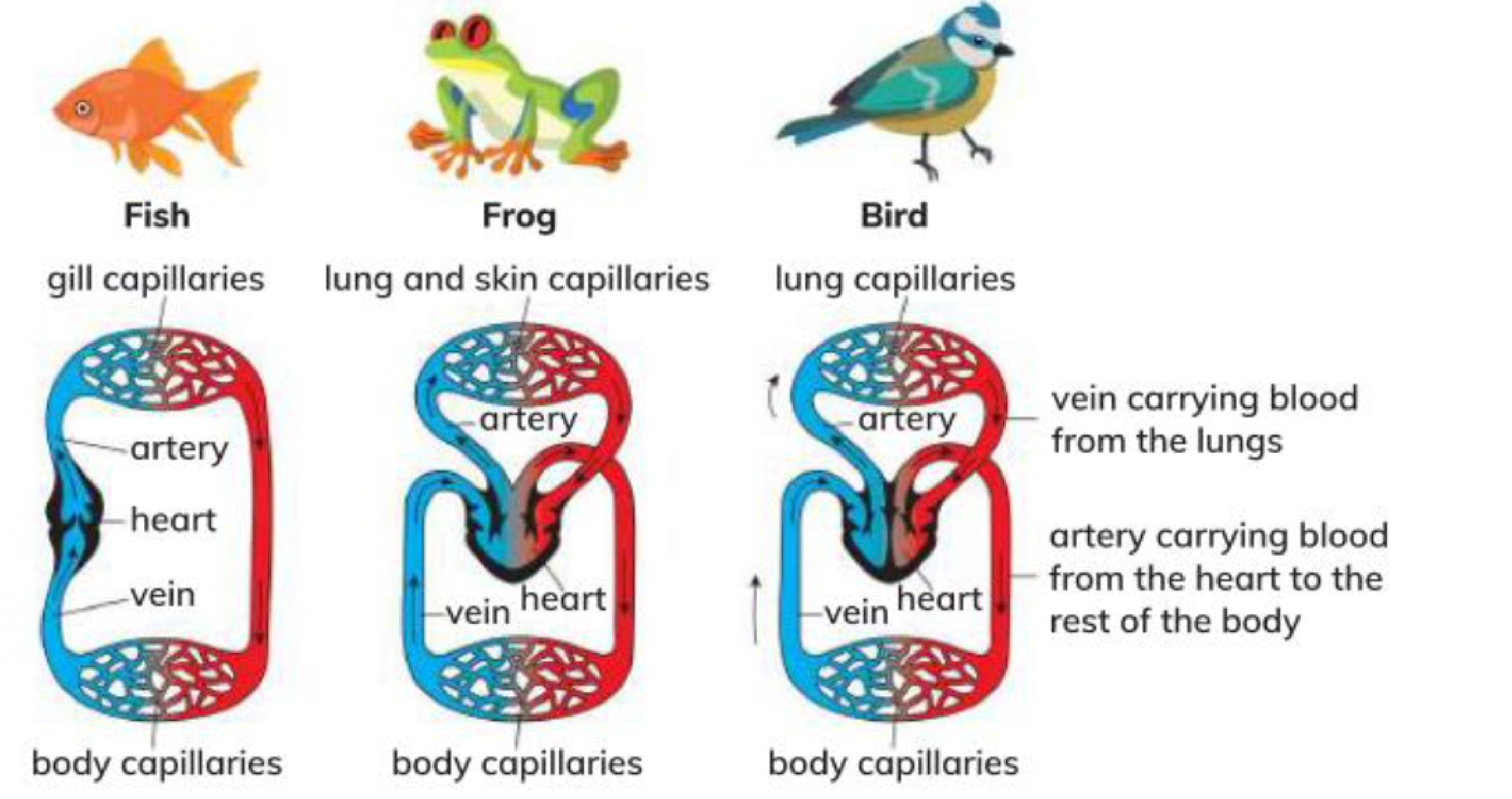
Work with a partner. Look at the drawings of the circulatory systems of different vertebrate animals, then discuss the questions.

Question illustration

Which parts of the animal circulatory systems are the same as the human circulatory system?

Question 15

Work with a partner. Look at the drawings of the circulatory systems of different vertebrate animals, then discuss the questions.

Question illustration

How are the animal circulatory systems different to the human circulatory system? Explain this to a partner.

Question 16

Measuring pulse rate

You will need: a watch or timer that can time seconds.

1 Find your pulse on your wrist or neck.
2 Count how many beats you feel in one minute. Repeat this three times.
3 Record the results in a table. Is the number of beats the same each time?
4 Compare your measurements with others in your class.

Question 17

What is the difference between heartbeat and pulse?

Question 18

Did everyone in your group have the same pulse rate? Why do you think this is?

Question 19

Work out your average pulse rate from the measurements you made.

Question 20

Which type of scientific enquiry did you use in the investigation?
0
0
GIỎ HÀNG
Empty CartGIỎ CHƯA CÓ GÌQUAY LẠI SHOP