Skip to content / Đến nội dung
SachHeCam.com

Cambridge Primary (1-6). Stage 5. Science. Learner's Book - Unit 3: States and properties of matter

Question 1

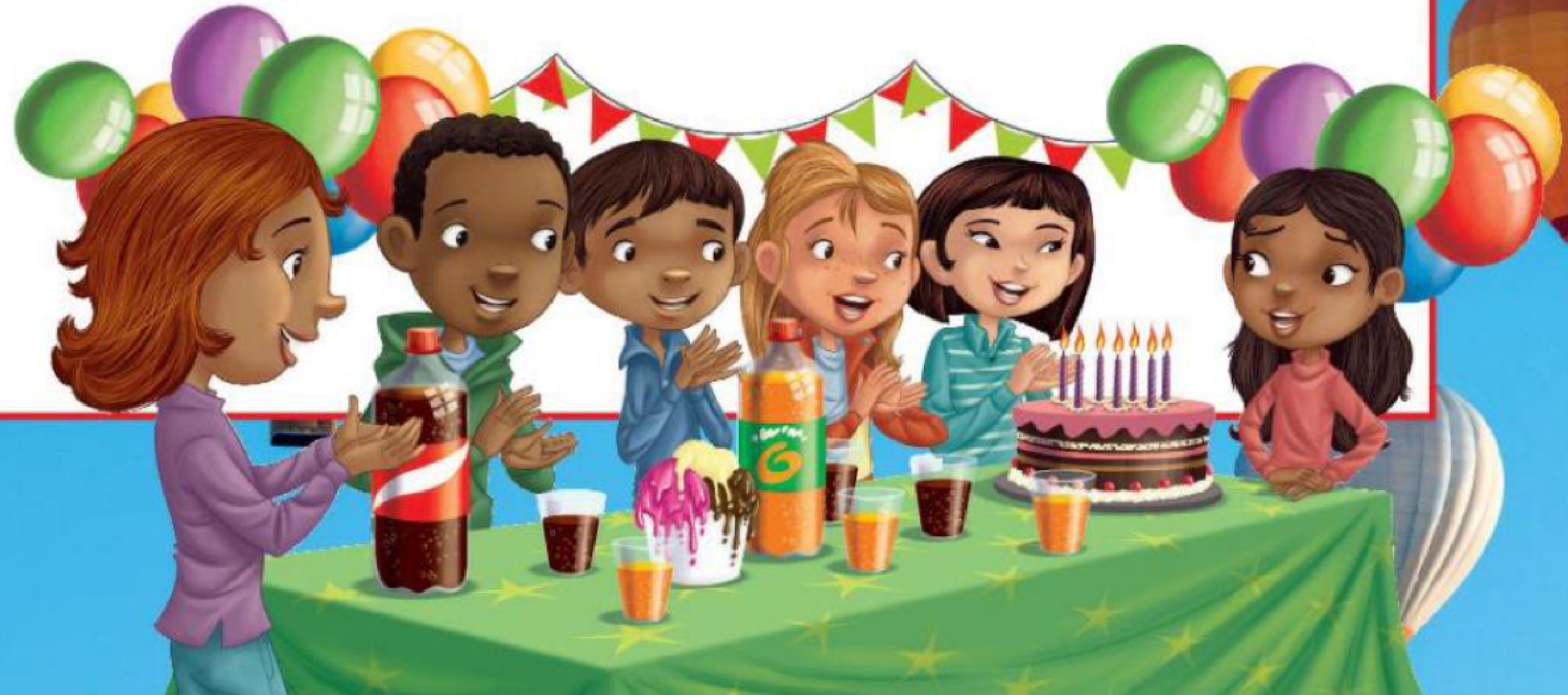
Look at the picture of Zara’s birthday party.

a Find all the solids, liquids, and gases shown in the picture.
b Write three lists, one for the solids, one for the liquids and one for the gases you observed in the picture.

Question illustration

Question 2

How did you decide if something was a solid, a liquid or a gas?

Question 3

You will need: a bowl of water and an empty plastic bottle, a balloon or paper bag.

Is the bottle really empty? Do you think there is anything inside the empty bottle?

Question 4

You will need: a bowl of water and an empty plastic bottle, a balloon or paper bag.

Hold the empty bottle under the surface of the water. Make sure the lid is off. What do you see? Say why you think this happened.

Question 5

You will need: a bowl of water and an empty plastic bottle, a balloon or paper bag.

Blow into the paper bag or balloon. What happens?

Question 6

You will need: a bowl of water and an empty plastic bottle, a balloon or paper bag.

What is inside the bag or balloon? How do you know?

Question 7

You will need: a bowl of water and an empty plastic bottle, a balloon or paper bag.

Talk about what you have learned about air from this activity.

Question 8

You will need: vinegar, bicarbonate of soda, a jar with a wide mouth, a spoon.

When we mix some materials, they react to make a gas. You are going to make carbon dioxide gas.
• Pour some vinegar into the jar.
• Put a teaspoon of bicarbonate of soda into the jar. Observe what happens.

What state of matter is vinegar?

Question 9

You will need: vinegar, bicarbonate of soda, a jar with a wide mouth, a spoon.

When we mix some materials, they react to make a gas. You are going to make carbon dioxide gas.
• Pour some vinegar into the jar.
• Put a teaspoon of bicarbonate of soda into the jar. Observe what happens.

What state of matter is bicarbonate of soda?

Question 10

You will need: vinegar, bicarbonate of soda, a jar with a wide mouth, a spoon.

When we mix some materials, they react to make a gas. You are going to make carbon dioxide gas.
• Pour some vinegar into the jar.
• Put a teaspoon of bicarbonate of soda into the jar. Observe what happens.

What state of matter is the new substance that forms?

Question 11

You will need: vinegar, bicarbonate of soda, a jar with a wide mouth, a spoon.

When we mix some materials, they react to make a gas. You are going to make carbon dioxide gas.
• Pour some vinegar into the jar.
• Put a teaspoon of bicarbonate of soda into the jar. Observe what happens.

Draw a picture to show what happened when the bicarbonate of soda mixed with the vinegar. Label the liquid and the gas.

Question 12

You will need: vinegar, bicarbonate of soda, a jar with a wide mouth, a spoon.

When we mix some materials, they react to make a gas. You are going to make carbon dioxide gas.
• Pour some vinegar into the jar.
• Put a teaspoon of bicarbonate of soda into the jar. Observe what happens.

Write a sentence to describe what happened when you mixed the bicarbonate of soda with the vinegar.

Question 13

Draw the particle model for each of these states of matter of water: water.

Question 14

Draw the particle model for each of these states of matter of water: water vapour.

Question 15

Draw the particle model for each of these states of matter of water: ice.

Question 16

In which state of matter are the particles very close together?

Question 17

In which state of matter are the particles very far apart?

Question 18

In which state of matter do the particles move fast in all directions?

Question 19

In which state of matter are the particles close together but not packed in a fixed pattern?

Question 20

What does the particle model show us about the structure of solids, liquids and gases?
0
0
GIỎ HÀNG
Empty CartGIỎ CHƯA CÓ GÌQUAY LẠI SHOP