Unit 2: Sound
- Tell a friend about something you know that makes a sound.
- Listen then point to something that makes a sound.
Count the sound sources in this picture.
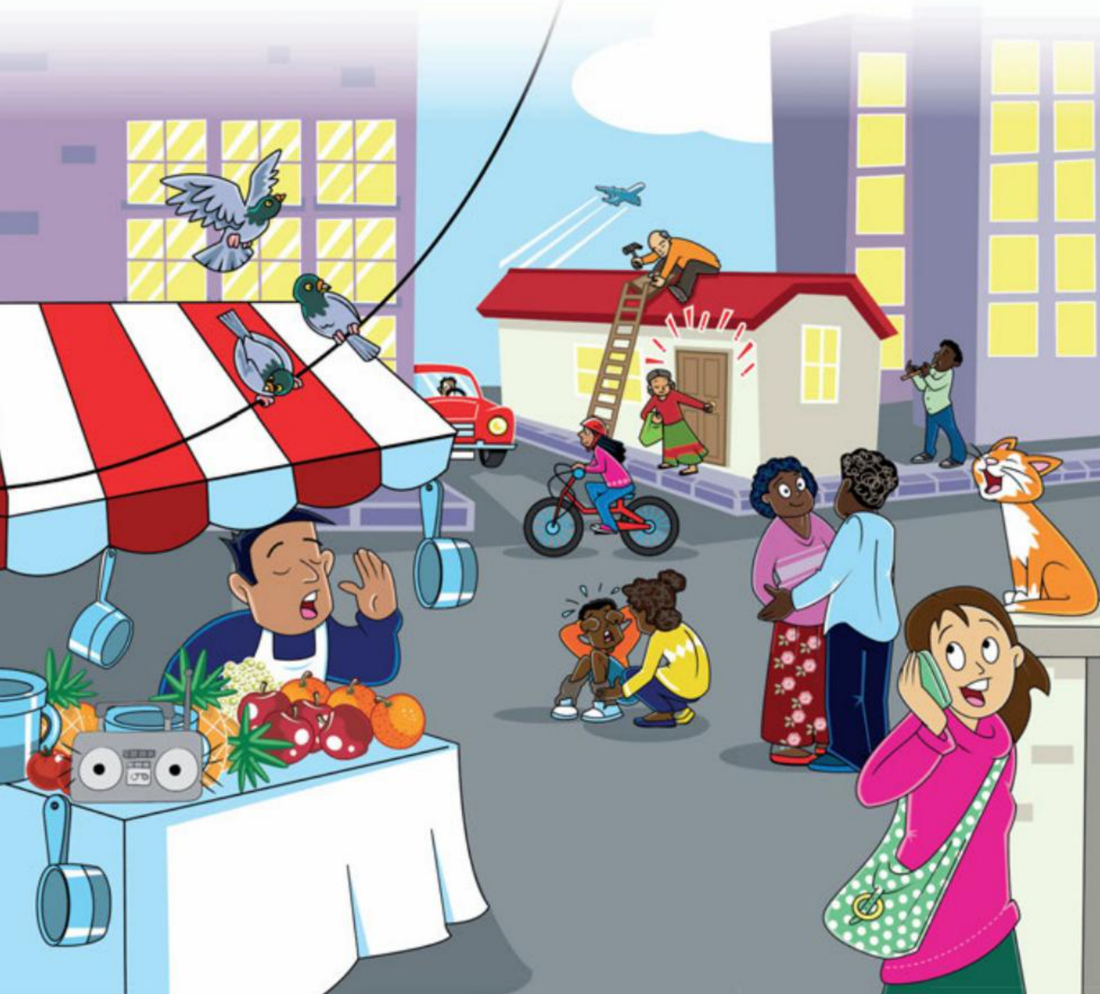
Name the sound sources that use electricity.
Walk around your school or classroom. What sound sources will you find?
Before the walk, make a list like this.
I predict that I will find ...
- a clock
After your walk, what did you find?
Make a list like this:
On our walk we found...
- a telephone
Did you find the things you predicted?
Which of the sound sources use electricity?
We will try to answer this question: 'Can a friend point to sounds you make?'
The children are investigating to see if Zara can point to the sound.
Talk to your friends about doing this investigation.
Plan which sound sources you will use.
Predict which things they can point to.
Write your prediction and results like this.
| Can a friend point to these sounds? | | |
|:-|:-|:-|
| **sound source** | **prediction** | **results** |
| clock | yes | yes |
| | | |
| | | |
| | | |
Do the investigation with your friends.
Which sounds were easy to find?
- Talk to a friend in a quiet voice.
- Now talk to a friend in a loud voice.
The children are playing instruments.
How can they play the instruments louder?
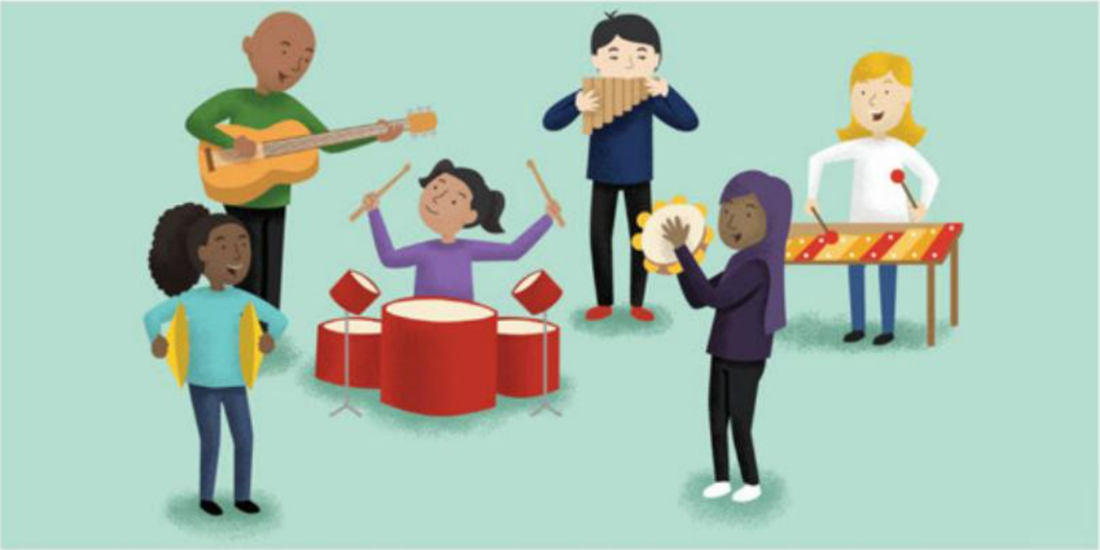
How can they play the instruments quieter?
Look at the picture. Marcus is using his sense of hearing.
He can hear loud and quiet sounds.
What are they?
We can put loud sounds together in a group.
We can put quiet sounds together in a group.
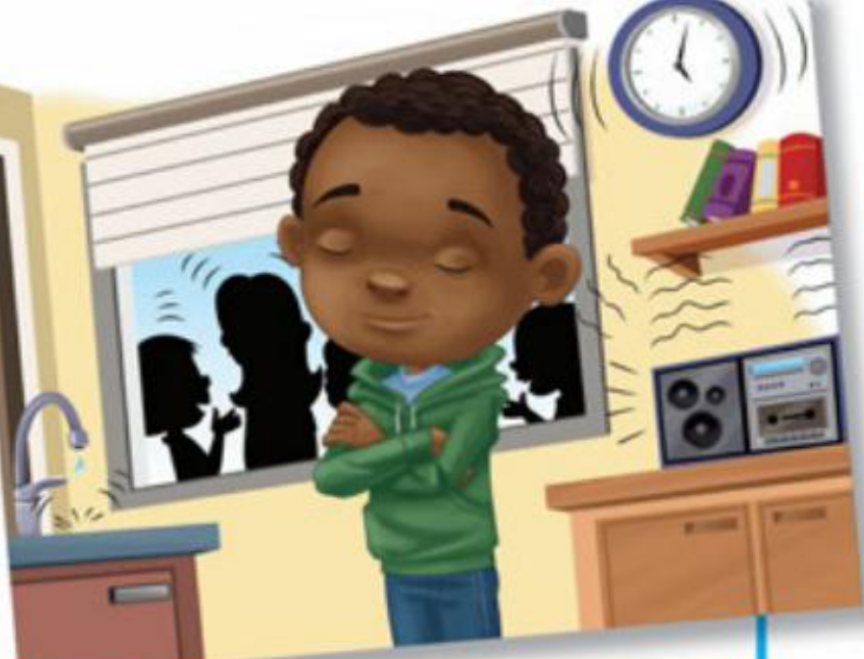
Record the loud and quiet sounds from the picture like this.
We record when we draw or write something.
Loud sounds: speaker, aeroplane, radio
Quiet sounds: tap
Then record some sounds you can hear around you.
Ume is covering her ears.
Listen to a sound.
Now cover your ears with your hands.
What can you hear this time?
Listen to another sound.
Now put your hand by your ear.
Does it change what you hear?
How do your hands make things sound quieter and louder?
Arun makes big card ears to see if it helps him to hear very quiet sounds.
Make some big ears and test them with your friends.
Plan which quiet sounds you will listen to.
Predict if these quiet sounds will be louder when you use the ears.
Record your results in a table like this.
| Sound source | Prediction | It was the same | It was louder |
|:-|:-|:-:|:-:|
| clock | it will be louder | | ✓ |
| | | | |
| | | | |
Record your results.
Were your predictions right?
Why do the big card ears make the sounds louder?
Draw two things that make a quiet sound.
Now draw two things that make a loud sound.
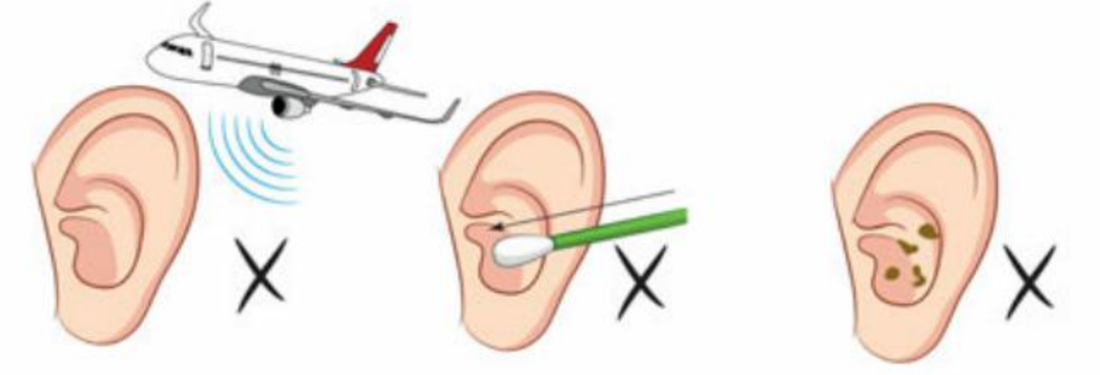
You need to take good care of our ears.
Make sure you:
- don't listen to very loud sounds
- don't stick things into your ears
- keep your ears clean.
Work with a friend. Make a poster to tell all your friends how to take care of their ears.