Cambridge Primary (1-6). Stage 2. Mathematics. Workbook - Unit 10: Calculating
Calculate: 32+26, 41+35, 23+34, 57+21, 43+14, 23+24.
Solve 38−25 and 46−12. Show the tens and ones steps.
Use a 100 square to find 27+12 and 33+24.
Find the differences: 34 and 21; 67 and 46.
Choose one number from {26, 44, 16, 35} and one from {52, 23, 31, 42}; add them. Do this three times and explain.
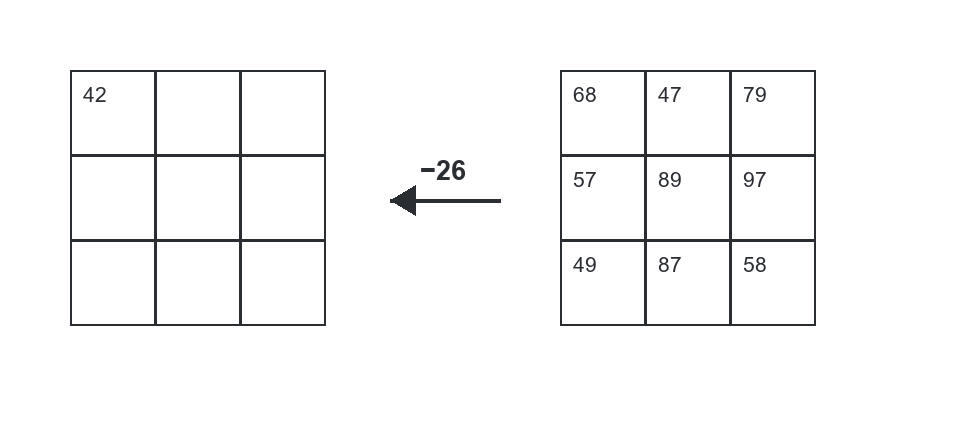
Complete the left grid by subtracting 26 from each number in the matching cell of the right grid.
Tick equivalent facts and correct the others: 53+24=54+25; 63+25=53+35; 85−33=95−23; 37−12=39−14.
Two numbers differ by 23. One number is 74. What could the other be?
Use digits 1,2,3,4,5 once to make two 2-digit numbers. Find the smallest and greatest possible totals.
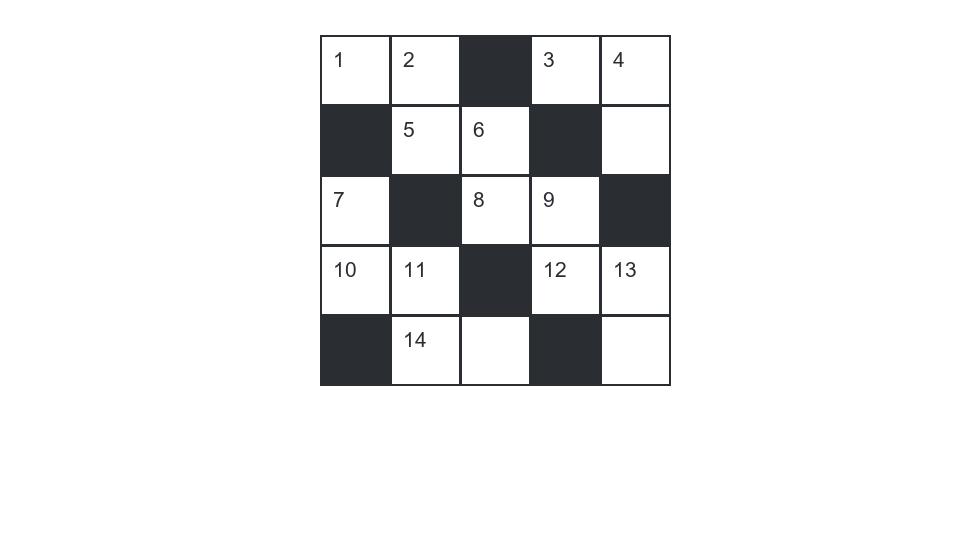
Complete the number puzzle. Across: 1)42+33, 3)99−42, 5)18+21, 8)79−31, 10)85−22, 12)88−14, 14)79−55. Down: 2)87−34, 4)97−26, 6)51+43, 7)88−22, 9)44+43, 11)77−45, 13)84−43.
Write the inverse for: 7+3=10; 13+5=18; 32+17=49; 8−6=2; 19−12=7; 28−15=13.
Write two different additions totalling 20 and their inverses.
Write the full fact family for whole 6 and parts 5 and 1.
Use inverses to check: 27−12=15, 11+23=34, 87−35=52, 32+64=96.
Find the missing digits: 3_+24=57; 49−_7=22; 76−42=3_; 65+1_=79.
Complete the fact-family houses for 13,7,20 and 15,13,28.
From 50+40=90, write the four related subtraction equalities.
Estimate, solve and check 54+35 and 77−44.
Find the missing digits: 5_+45=98; 47−3_=14; 86−61=2_; 42+_3=95.
Why does 30+30=60 have only two related subtraction equalities?
