Cambridge Primary (1-6). Stage 2. Mathematics. Workbook - Unit 5: Working with numbers to 100
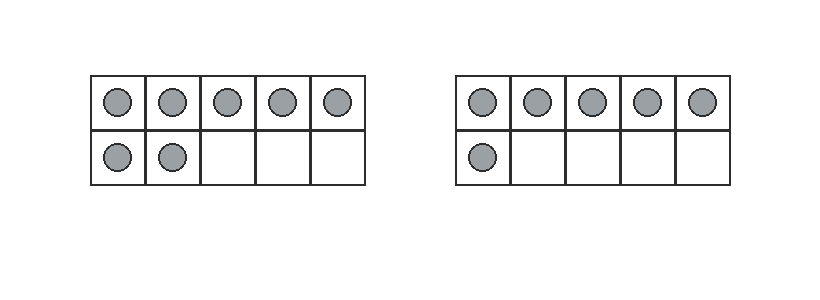
How many counters are there in each arrangement?
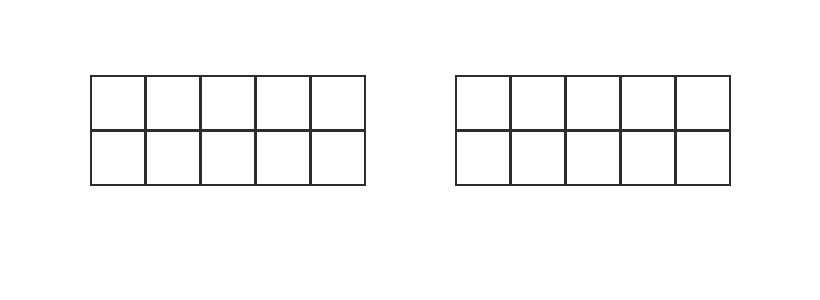
Draw two different arrangements for 5 on ten frames.
Find the totals.
- 25 + 4 = ___
- 42 + 5 = ___
- 51 + 7 = ___
- 33 + 6 = ___
Find the totals.
- 28 + 10 = ___
- 32 + 10 = ___
- 54 + 20 = ___
- 41 + 20 = ___
Complete the column calculation: 35 + 20.
Find each total: 5+5+5; 6+5+4; 8+4+2.
Find the totals.
- 64 + 5 = ___
- 31 + 8 = ___
- 84 + 3 = ___
- 92 + 6 = ___
Find the totals.
- 89 + 10 = ___
- 26 + 20 = ___
- 68 + 20 = ___
- 77 + 10 = ___
Use 8 + 2 = 10 to write two complements of 20 and one complement of 100.
Use number bonds for 6 to write four complements of 60 using tens.
Find: 3+6+7; 0+7+10; 1+5+8; 2+9+5.
Find the totals.
- 58 + 20 = ___
- 62 + 7 = ___
- 46 + 20 = ___
- 83 + 6 = ___
- 55 + 30 = ___
- 71 + 8 = ___
Sofia writes 4+6=10 and 40+60=100. Which complement of 20 helps her?
Write five tens-number sentences that total 90.
Find six totals. Look for complements or near complements of 10.
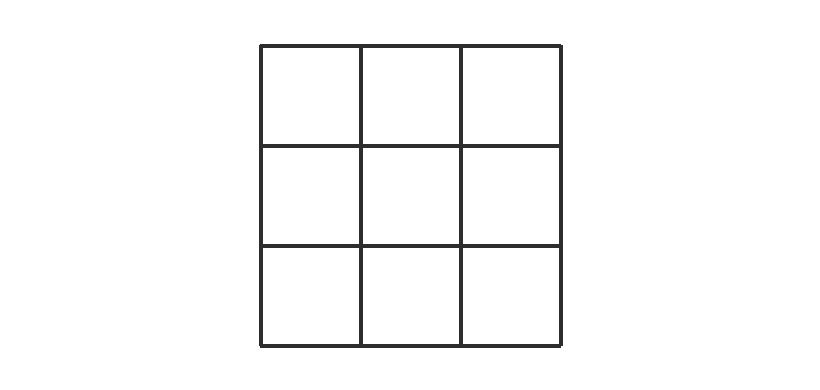
Place 1–9 in the square so every row, column and diagonal totals 15.
Find the missing numbers.
- 39 − 8 = ___
- 48 − 5 = ___
- 77 − 5 = ___
- 59 − 7 = ___
Find the missing numbers.
- 24 − 10 = ___
- 41 − 10 = ___
- 52 − 20 = ___
- 38 − 20 = ___
Choose add or subtract and solve: 6 ducks and 22 ducklings; 37 elephants including 5 calves.
Which calculation has a different answer: 27−3, 14+10, 34−10, 29−4?
