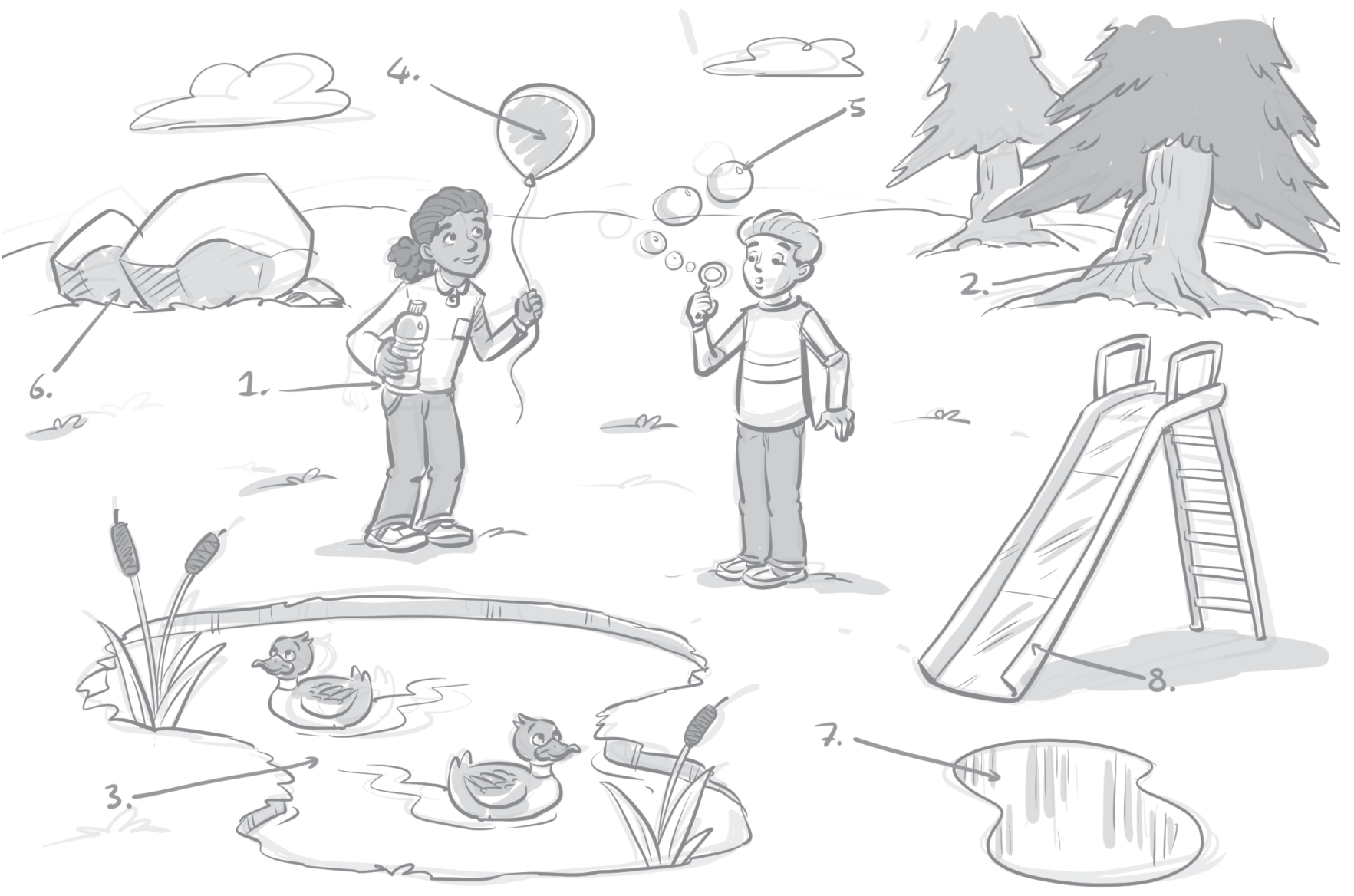
Cambridge Primary (1-6). Stage 3. Science. Workbook - Unit 2: Mixing materials Next → Label the things in the picture as solid, a liquid or gas.
Sort these materials into solid, liquid and gas groups. Add another material to each group.
Use these words to finish the sentence: liquid; solid.
liquid
solid
Use these words to finish the sentence: liquid; solid.
liquid
solid
Use these words to finish the sentence: liquid; carbon dioxide; solid; gases; oxygen; nitrogen.
liquid
carbon dioxide
solid
gases
oxygen
nitrogen
Use these words to finish the sentence: liquid; carbon dioxide; solid; gases; oxygen; nitrogen.
liquid
carbon dioxide
solid
gases
oxygen
nitrogen
Use these words to finish the sentence: liquid; carbon dioxide; solid; gases; oxygen; nitrogen.
liquid
carbon dioxide
solid
gases
oxygen
nitrogen
Use these words to finish the sentence: liquid; carbon dioxide; solid; gases; oxygen; nitrogen.
liquid
carbon dioxide
solid
gases
oxygen
nitrogen
Use these words to finish the sentence: liquid; carbon dioxide; solid; gases; oxygen; nitrogen.
liquid
carbon dioxide
solid
gases
oxygen
nitrogen
Use these words to finish the sentence: liquid; carbon dioxide; solid; gases; oxygen; nitrogen.
liquid
carbon dioxide
solid
gases
oxygen
nitrogen
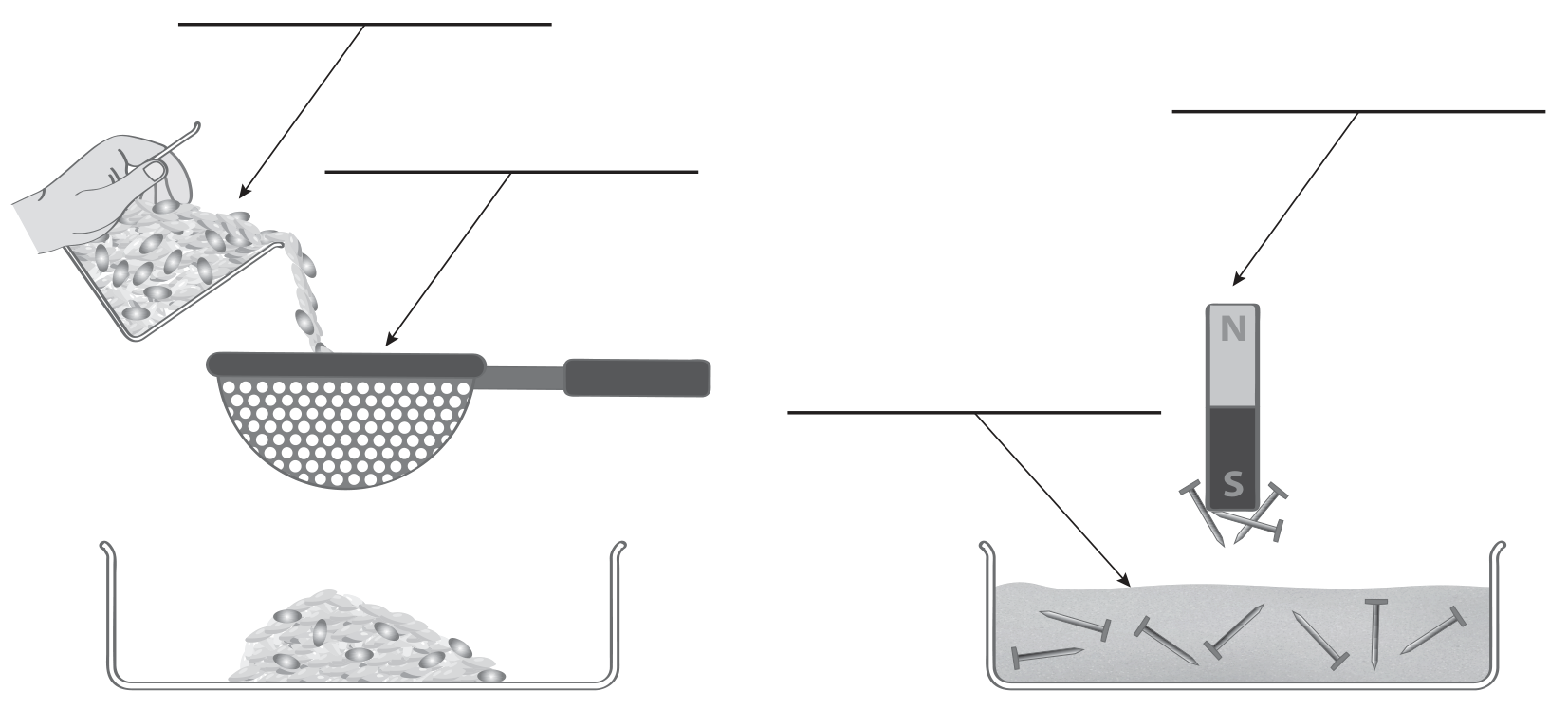
Label these diagrams. Use these words: sieve; mixture; magnet; mixture.
Fill in the missing words. Use these words: sieve; magnet; separate; separate.
Fill in the missing words. Use these words: sieve; magnet; separate; separate.
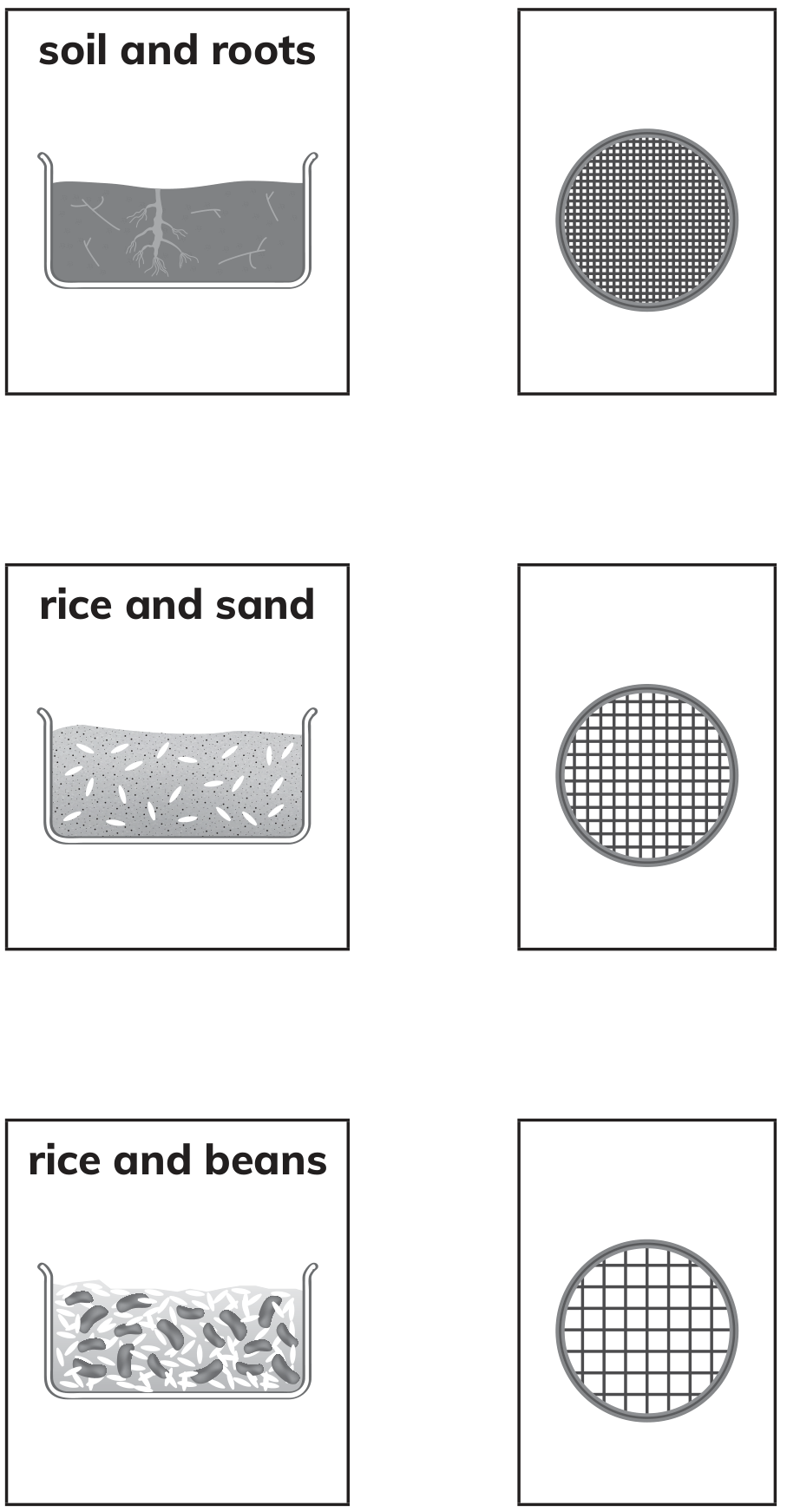
Draw lines to match each mixture to the sieve that can be used to separate it.
Finish each sentence. For the top, fine sieve, after matching the mixture of rice and sand:
Finish each sentence. For the middle sieve, after matching the mixture of rice and beans:
Finish each sentence. For the bottom, coarse sieve, after matching the mixture of soil and roots:
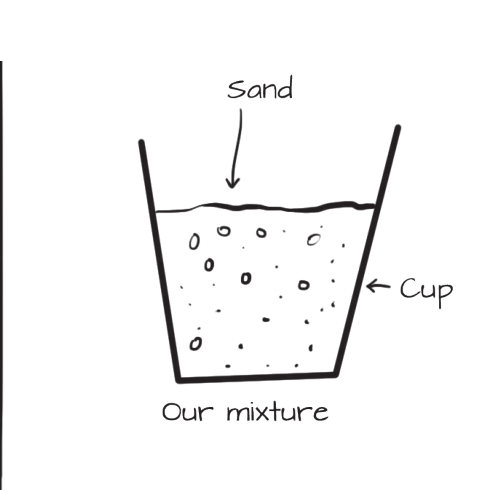
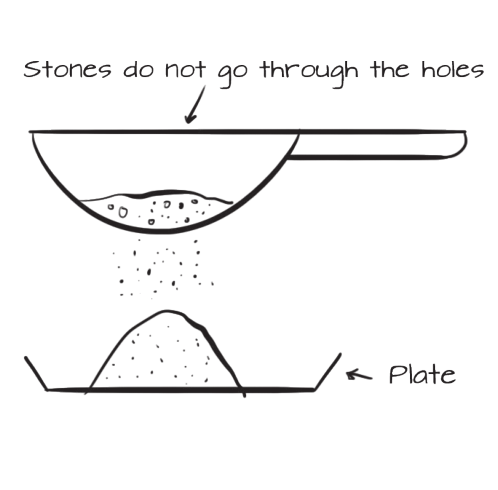
Zara has drawn two diagrams to show how she separated a mixture of sand and rocks. Look at Zara’s diagrams. She has made some mistakes. She has not labelled all the equipment and all the materials in each diagram. Some of her diagram is not neat.
What mistake has she made in diagram 1?
Zara has drawn two diagrams to show how she separated a mixture of sand and rocks. Look at Zara’s diagrams. She has made some mistakes. She has not labelled all the equipment and all the materials in each diagram. Some of her diagram is not neat.
What three mistakes has she made in diagram 2?
Add the missing words to these sentences. Use these words: transparent · dissolve · soluble · insoluble · insoluble.
transparent
dissolve
soluble
insoluble
Next →