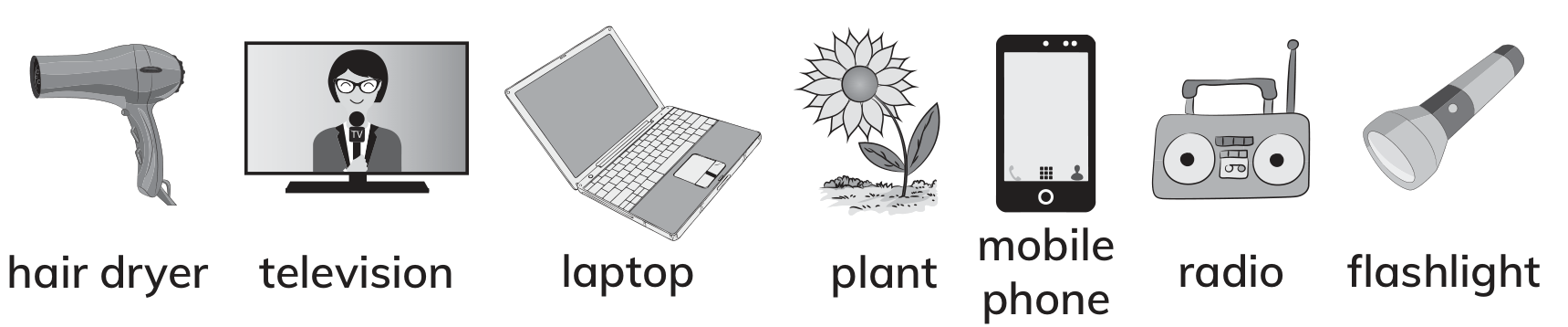
Electricity is very useful. Electricity makes lots of things work.
Look at the pictures. Do these things use electricity? Fill in the table below with a ✓ or ✗.
Some electrical appliances use mains electricity, some use cells. Some can work on cells and mains.
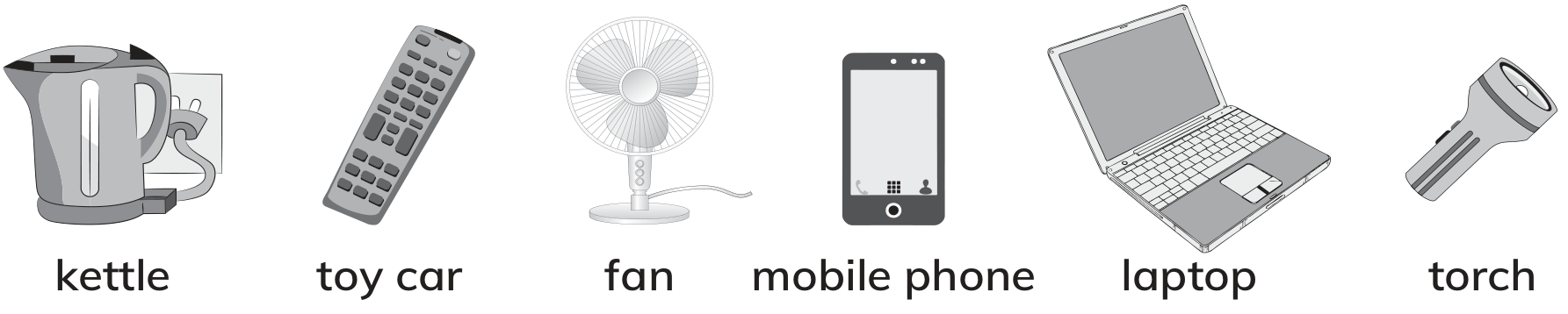
Do these electrical appliances use cells or mains?
Kettle, toy car, fan, mobile phone, laptop, torch.
Some electrical appliances use mains electricity, some use cells. Some can work on cells and mains.
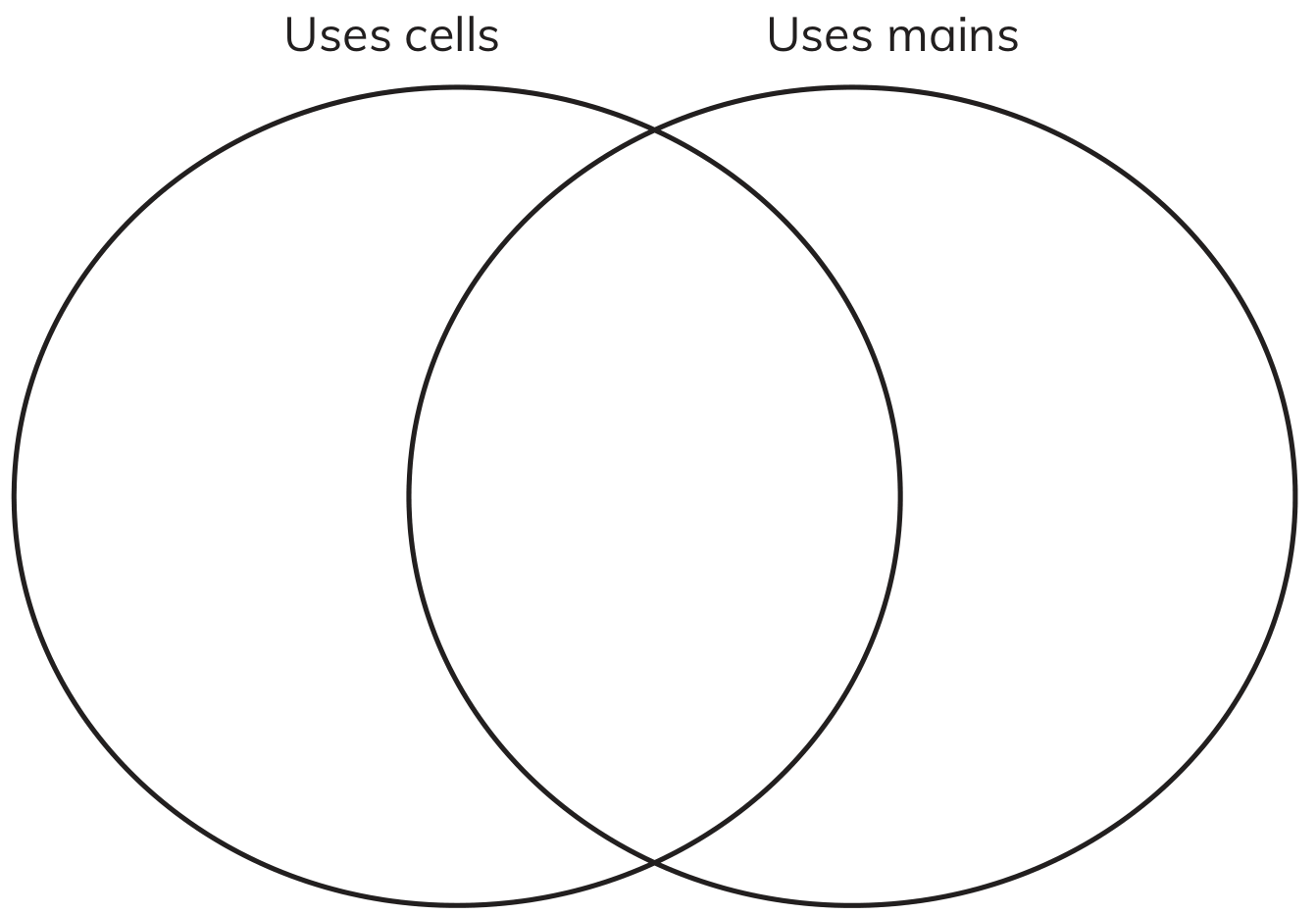
Draw and write the name of each appliance in the diagram.
Appliances: kettle, toy car, fan, mobile phone, laptop, torch. Draw two overlapping circles labelled “Uses cells” and “Uses mains”; the overlap is for both.
We use electric lights in our schools and homes. The electric light bulb was invented by Thomas Edison. Edison tried 1600 different materials inside the electric light bulb to make it work. Some materials were bright and others were not. Some materials lasted longer than others.
Look at the table and answer the question.
| Material | Bright? | How long did it last? |
|:-|:-:|:-|
| Cotton | yes | 8 seconds |
| Wool | no | 0 seconds |
| Hair | yes | 2 seconds |
| Coconut string | yes | 12 seconds |
| Wood | yes | 8 seconds |
| Paper | yes | 6 seconds |
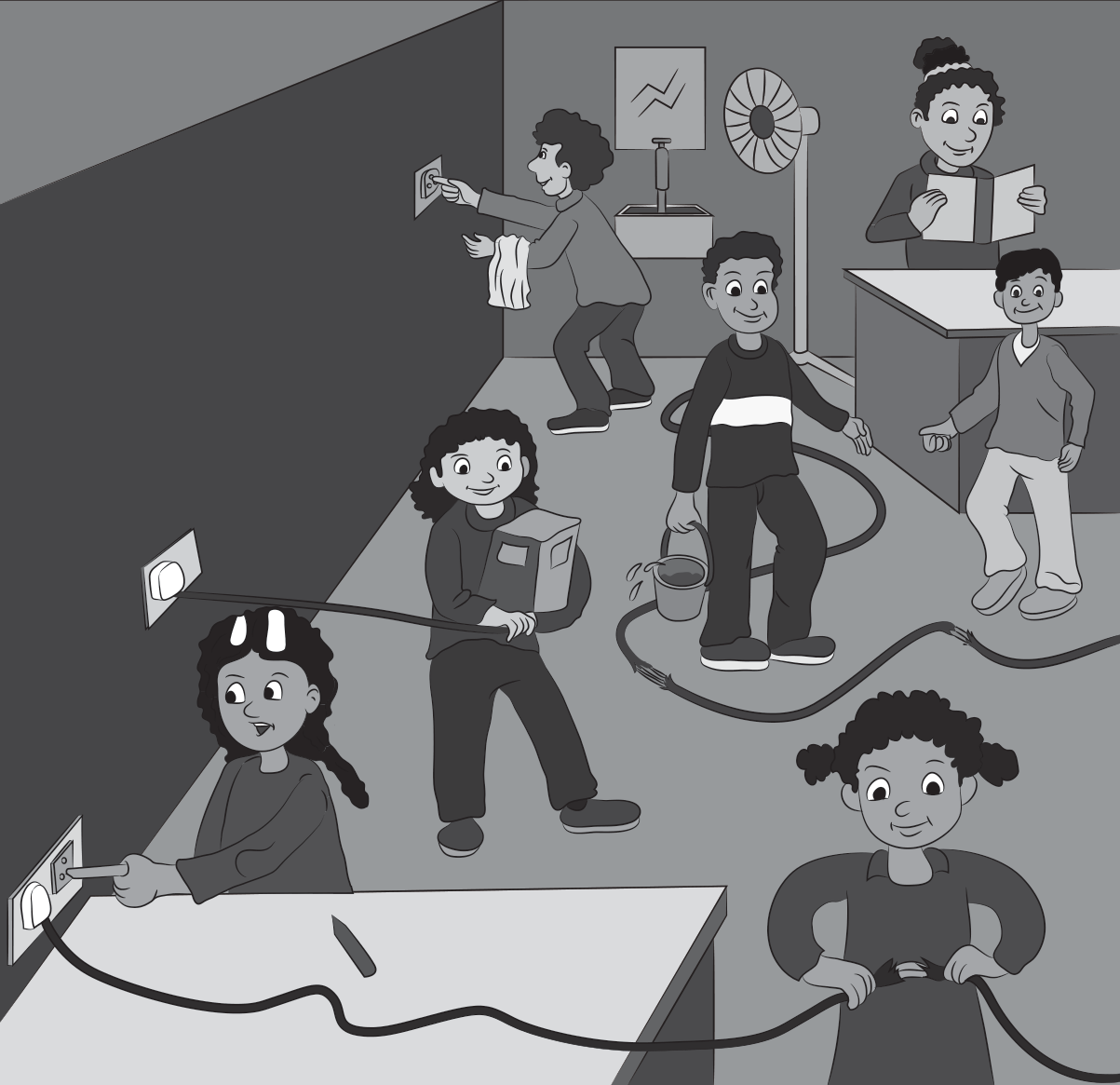
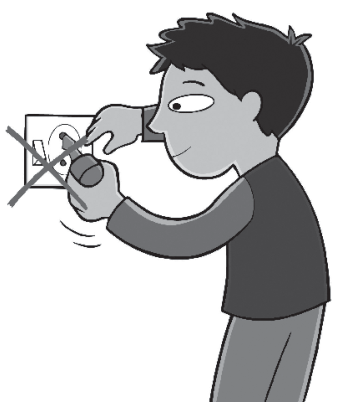
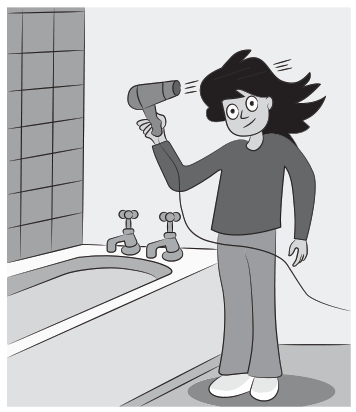
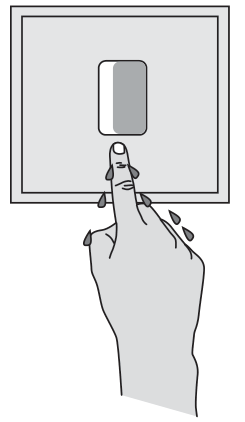
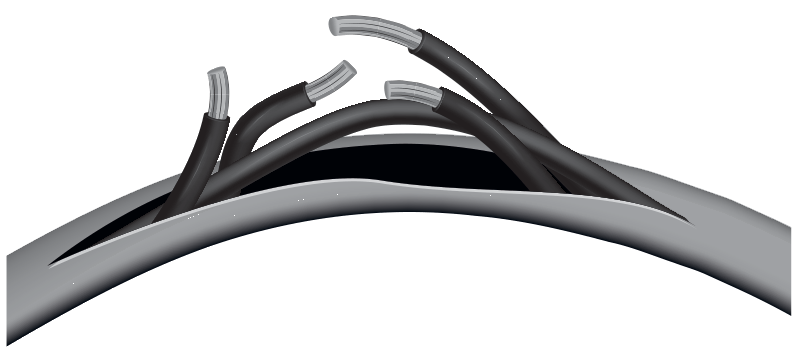
We all need to take care around electricity and electrical appliances.
Look at these pictures and explain the danger. Complete the table: Picture | The danger is. The pictures are in order from top to bottom.
Electricity is safe if you follow the rules. These children are talking about electrical appliances. One says, “Water is not always dangerous near mains appliances.” Another says, “Children can touch mains wall sockets.” A third says, “This radio still works, it must be safe.” The picture shows a radio near water and a damaged lead.
Read what they say and then answer the question.
Why should children never touch a mains wall socket?
Electricity is safe if you follow the rules. These children are talking about electrical appliances. One says, “Water is not always dangerous near mains appliances.” Another says, “Children can touch mains wall sockets.” A third says, “This radio still works, it must be safe.” The picture shows a radio near water and a damaged lead.
Read what they say and then answer the question.
Why should you never use a broken mains appliance?
Electricity is safe if you follow the rules. These children are talking about electrical appliances. One says, “Water is not always dangerous near mains appliances.” Another says, “Children can touch mains wall sockets.” A third says, “This radio still works, it must be safe.” The picture shows a radio near water and a damaged lead.
Read what they say and then answer the question.
Write on the picture to show what Sofia has to say about electrical safety. Complete Sofia’s speech bubble.