Cambridge Primary (1-6). Stage 2. Science. Workbook - Unit 3: Getting materials right Next → Are these objects made from natural materials? Are they made from materials that have been made by people? Draw lines to show if the materials are natural or made.
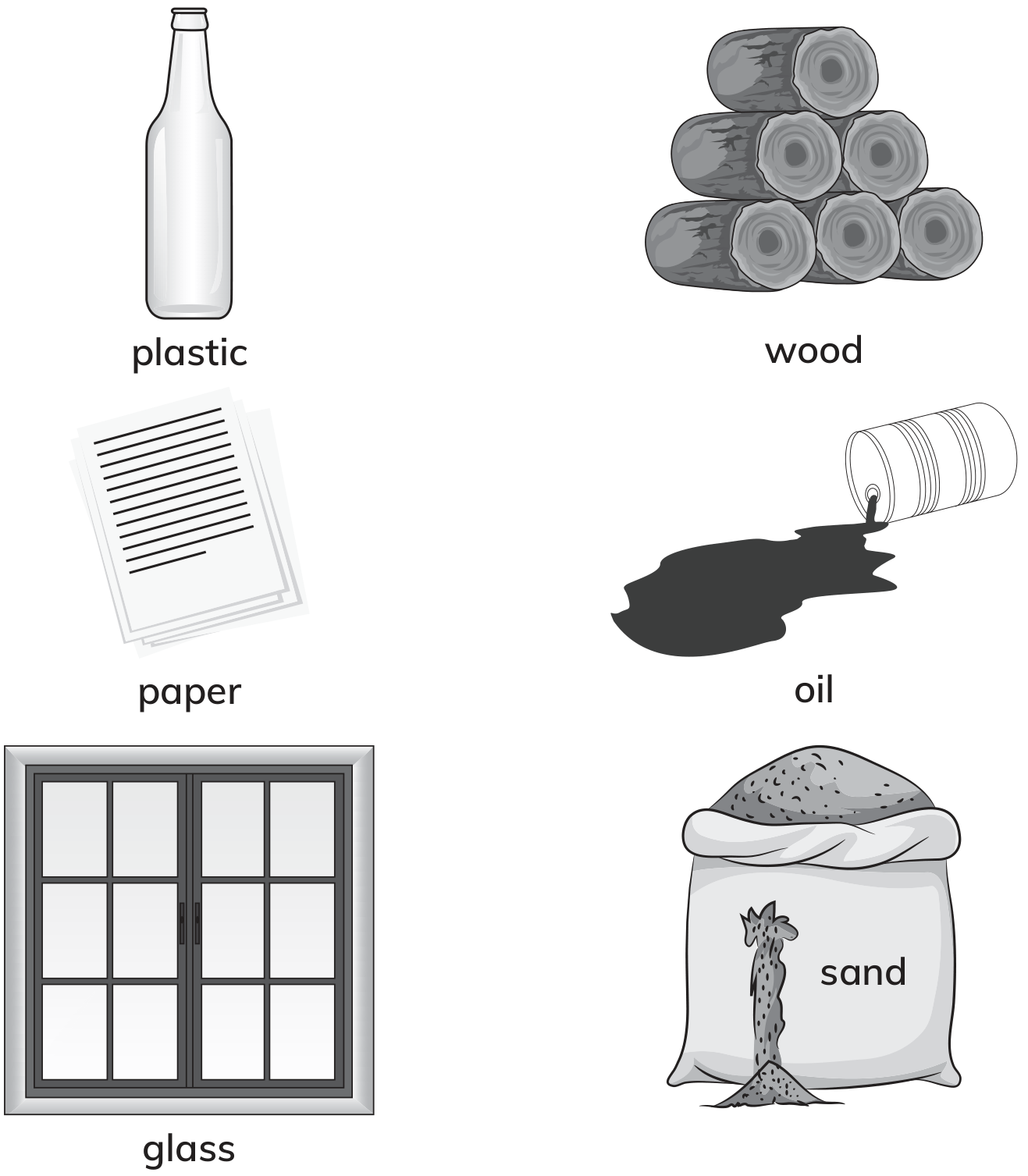
Match these made materials to the natural materials they are made from.
Made materials: plastic, paper, glass.
Natural materials: wood, oil, sand.
Now finish the sentences.
Now finish the sentences.
Now finish the sentences.
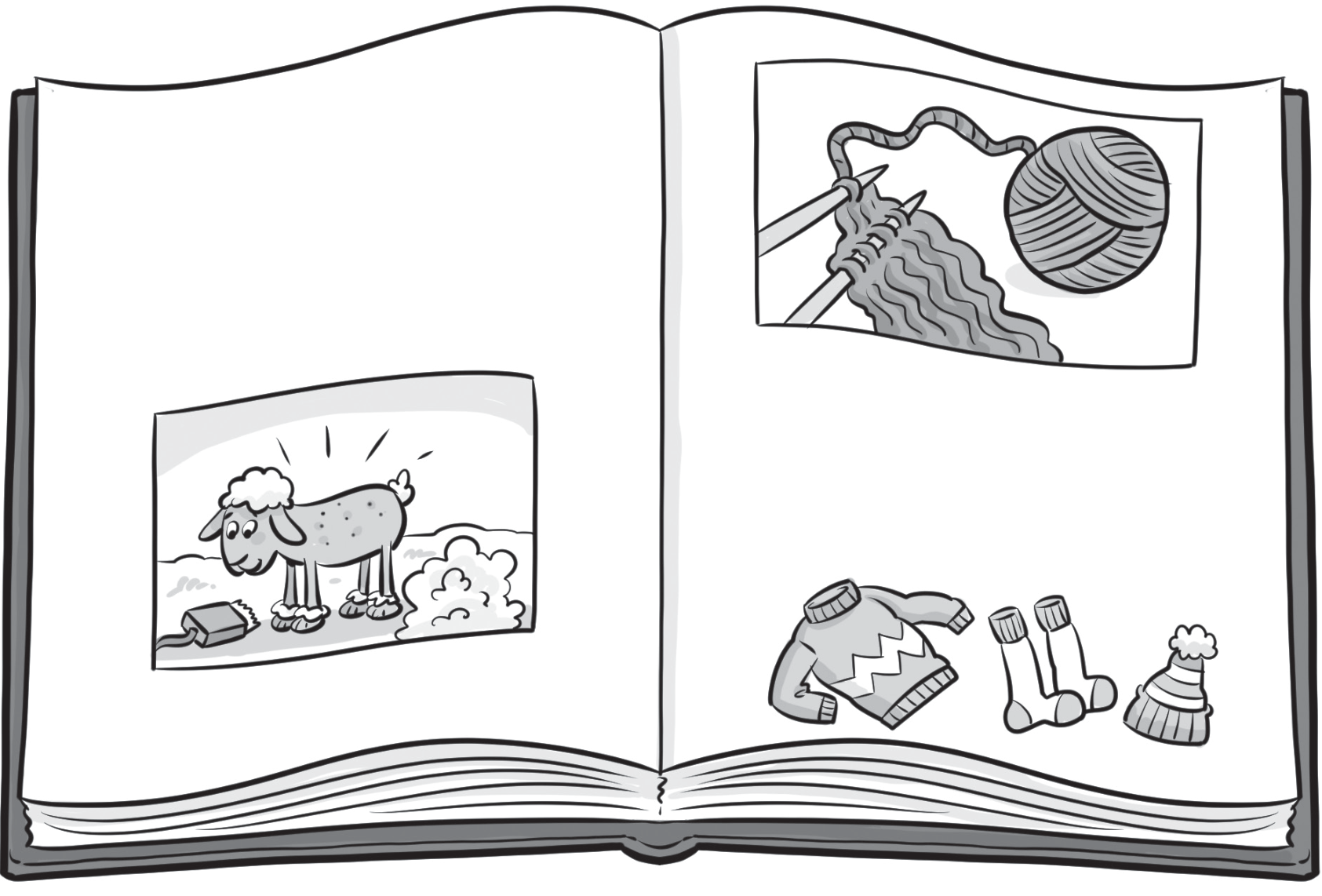
Read this information about wool.
Where does wool come from?
Read this information about wool.
What is wool used for?
Read this information about wool.
Is wool a natural or a made material?
natural
made
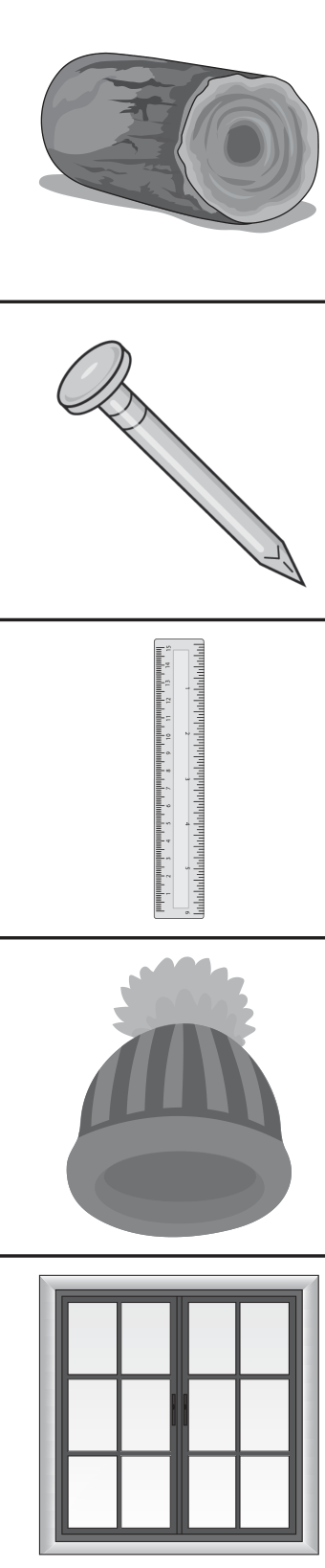
Match the object to the material and the characteristics.
Objects: log, nail, ruler, hat, window pane.
Materials: plastic, metal, wood, glass, fabric.
Characteristics: rough, strong; smooth, flexible; strong, shiny; soft, flexible; waterproof, smooth.
The example shows log → wood → rough, strong.
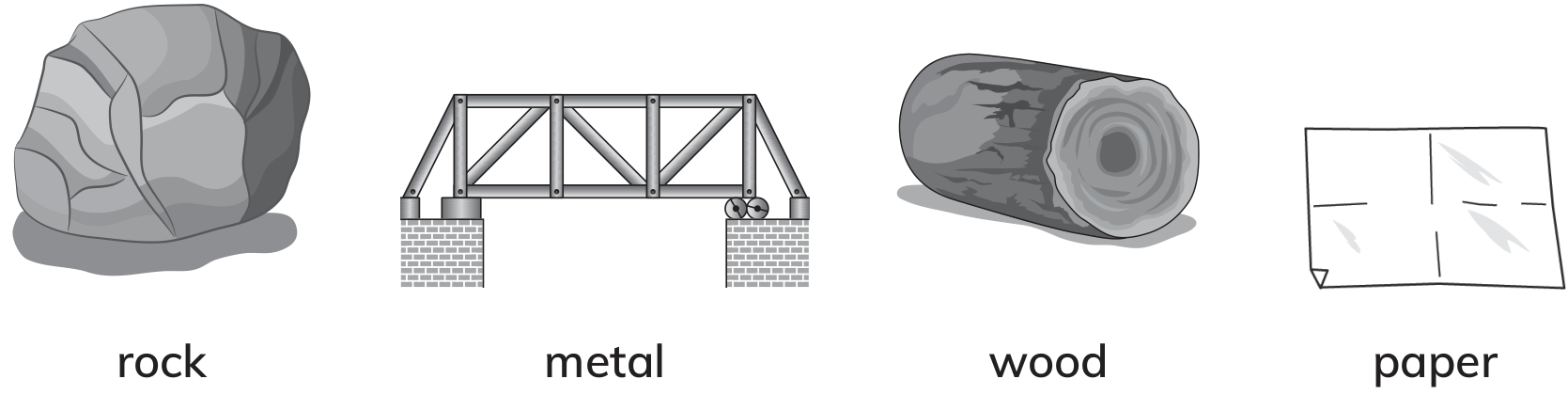
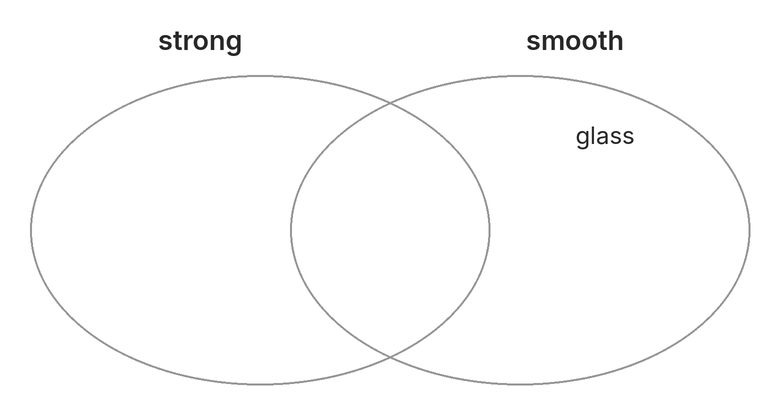
Sort these materials using the Venn diagram. Write the name of the material in the right place on the Venn diagram.
Materials: rock, metal, wood, paper, glass. The circles are strong and smooth. Glass is already shown in smooth only.
Use the right words to finish the sentences.
waterproof
absorbent
strong
weak
Use the right words to finish the sentences.
hard
soft
flexible
rigid
Use the right words to finish the sentences.
weak
strong
flexible
rigid
Use the right words to finish the sentences.
waterproof
absorbent
flexible
rigid
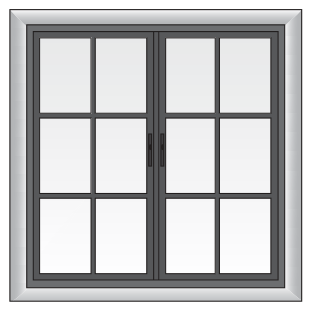
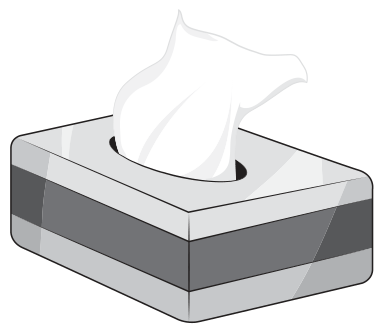
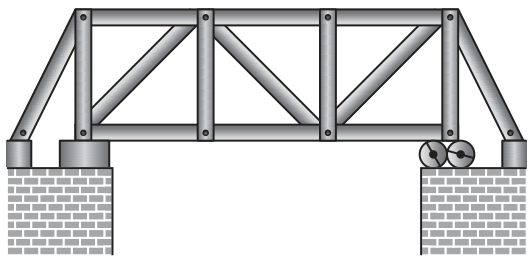
Match each object to the best material and its useful property.
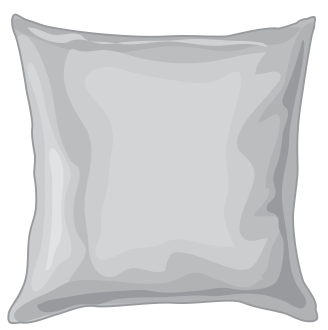
The example is balloon → rubber → flexible. Complete the other four objects: window, tissue, bridge, cushion.
Materials: glass, rubber, metal, fabric, paper.
Useful properties: flexible, transparent, absorbent, soft, rigid.
Use the right words to finish the sentences.
soft
strong
flexible
Use the right words to finish the sentences.
shiny
flexible
transparent
Use the right words to finish the sentences.
flexible
transparent
waterproof
Use the right words to finish the sentences.
hard
soft
rigid
Why are these materials used to make a car?
Next →