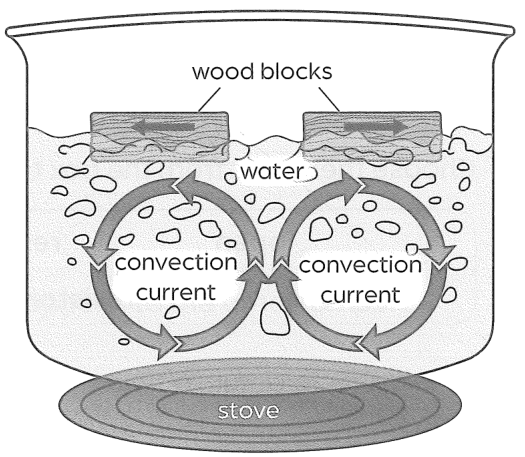
Work in groups. Fill half of a pot or large beaker with water. Place it on a hot plate or Bunsen burner and bring it to boil. Carefully place two lightweight wooden blocks on the surface of the water. Be careful when boiling water or placing wooden blocks to prevent scalding. The wooden blocks and boiling water represent parts of the Earth. What do you think the wooden blocks represent?
Work in groups. Fill half of a pot or large beaker with water. Place it on a hot plate or Bunsen burner and bring it to boil. Carefully place two lightweight wooden blocks on the surface of the water. Be careful when boiling water or placing wooden blocks to prevent scalding. Describe your observations.
Work in groups. Fill half of a pot or large beaker with water. Place it on a hot plate or Bunsen burner and bring it to boil. Carefully place two lightweight wooden blocks on the surface of the water. Be careful when boiling water or placing wooden blocks to prevent scalding. How does this experiment demonstrate the movement of tectonic plates?
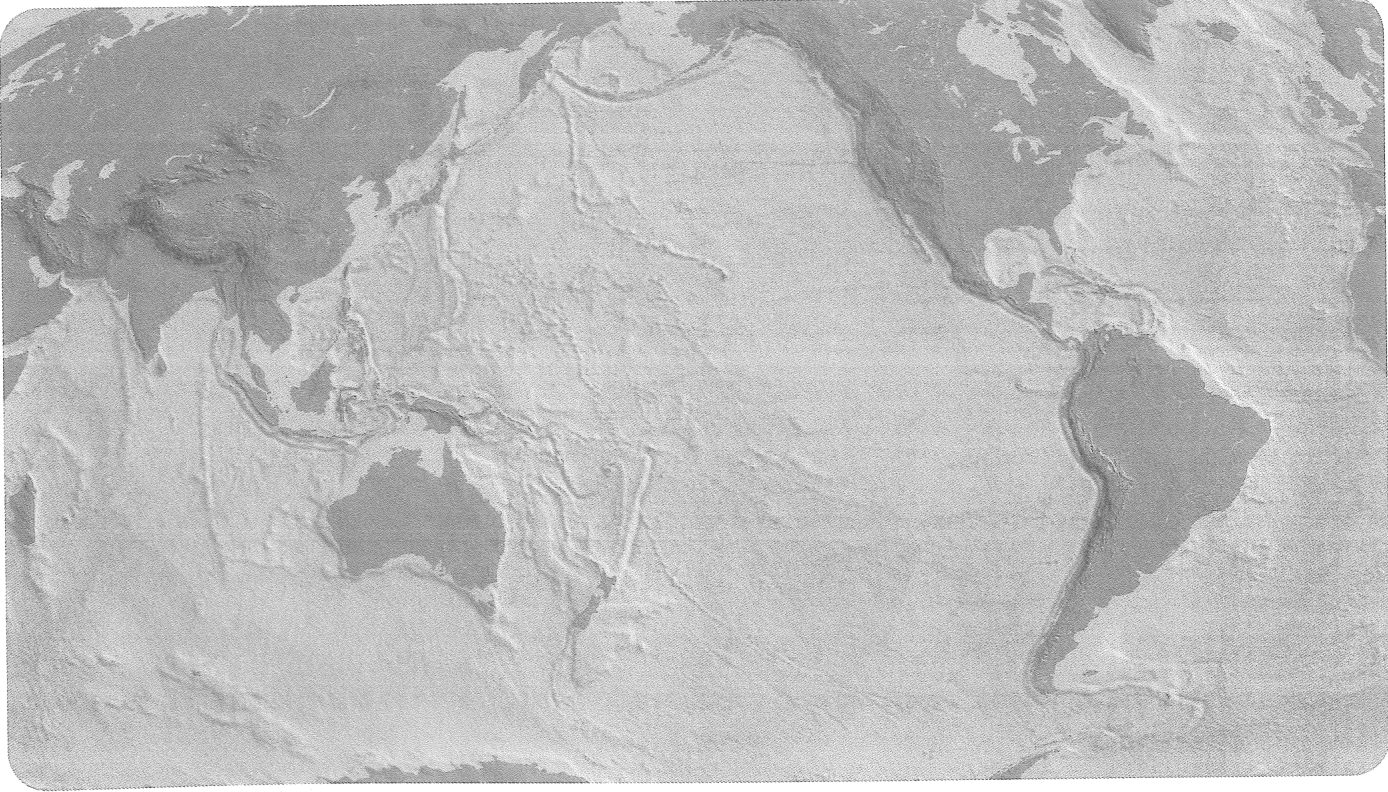
Using an atlas or online map, find these volcanoes and indicate their rough positions with red drawing pins.
- Mount Agung (Indonesia)
- Mount Sinabung (Indonesia)
- Mount Mayon (Philippines)
- Mount Kadovar (Papua New Guinea)
- Mount Kusatu-Shirane (Japan)
- Mount Fuji (Japan)
- Popocatépetl (Mexico)
- Mount St Helens (United States)
- Hunga Tonga–Hunga Ha’apai (Tonga)
- Santa Maria (Guatemala)
- Arenal (Costa Rica)
- Cotopaxi (Ecuador)
Use the Internet to search for the top ten biggest volcanic eruptions in the last century. Locate these on your map and indicate them with yellow drawing pins.
Many of the volcanoes along the Pacific Ring of Fire are in the ocean. Explain why this is still dangerous for human populations that live in coastal areas along the Pacific Ocean.
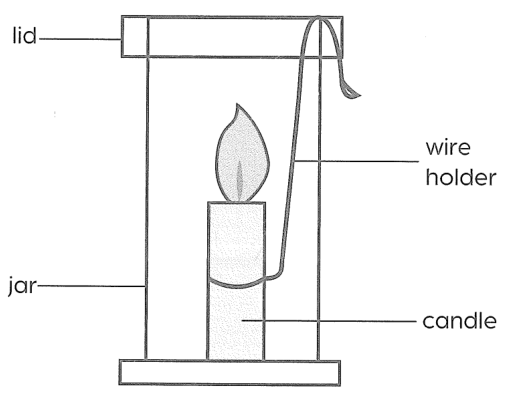
In this activity, wear safety goggles and gloves. Attach a wire holder to a candle and put it in a jar. Light the candle, cover the jar with its lid and observe until the flame goes out. Measure 10 ml of limewater. Remove the lid and candle, quickly add the limewater, replace the lid, and shake for a few minutes. Avoid burns and contact with limewater; hold the jar and lid firmly.
Tick (✓) the statement(s) that correctly describe(s) what happened during the activity.
- The candle burnt brightly in the first minute.
- The candle continued to burn brightly after the lid was closed.
- The candle was extinguished shortly after the lid was closed.
In this activity, wear safety goggles and gloves. Attach a wire holder to a candle and put it in a jar. Light the candle, cover the jar with its lid and observe until the flame goes out. Measure 10 ml of limewater. Remove the lid and candle, quickly add the limewater, replace the lid, and shake for a few minutes. Avoid burns and contact with limewater; hold the jar and lid firmly.
To continue burning, fire needs fuel (the candle wax), heat (the flame) and oxygen. Why did the candle go out when the jar was covered?
In this activity, wear safety goggles and gloves. Attach a wire holder to a candle and put it in a jar. Light the candle, cover the jar with its lid and observe until the flame goes out. Measure 10 ml of limewater. Remove the lid and candle, quickly add the limewater, replace the lid, and shake for a few minutes. Avoid burns and contact with limewater; hold the jar and lid firmly.
Explain how the investigation shows that carbon dioxide is a by-product of combustion.
In this activity, wear safety goggles and gloves. Attach a wire holder to a candle and put it in a jar. Light the candle, cover the jar with its lid and observe until the flame goes out. Measure 10 ml of limewater. Remove the lid and candle, quickly add the limewater, replace the lid, and shake for a few minutes. Avoid burns and contact with limewater; hold the jar and lid firmly.
How does this experiment relate to the global environment?
In this activity, wear safety goggles and gloves. Attach a wire holder to a candle and put it in a jar. Light the candle, cover the jar with its lid and observe until the flame goes out. Measure 10 ml of limewater. Remove the lid and candle, quickly add the limewater, replace the lid, and shake for a few minutes. Avoid burns and contact with limewater; hold the jar and lid firmly.
Why is it important to understand combustion in terms of environmental impact?
In this activity, wear safety goggles and gloves. Attach a wire holder to a candle and put it in a jar. Light the candle, cover the jar with its lid and observe until the flame goes out. Measure 10 ml of limewater. Remove the lid and candle, quickly add the limewater, replace the lid, and shake for a few minutes. Avoid burns and contact with limewater; hold the jar and lid firmly.
Give some other everyday examples of combustion and their effects on the environment.
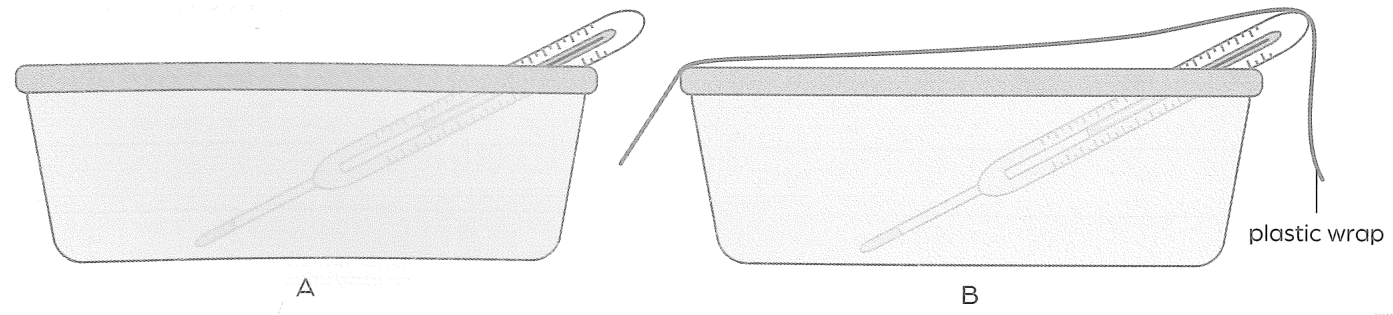
Place a thermometer in each of two empty ice-cream tubs. Read their starting temperatures. Cover tub B with plastic wrap; leave tub A uncovered. Put both tubs in direct sunlight for two hours and read each thermometer every 15 minutes.
Read the temperature on each thermometer and note it down in the table. Place the tubs in direct sunlight for two hours. Read the temperatures on each thermometer every 15 minutes. Record the temperatures in this table.
| Time in min | Thermometer reading in tub A in °C | Thermometer reading in tub B in °C |
|---|---|---|
| 15 | ___ | ___ |
| 30 | ___ | ___ |
| 45 | ___ | ___ |
| 60 | ___ | ___ |
| 75 | ___ | ___ |
| 90 | ___ | ___ |
| 105 | ___ | ___ |
| 120 | ___ | ___ |
Place a thermometer in each of two empty ice-cream tubs. Read their starting temperatures. Cover tub B with plastic wrap; leave tub A uncovered. Put both tubs in direct sunlight for two hours and read each thermometer every 15 minutes.
Place a thermometer in each of two empty ice-cream tubs. Read their starting temperatures. Cover tub B with plastic wrap; leave tub A uncovered. Put both tubs in direct sunlight for two hours and read each thermometer every 15 minutes.
Which tub accurately mimicked the greenhouse effect? Explain your answer.
Place a thermometer in each of two empty ice-cream tubs. Read their starting temperatures. Cover tub B with plastic wrap; leave tub A uncovered. Put both tubs in direct sunlight for two hours and read each thermometer every 15 minutes.
What do you think would happen if you added another layer of plastic wrap to tub B? How does this relate to the increasing levels of greenhouse gases in the Earth's atmosphere?
Place a thermometer in each of two empty ice-cream tubs. Read their starting temperatures. Cover tub B with plastic wrap; leave tub A uncovered. Put both tubs in direct sunlight for two hours and read each thermometer every 15 minutes.
What might be the consequences for our planet if we continue to add more greenhouse gases?