Skip to content / Đến nội dung
SachHeCam.com

Cambridge Secondary (7-9). Stage 9. MCE Science. Workbook - Unit 10: Transfer of Thermal Energy

Question 1

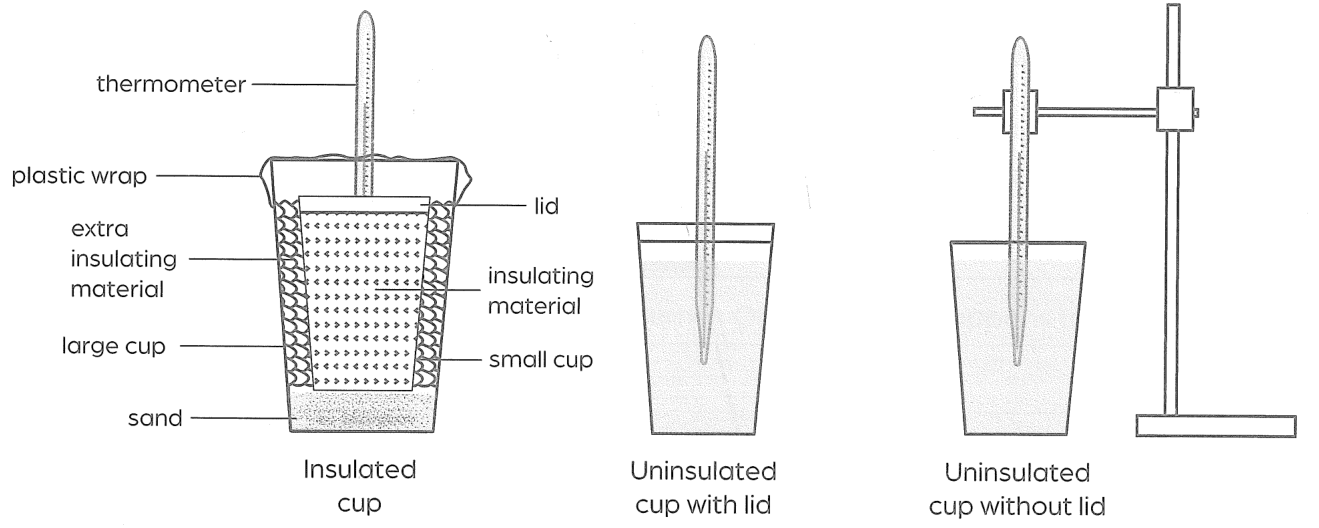
Three identical small plastic cups contain equal amounts of hot water, three-quarters full. One cup is wrapped in aluminium foil and insulating material, placed in a larger cup supported by sand, with extra insulation in the gap, a lid and plastic wrap sealing the larger cup. A second cup is uninsulated with a lid; the third is uninsulated without a lid. Thermometer bulbs dip fully into the water. The cups are kept in the same surroundings. Handle hot water carefully; an adult should prepare any holes with a knife cutter.
Question illustration

Measure and record the initial temperature of the hot water. Then use the same amount of hot water to fill the three small cups until they are three-quarters full.
Question 2

Three identical small plastic cups contain equal amounts of hot water, three-quarters full. One cup is wrapped in aluminium foil and insulating material, placed in a larger cup supported by sand, with extra insulation in the gap, a lid and plastic wrap sealing the larger cup. A second cup is uninsulated with a lid; the third is uninsulated without a lid. Thermometer bulbs dip fully into the water. The cups are kept in the same surroundings. Handle hot water carefully; an adult should prepare any holes with a knife cutter.

Question illustration

Measure and record the temperature of the water in each small cup every 5 minutes for 30 minutes.

| Time in min | 0 | 5 | 10 | 15 | 20 | 25 | 30 |
|---|---|---|---|---|---|---|---|
| Temperature in insulated cup in °C | | | | | | | |
| Temperature in uninsulated cup with lid in °C | | | | | | | |
| Temperature in uninsulated cup without lid in °C | | | | | | | |

Question 3

Three identical small plastic cups contain equal amounts of hot water, three-quarters full. One cup is wrapped in aluminium foil and insulating material, placed in a larger cup supported by sand, with extra insulation in the gap, a lid and plastic wrap sealing the larger cup. A second cup is uninsulated with a lid; the third is uninsulated without a lid. Thermometer bulbs dip fully into the water. The cups are kept in the same surroundings. Handle hot water carefully; an adult should prepare any holes with a knife cutter.

Question illustration

In groups, discuss: Compare the temperature changes in the three small plastic cups over time.

Question 4

Three identical small plastic cups contain equal amounts of hot water, three-quarters full. One cup is wrapped in aluminium foil and insulating material, placed in a larger cup supported by sand, with extra insulation in the gap, a lid and plastic wrap sealing the larger cup. A second cup is uninsulated with a lid; the third is uninsulated without a lid. Thermometer bulbs dip fully into the water. The cups are kept in the same surroundings. Handle hot water carefully; an adult should prepare any holes with a knife cutter.

Question illustration

Explain why the final temperatures differed among the three small cups.

Question 5

Three identical small plastic cups contain equal amounts of hot water, three-quarters full. One cup is wrapped in aluminium foil and insulating material, placed in a larger cup supported by sand, with extra insulation in the gap, a lid and plastic wrap sealing the larger cup. A second cup is uninsulated with a lid; the third is uninsulated without a lid. Thermometer bulbs dip fully into the water. The cups are kept in the same surroundings. Handle hot water carefully; an adult should prepare any holes with a knife cutter.

Question illustration

State three steps you can take to make sure your measurements are accurate and consistent.

Question 6

Three identical small plastic cups contain equal amounts of hot water, three-quarters full. One cup is wrapped in aluminium foil and insulating material, placed in a larger cup supported by sand, with extra insulation in the gap, a lid and plastic wrap sealing the larger cup. A second cup is uninsulated with a lid; the third is uninsulated without a lid. Thermometer bulbs dip fully into the water. The cups are kept in the same surroundings. Handle hot water carefully; an adult should prepare any holes with a knife cutter.

Question illustration

State three ways to increase your range of observations and measurements to increase your overall reliability and validity of your conclusion.

Question 7

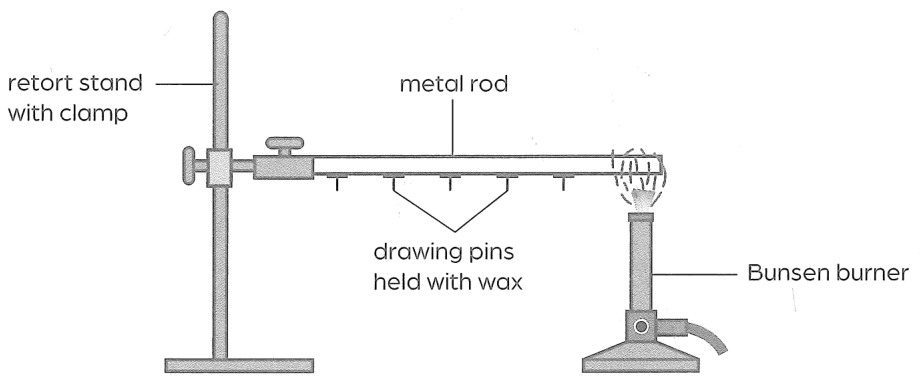
Attach several drawing pins to a clamped metal rod using small pieces of candle wax. Heat one end of the rod with a Bunsen burner and observe the pins as the rod heats up. Wear safety goggles, tie back long hair and keep a safe distance from the flame. Do not touch the hot rod or falling pins; let the apparatus cool before handling.

Question illustration

Record your observations regarding the drawing pins and the wax.

Question 8

Attach several drawing pins to a clamped metal rod using small pieces of candle wax. Heat one end of the rod with a Bunsen burner and observe the pins as the rod heats up. Wear safety goggles, tie back long hair and keep a safe distance from the flame. Do not touch the hot rod or falling pins; let the apparatus cool before handling.

Question illustration

In groups, discuss: What happened to the drawing pins as the metal rod got hotter? Why did this happen?

Question 9

Attach several drawing pins to a clamped metal rod using small pieces of candle wax. Heat one end of the rod with a Bunsen burner and observe the pins as the rod heats up. Wear safety goggles, tie back long hair and keep a safe distance from the flame. Do not touch the hot rod or falling pins; let the apparatus cool before handling.

Question illustration

How was thermal energy transferred along the metal rod during the experiment?

Question 10

Attach several drawing pins to a clamped metal rod using small pieces of candle wax. Heat one end of the rod with a Bunsen burner and observe the pins as the rod heats up. Wear safety goggles, tie back long hair and keep a safe distance from the flame. Do not touch the hot rod or falling pins; let the apparatus cool before handling.

Question illustration

In this experiment, did the thermal energy disappear after it left the metal rod? Explain your answer based on the Law of Conservation of Energy.

Question 11

Attach several drawing pins to a clamped metal rod using small pieces of candle wax. Heat one end of the rod with a Bunsen burner and observe the pins as the rod heats up. Wear safety goggles, tie back long hair and keep a safe distance from the flame. Do not touch the hot rod or falling pins; let the apparatus cool before handling.

Question illustration

List two ways in which your group could improve the experiment.

Question 12

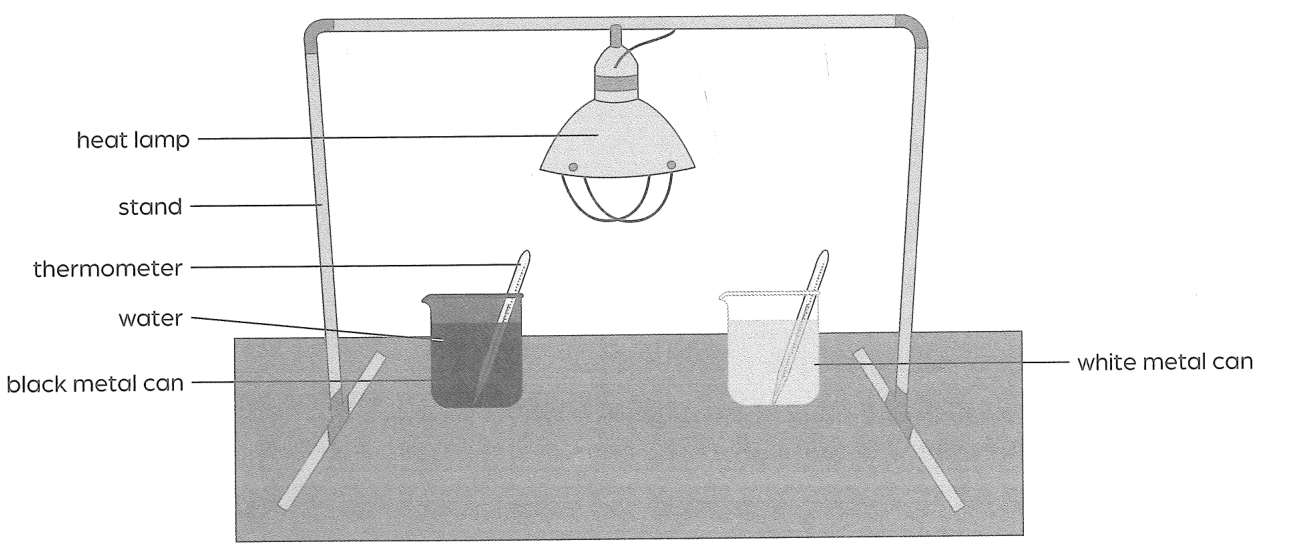
Paint one metal can black and the other white. Let the paint dry completely. Fill each can with an equal amount of water and place a thermometer in each can. Position both cans under the heat lamp at the same distance where they can receive equal amounts of light.

Question illustration

Measure the initial temperature of the water in each metal can and record in this table. After 20 minutes, measure the temperature in each can again. Record your readings in the table.

|Temperature|Black can|White can|
|---|---|---|
|Initial temperature in °C|___|___|
|Final temperature after 20 minutes in °C|___|___|

Question 13

Paint one metal can black and the other white. Let the paint dry completely. Fill each can with an equal amount of water and place a thermometer in each can. Position both cans under the heat lamp at the same distance where they can receive equal amounts of light.

Question illustration

When you do this experiment, what precautions should you take?

Question 14

Paint one metal can black and the other white. Let the paint dry completely. Fill each can with an equal amount of water and place a thermometer in each can. Position both cans under the heat lamp at the same distance where they can receive equal amounts of light.

Question illustration

In groups, discuss these questions. What is radiation?

Question 15

Paint one metal can black and the other white. Let the paint dry completely. Fill each can with an equal amount of water and place a thermometer in each can. Position both cans under the heat lamp at the same distance where they can receive equal amounts of light.

Question illustration

Why does heat transfer by radiation not require a medium?

Question 16

Paint one metal can black and the other white. Let the paint dry completely. Fill each can with an equal amount of water and place a thermometer in each can. Position both cans under the heat lamp at the same distance where they can receive equal amounts of light.

Question illustration

Which can, the black or white one, could absorb more thermal energy from radiation? Why do you think this happened?

Question 17

Paint one metal can black and the other white. Let the paint dry completely. Fill each can with an equal amount of water and place a thermometer in each can. Position both cans under the heat lamp at the same distance where they can receive equal amounts of light.

Question illustration

How do colour and surface texture affect the rate of absorption and emission of thermal energy from radiation?

Question 18

Paint one metal can black and the other white. Let the paint dry completely. Fill each can with an equal amount of water and place a thermometer in each can. Position both cans under the heat lamp at the same distance where they can receive equal amounts of light.

Question illustration

Suggest two everyday applications where the colours of objects are important for heat transfer.

Question 19

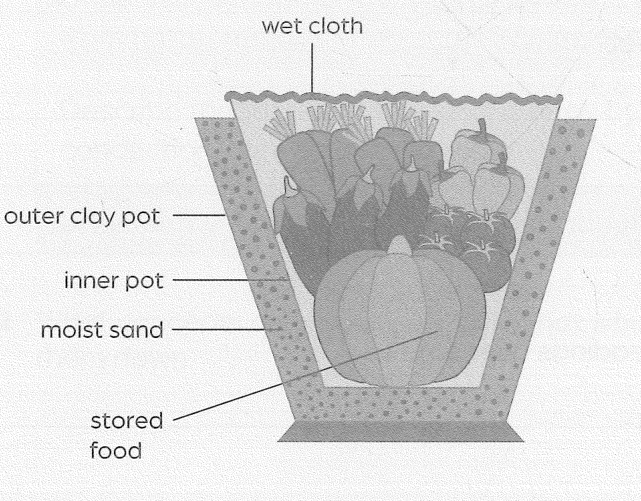
Place a smaller clay pot inside a larger clay pot. Fill the space between the pots with sand. Pour water into the sand until it is moist. Place a thermometer inside the smaller pot. Cover the whole set-up with a damp cloth.

Question illustration

Record the temperature inside the smaller pot every 20 minutes for an hour.

|Time in min|Temperature in °C|
|---|---|
|0|___|
|20|___|
|40|___|
|60|___|

Question 20

Place a smaller clay pot inside a larger clay pot. Fill the space between the pots with sand. Pour water into the sand until it is moist. Place a thermometer inside the smaller pot. Cover the whole set-up with a damp cloth.

Question illustration

In groups, discuss these questions. Why is clay a suitable material for the pots?
0
0
GIỎ HÀNG
Empty CartGIỎ CHƯA CÓ GÌQUAY LẠI SHOP