Aim: To make a model of chromosomes. Materials: Lengths of wool, scissors, plasticine.
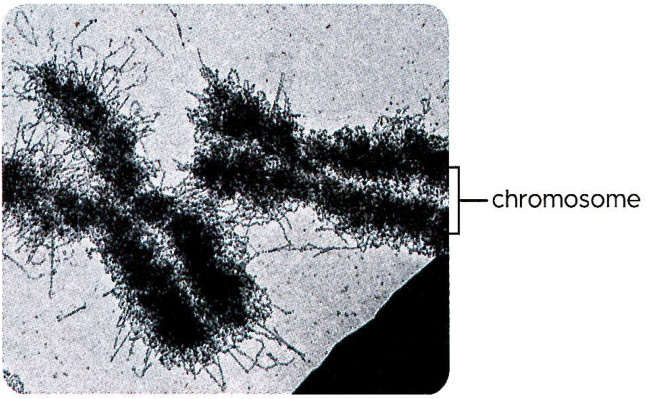
1 Work in pairs. Refer to Figure 3.2 on page 29 of the Student’s Book (shown here).
2 Cut lengths of wool to represent a set of chromosomes and model how genetic information is copied and transferred when a parent cell divides to make new cells.
3 Share your model with another pair. Explain to them how chromosomes are able to pass genetic information from the parent to new cells.
Caution: When using a sharp object such as scissors, take care not to stab or cut yourself or somebody else. Pass the scissors handle first.
A wool-and-plasticine model represents chromosomes being copied and transferred when a parent cell divides into two new body cells. In your model, do the new cells have the same number of chromosomes as the parent cell? Why or why not?
A wool-and-plasticine model represents chromosomes being copied and transferred when a parent cell divides into two new body cells. Explain how your model is similar to real chromosomes.
A wool-and-plasticine model represents chromosomes being copied and transferred when a parent cell divides into two new body cells. Do the two new cells both contain the same amount of genetic information as the parent cell? Explain how this is possible.
A wool-and-plasticine model represents chromosomes being copied and transferred when a parent cell divides into two new body cells. How would you improve your model? What other materials would you use?
During fertilisation in humans, a sperm cell and an egg cell combine to form a zygote. Each gamete has certain structural features for their functions. Complete the table for the male and female gametes. Name one feature of each and the function of this feature.
| Gamete | Number of chromosomes | Structural feature | Function of the feature |
|---|---|---|---|
| Male gamete (sperm cell) | ___ | ___ | ___ |
| Female gamete (egg cell) | ___ | ___ | ___ |
During fertilisation in humans, a sperm cell and an egg cell combine to form a zygote. Each gamete has certain structural features for their functions. How many chromosomes does the zygote have? Explain your answer.
During fertilisation in humans, a sperm cell and an egg cell combine to form a zygote. Each gamete has certain structural features for their functions. The head of a sperm cell contains enzymes. How do the enzymes help the sperm cell?
During fertilisation in humans, a sperm cell and an egg cell combine to form a zygote. Each gamete has certain structural features for their functions. Once a sperm cell has successfully penetrated an egg cell, the jelly around the egg cell prevents other sperm cells from entering. Suggest why.
During fertilisation in humans, a sperm cell and an egg cell combine to form a zygote. Each gamete has certain structural features for their functions. Does each gamete contain the full set of genetic material of its parent? Why or why not?
The length of the fetus increases greatly in the 8th and 9th months. Is this the most important time for the mother to eat the right nutrients for the fetus’ development? Why or why not?
Aim: To investigate variation in leaf length. Materials: 10–15 leaves from the same plant or same species of plant, ruler.
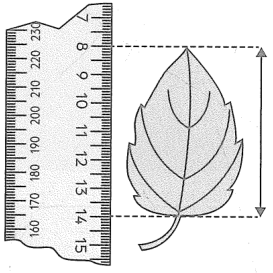
1 Work in groups. Measure the length of each leaf from the leaf apex (tip) to the base of the leaf. Do not measure the leaf stalk.
2 Decide on how many leaves you will measure. Draw a table below to record your measurements.
Caution: Do not taste the leaves. Wash your hands after measuring them.