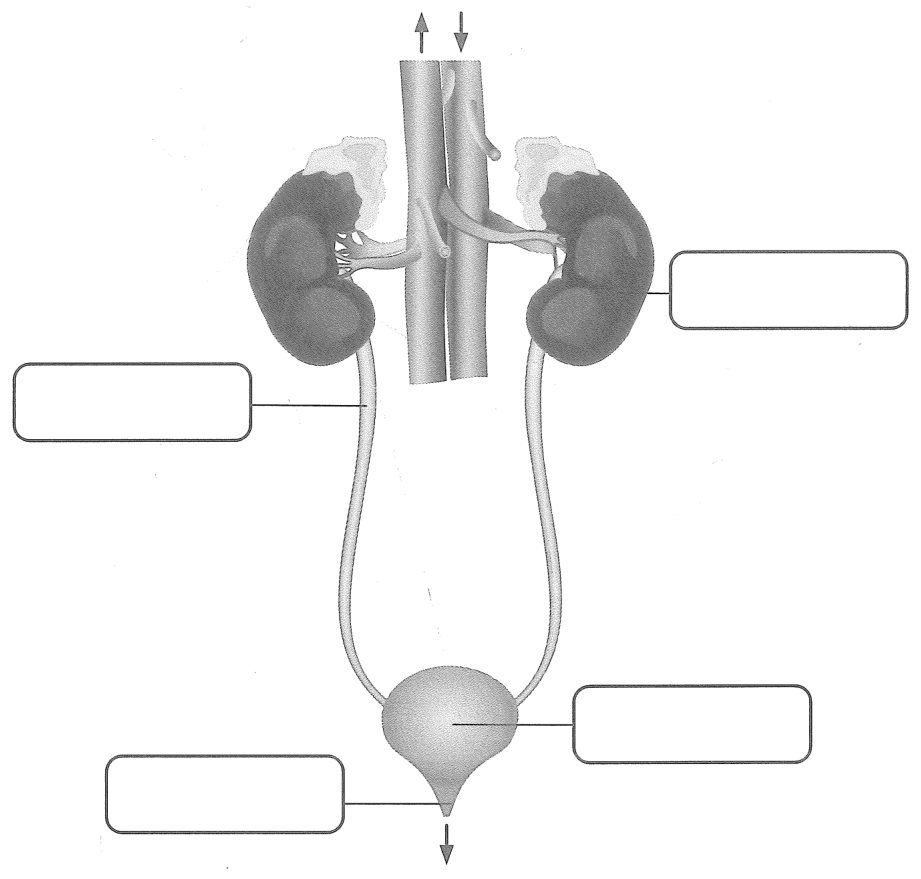
Aim: To understand how the excretory system works through the use of a model.
Materials: Craft knife or sharp scissors, three clear 500-ml plastic bottles with caps, screwdriver or other sharp tool, two long, bendy straws, short straw (about 10 cm long), clay or plasticine, shoe box (or any open cardboard box), cardboard (preferably pink or red), tape, labels, black pen or marker.
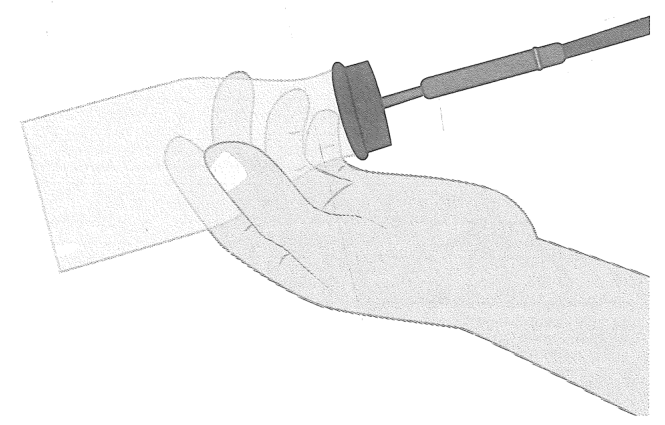
1 Work in pairs. Carefully cut the plastic bottles in half. Discard two of the bottom halves. Then, taking great care, create holes in each of the caps just big enough for straws to pass through.
2 Insert the ends of the straws into the caps. Use clay or plasticine to seal up any openings.
3 Remove the lid of a shoe box. If it is attached to the rest of the box, carefully cut it away.
4 Trace two kidney shapes on pink cardboard. Cut these out and stick them onto the top halves of two bottles. Use tape to stick the two bottles near the top of the box.
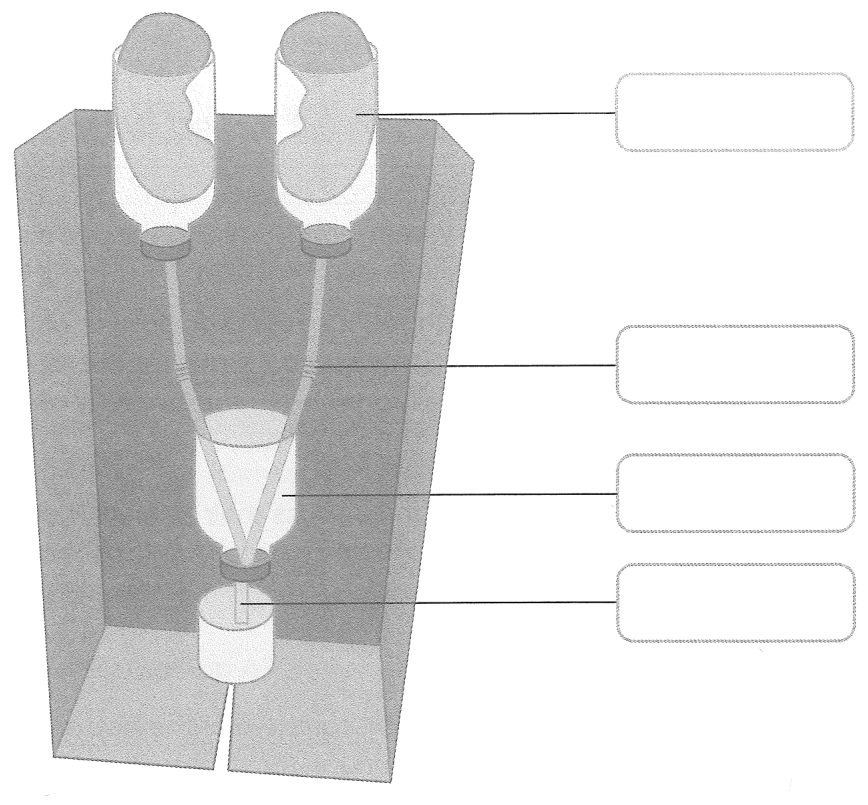
5 Assemble the rest of the model as shown in the diagram. Label the parts of the model.
6 Pour water into the parts that represent the kidneys. Observe what happens.
A model uses two upper bottles as kidneys, two long straws as ureters, a lower inverted bottle as the bladder and a short outlet straw as the urethra. Water is poured into the upper bottles. Describe what the model demonstrates.
A model uses two upper bottles as kidneys, two long straws as ureters, a lower inverted bottle as the bladder and a short outlet straw as the urethra. Water is poured into the upper bottles. Describe what the model does not demonstrate.
A model uses two upper bottles as kidneys, two long straws as ureters, a lower inverted bottle as the bladder and a short outlet straw as the urethra. Water is poured into the upper bottles. Two ideas on how the model could be made more accurate are listed below. Discuss how they would improve the model and write your answers in spaces provided.
| Idea | How it would improve the model |
|---|---|
| Idea 1: I could insert small sponges in the bottles that represent the kidneys. | ___ |
| Idea 2: I could insert a valve in the bottle that represents the bladder to release the water once some has collected. | ___ |
A model uses two upper bottles as kidneys, two long straws as ureters, a lower inverted bottle as the bladder and a short outlet straw as the urethra. Water is poured into the upper bottles. Two ideas already suggested are to put sponges in the kidney bottles and add a valve to the bladder bottle. With your partner, discuss and write down one more way in which the model could be improved.
Aim: To understand how filtration can result in clearer and cleaner water. Materials: Sieve, paper towel, three beakers, water, soil, beans, glitter, elastic band.
1 Add beans, soil and glitter to a beaker. Then half-fill the beaker with water.
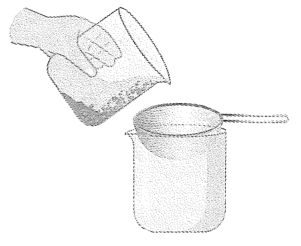
2 Place a sieve over another empty beaker. Pour the water from the first beaker through the sieve. Observe the water.
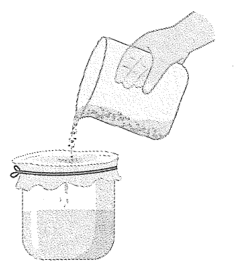
3 Tear off two sheets of paper towel and fold them over to create a square. Wrap the paper towel over the top of a third beaker. Use elastic band to secure the paper towel in place.
4 Carefully pour the water from the second beaker into the third beaker. Observe the appearance of the water.
5 Repeat the filtration process in steps 2 to 4, until the water is as clear as possible. You can change the paper towel as many times as you need to.
In the investigation, water mixed with beans, soil and glitter is filtered through a sieve and then paper towel; this is repeated until it is as clear as possible. How many times did you have to filter the water to get it clear?
In the investigation, water mixed with beans, soil and glitter is filtered through a sieve and then paper towel; this is repeated until it is as clear as possible. Tick (✓) the statement that best describes your water after the investigation.
- My water is perfectly clear and free of all other substances.
- My water is clear, but some substances/particles remain.
- My water is as dirty as it was when I started.
In the investigation, water mixed with beans, soil and glitter is filtered through a sieve and then paper towel; this is repeated until it is as clear as possible. Relate your investigation to how the kidneys filter the blood. What does your filtered water represent?
In the investigation, water mixed with beans, soil and glitter is filtered through a sieve and then paper towel; this is repeated until it is as clear as possible. Relate your investigation to how the kidneys filter the blood. What do the remaining substances in your filtered water represent?
In the investigation, water mixed with beans, soil and glitter is filtered through a sieve and then paper towel; this is repeated until it is as clear as possible. Relate your investigation to how the kidneys filter the blood. What do the substances that you filtered out from the water represent?
Tick (✓) the three correct statements about the excretory system.
1 The excretory system removes waste products from the body.
2 Urination is a function performed by the excretory system.
3 Urine is mostly made up of urea.
4 A person who is dehydrated has had too much water.
5 A dehydrated person’s urine will contain more salts and uric acid than normal.
Parts: kidney; ureter; urethra; bladder.
Functions: carries urine out of the body; filters blood and removes waste products; transports urea in urine to the bladder; holds urine temporarily.