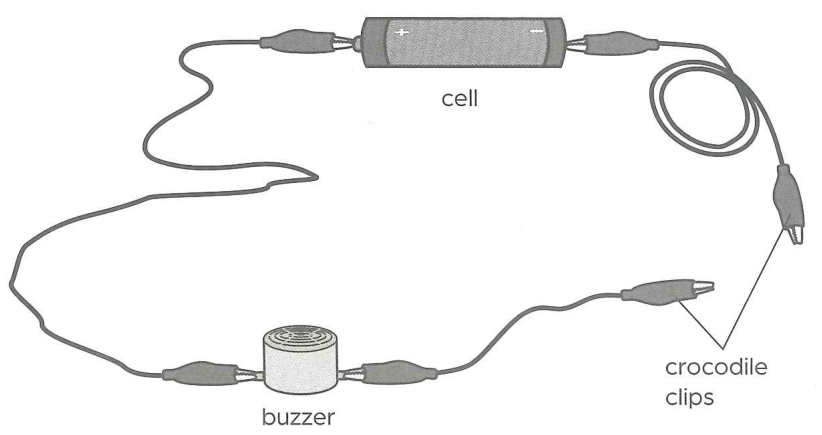
Use a 1.5 V electrical cell in a cradle, three crocodile clips and a buzzer. The objects are a toothpick, carpenter’s nail, marker pen, steel clip, piece of aluminium foil and piece of string. Make sure you build circuits safely and correctly. Remember to detach any battery or cells before touching the added material to avoid electric shocks.
Use a 1.5 V electrical cell in a cradle, three crocodile clips and a buzzer. The objects are a toothpick, carpenter’s nail, marker pen, steel clip, piece of aluminium foil and piece of string. One at a time, clip both ends of each object with two crocodile clips to test the object.
Use a 1.5 V electrical cell in a cradle, three crocodile clips and a buzzer. The objects are a toothpick, carpenter’s nail, marker pen, steel clip, piece of aluminium foil and piece of string. Does the buzzer sound each time? Record your findings in the table. Check your equipment carefully. Make sure the crocodile clips do not have tears in their protective coatings. Check that the buzzer is working before you start your investigation. Ask your teacher to replace any faulty components to avoid getting an electric shock.
| Object | Does the buzzer sound? Write Yes or No. |
|---|---|
| Toothpick | |
| Carpenter’s nail | |
| Marker pen | |
| Steel clip | |
| Piece of aluminium foil | |
| Piece of string | |
The buzzer sounded when some objects were connected in the circuit, but not others. Explain what happened in terms of the flow of current from the cell.
In the conductor-and-insulator experiment with the six objects (toothpick, carpenter’s nail, marker pen, steel clip, aluminium foil and string), were your predictions correct? Why or why not?
Complete the following table by classifying each object you have tested into the correct column. The objects tested were a toothpick, carpenter’s nail, marker pen, steel clip, piece of aluminium foil and piece of string.
As a group, discuss other objects in the classroom that you can test. Remember to predict which ones are conductors and which ones are insulators before you test them.
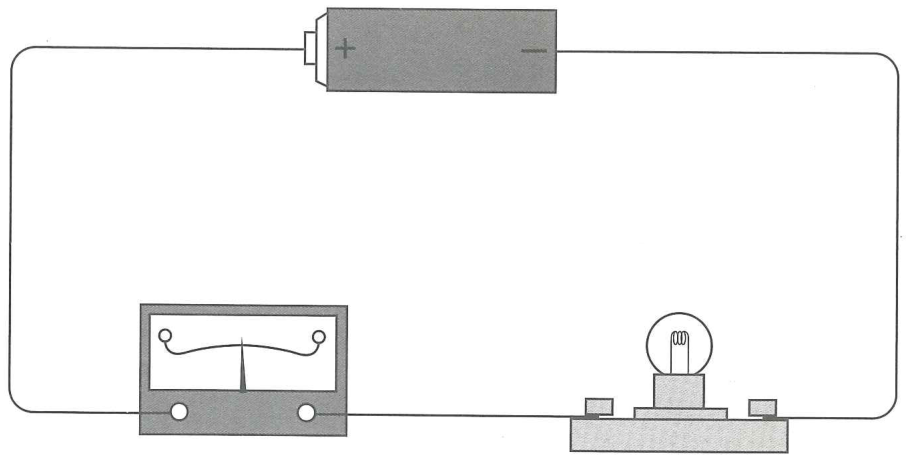
Complete the table by filling in the missing name, circuit symbol or function.
| Name | Circuit symbol | Function |
|---|---|---|
| ___ | ___ | To measure current in a circuit |
| ___ | | ___ |
| ___ | ___ | To close and open a circuit |
| Buzzer | ___ | ___ |
| Lamp | ___ | To light up when current flows through |
We need to be careful when we use electricity. Read the caution box below. Use your knowledge of conductors and insulators to explain the precautions.
Caution: Never touch electrical wires with wet hands. If you need to handle wires, always wear rubber gloves. Check that all electrical wires are in good condition. Their coating must not be worn out.
This classroom activity uses a 1.5 V cell; do not handle mains wiring.
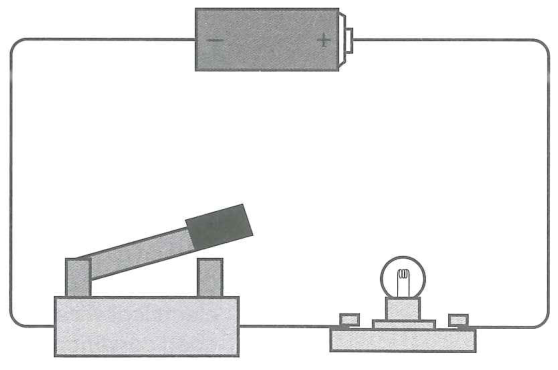
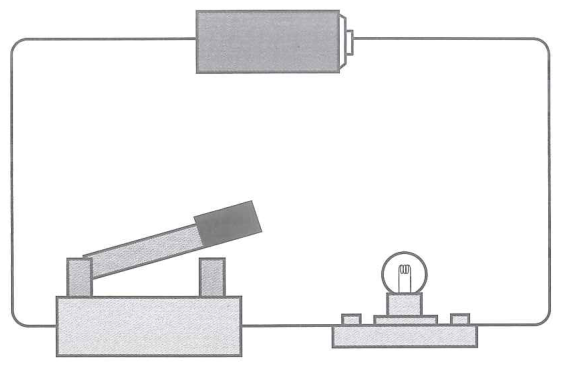
Set up an electrical circuit exactly as shown in the diagram, using a 1.5 V cell, a switch and a lamp. First observe the lamp with the switch open, then close it. From your answers to a and b, infer whether air is a good conductor or insulator. Explain your answer.
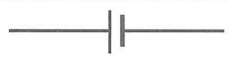 | ___ |