Look at the list of changes. Decide which are chemical changes and which are physical changes. Then, fill them in the correct column of the table.
- Nail rusting
- Electrical cells charging
- Water boiling to form water vapour
- Water evaporating to form water vapour
- Water freezing into ice
- Food digesting in the stomach
- Food becoming mouldy
- Separating sand from muddy water
- Ice cream melting
- Fire burning
- Butter melting
Wear eye protection and disposable gloves when handling solutions. Work under teacher supervision. Investigation 1: an iron nail is placed in about 200 cm³ of copper nitrate solution in a beaker on an electronic balance. The beaker is covered with a watch glass while it stands for a week; the watch glass is removed before the final weighing.
Pour about 200 cm³ of copper nitrate solution into a beaker. Place the beaker on an electronic balance and put an iron nail in it. Record the mass and write it on a strip of tape. Stick the tape to the beaker.
Wear eye protection and disposable gloves when handling solutions. Work under teacher supervision. Investigation 1: an iron nail is placed in about 200 cm³ of copper nitrate solution in a beaker on an electronic balance. The beaker is covered with a watch glass while it stands for a week; the watch glass is removed before the final weighing.
Make a note of any changes that you can see so far. Then take the beaker from the balance, put a watch glass over the top to reduce evaporation and stop dust from falling into it.
Wear eye protection and disposable gloves when handling solutions. Work under teacher supervision. Investigation 1: an iron nail is placed in about 200 cm³ of copper nitrate solution in a beaker on an electronic balance. The beaker is covered with a watch glass while it stands for a week; the watch glass is removed before the final weighing.
After a week, examine the beaker with the copper nitrate solution and iron nail. Record your observations.
Wear eye protection and disposable gloves when handling solutions. Work under teacher supervision. Investigation 1: an iron nail is placed in about 200 cm³ of copper nitrate solution in a beaker on an electronic balance. The beaker is covered with a watch glass while it stands for a week; the watch glass is removed before the final weighing.
Remove the watch glass and place the beaker containing the solution and iron nail on the electronic balance. Record the final mass.
Wear eye protection and disposable gloves when handling solutions. Work under teacher supervision. Investigation 1: an iron nail is placed in about 200 cm³ of copper nitrate solution in a beaker on an electronic balance. The beaker is covered with a watch glass while it stands for a week; the watch glass is removed before the final weighing.
How does the final mass compare with the total mass of the reactants?
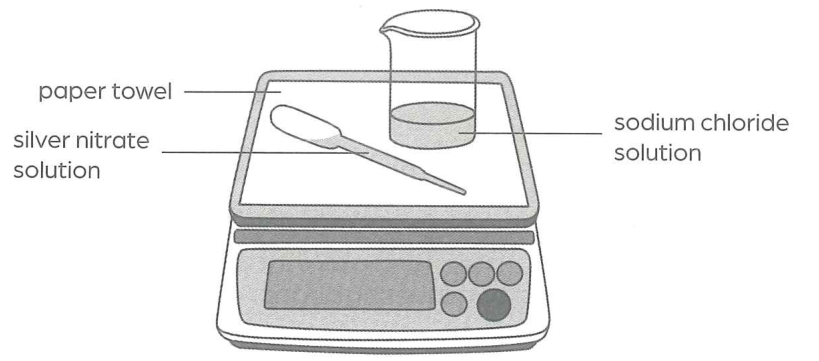
Wear eye protection and disposable gloves when handling solutions. Work under teacher supervision. Investigation 2: put a sheet of paper towel on the balance, and on top of that, put a small beaker and an empty dropper pipette. Zero (tare) the balance, then pour about 10 cm³ of sodium chloride solution into the beaker. Place the beaker back on the balance. Half-fill the dropper pipette with silver nitrate solution and lay it carefully back on the balance. Add the silver nitrate solution to the sodium chloride solution, then put the empty dropper back on the balance.
Half-fill the dropper pipette with silver nitrate solution and lay it carefully back on the balance. Record the total mass of the two reactants.
Total mass of reactants = ______
Labels: paper towel; silver nitrate solution; sodium chloride solution.
Wear eye protection and disposable gloves when handling solutions. Work under teacher supervision. Investigation 2: put a sheet of paper towel on the balance, and on top of that, put a small beaker and an empty dropper pipette. Zero (tare) the balance, then pour about 10 cm³ of sodium chloride solution into the beaker. Place the beaker back on the balance. Half-fill the dropper pipette with silver nitrate solution and lay it carefully back on the balance. Add the silver nitrate solution to the sodium chloride solution, then put the empty dropper back on the balance.
Add the silver nitrate solution from the dropper pipette to the sodium chloride solution in the beaker. Put the empty dropper pipette back on the balance. Record your observations.
Labels: paper towel; silver nitrate solution; sodium chloride solution.
Wear eye protection and disposable gloves when handling solutions. Work under teacher supervision. Investigation 2: put a sheet of paper towel on the balance, and on top of that, put a small beaker and an empty dropper pipette. Zero (tare) the balance, then pour about 10 cm³ of sodium chloride solution into the beaker. Place the beaker back on the balance. Half-fill the dropper pipette with silver nitrate solution and lay it carefully back on the balance. Add the silver nitrate solution to the sodium chloride solution, then put the empty dropper back on the balance.
Record the mass when there is no further change observed.
Final mass = ______
Labels: paper towel; silver nitrate solution; sodium chloride solution.
Wear eye protection and disposable gloves when handling solutions. Work under teacher supervision. Investigation 2: put a sheet of paper towel on the balance, and on top of that, put a small beaker and an empty dropper pipette. Zero (tare) the balance, then pour about 10 cm³ of sodium chloride solution into the beaker. Place the beaker back on the balance. Half-fill the dropper pipette with silver nitrate solution and lay it carefully back on the balance. Add the silver nitrate solution to the sodium chloride solution, then put the empty dropper back on the balance.
Compare the final mass to the total mass of the reactants. What do you notice about the two masses?
Labels: paper towel; silver nitrate solution; sodium chloride solution.
Wear eye protection and disposable gloves when handling solutions. Work under teacher supervision. Investigation 1: an iron nail is placed in about 200 cm³ of copper nitrate solution in a beaker on an electronic balance. The beaker is covered with a watch glass while it stands for a week; the watch glass is removed before the final weighing. Investigation 2: put a sheet of paper towel on the balance, and on top of that, put a small beaker and an empty dropper pipette. Zero (tare) the balance, then pour about 10 cm³ of sodium chloride solution into the beaker. Place the beaker back on the balance. Half-fill the dropper pipette with silver nitrate solution and lay it carefully back on the balance. Add the silver nitrate solution to the sodium chloride solution, then put the empty dropper back on the balance.
Are the changes you observed in the two investigations physical changes or chemical changes? Explain your answer.
Wear eye protection and disposable gloves when handling solutions. Work under teacher supervision. Investigation 1: an iron nail is placed in about 200 cm³ of copper nitrate solution in a beaker on an electronic balance. The beaker is covered with a watch glass while it stands for a week; the watch glass is removed before the final weighing. Investigation 2: put a sheet of paper towel on the balance, and on top of that, put a small beaker and an empty dropper pipette. Zero (tare) the balance, then pour about 10 cm³ of sodium chloride solution into the beaker. Place the beaker back on the balance. Half-fill the dropper pipette with silver nitrate solution and lay it carefully back on the balance. Add the silver nitrate solution to the sodium chloride solution, then put the empty dropper back on the balance.
What do your answers to questions 2e and 3e tell you? (These compare the mass before and after each reaction.)
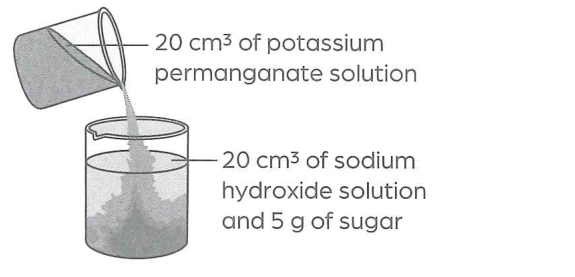
Work in pairs. Put on your eye protection and disposable gloves. Use a small measuring cylinder. Place 20 cm³ of dilute sodium hydroxide solution into a beaker. Add 5 g of sugar into the beaker. Mix well with a stirring rod. Add 20 cm³ of potassium permanganate solution into the beaker.
Caution: Wear eye protection and disposable gloves when handling alkalis, even if they are diluted. Handle the various chemicals with care. Potassium permanganate can stain skin and is an irritant at high concentrations.
Describe what you observe. How does the solution in the beaker change?
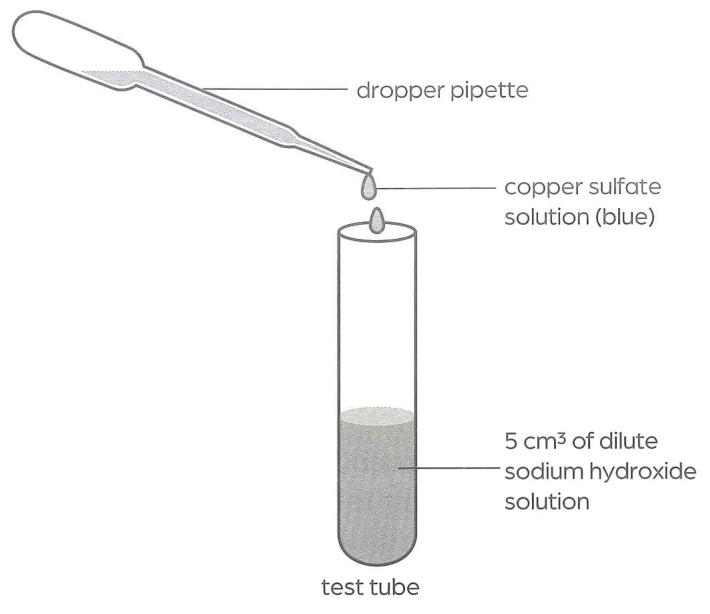
Use the dropper pipette. Place about 5 cm³ of dilute sodium hydroxide solution into a test tube. Use a clean dropper pipette to add the copper sulfate solution into the test tube, a few drops at a time. Wear eye protection and disposable gloves.
Work in pairs. Put on your eye protection and disposable gloves. Use a small measuring cylinder. Place 20 cm³ of dilute sodium hydroxide solution into a beaker. Add 5 g of sugar into the beaker. Mix well with a stirring rod. Add 20 cm³ of potassium permanganate solution into the beaker.
Caution: Wear eye protection and disposable gloves when handling alkalis, even if they are diluted. Handle the various chemicals with care. Potassium permanganate can stain skin and is an irritant at high concentrations.
What evidence of a chemical reaction did you observe when you mixed the materials in the first investigation?
Work in pairs. Put on your eye protection and disposable gloves. Use a small measuring cylinder. Place 20 cm³ of dilute sodium hydroxide solution into a beaker. Add 5 g of sugar into the beaker. Mix well with a stirring rod. Add 20 cm³ of potassium permanganate solution into the beaker.
Caution: Wear eye protection and disposable gloves when handling alkalis, even if they are diluted. Handle the various chemicals with care. Potassium permanganate can stain skin and is an irritant at high concentrations.
Do you think that only one chemical reaction took place? Give a reason for your answer.