Work in pairs. Read the extract below about the advantages and disadvantages of using acidic chemical fertilisers.
Fertilisers provide the nutrients that plants need to be healthy. When plants grow well, there are more crops and therefore more food. Different plants need different nutrients to grow well. Chemical fertilisers are manufactured to suit a variety of plants. There are different types of chemical fertilisers. Acids are used to make acidic chemical fertilisers.
Fertilisers must be handled and used carefully. They can harm our skin and especially our eyes. They can also harm animals. If the fertilisers are not used carefully, they can damage plants. If too much fertiliser is added to the soil, it may run off into rivers and can kill fish. Too much fertiliser can make crops grow too fast and fall over, or spread too far, preventing other species of plants from growing in their natural habitats.
Chemical fertilisers for certain crops may be cheaper than natural fertilisers, as less is needed for the same amount of plant growth. However, some chemical fertilisers increase the soil’s acidity. This may prevent other crops from growing well.
Use the information in the text to complete the table below.
| Advantages of using acidic chemical fertilisers | Disadvantages of using acidic chemical fertilisers |
|---|---|
| | |
Work in pairs. Read the extract below about the advantages and disadvantages of using acidic chemical fertilisers.
Fertilisers provide the nutrients that plants need to be healthy. When plants grow well, there are more crops and therefore more food. Different plants need different nutrients to grow well. Chemical fertilisers are manufactured to suit a variety of plants. There are different types of chemical fertilisers. Acids are used to make acidic chemical fertilisers.
Fertilisers must be handled and used carefully. They can harm our skin and especially our eyes. They can also harm animals. If the fertilisers are not used carefully, they can damage plants. If too much fertiliser is added to the soil, it may run off into rivers and can kill fish. Too much fertiliser can make crops grow too fast and fall over, or spread too far, preventing other species of plants from growing in their natural habitats.
Chemical fertilisers for certain crops may be cheaper than natural fertilisers, as less is needed for the same amount of plant growth. However, some chemical fertilisers increase the soil’s acidity. This may prevent other crops from growing well.
Is it a good idea to manufacture and use chemical fertilisers? Do more research if you need more information. Write down your thoughts.
Work in pairs. Read the extract below about the advantages and disadvantages of using acidic chemical fertilisers.
Fertilisers provide the nutrients that plants need to be healthy. When plants grow well, there are more crops and therefore more food. Different plants need different nutrients to grow well. Chemical fertilisers are manufactured to suit a variety of plants. There are different types of chemical fertilisers. Acids are used to make acidic chemical fertilisers.
Fertilisers must be handled and used carefully. They can harm our skin and especially our eyes. They can also harm animals. If the fertilisers are not used carefully, they can damage plants. If too much fertiliser is added to the soil, it may run off into rivers and can kill fish. Too much fertiliser can make crops grow too fast and fall over, or spread too far, preventing other species of plants from growing in their natural habitats.
Chemical fertilisers for certain crops may be cheaper than natural fertilisers, as less is needed for the same amount of plant growth. However, some chemical fertilisers increase the soil’s acidity. This may prevent other crops from growing well.
What effect do acidic chemical fertilisers have on soil?
Work in pairs. Read the extract below about the advantages and disadvantages of using acidic chemical fertilisers.
Fertilisers provide the nutrients that plants need to be healthy. When plants grow well, there are more crops and therefore more food. Different plants need different nutrients to grow well. Chemical fertilisers are manufactured to suit a variety of plants. There are different types of chemical fertilisers. Acids are used to make acidic chemical fertilisers.
Fertilisers must be handled and used carefully. They can harm our skin and especially our eyes. They can also harm animals. If the fertilisers are not used carefully, they can damage plants. If too much fertiliser is added to the soil, it may run off into rivers and can kill fish. Too much fertiliser can make crops grow too fast and fall over, or spread too far, preventing other species of plants from growing in their natural habitats.
Chemical fertilisers for certain crops may be cheaper than natural fertilisers, as less is needed for the same amount of plant growth. However, some chemical fertilisers increase the soil’s acidity. This may prevent other crops from growing well.
What properties of acids are shown by acidic chemical fertilisers?
Investigate: Which type of building material is most affected by acid rain? Materials: safety goggles, spotting tile, calcium carbonate, samples representing different building materials (such as limestone, pieces of shale, pieces of clay brick, granite or basalt), spatula, dilute ethanoic acid (representing acid rain), dropper pipette, beaker.
Normal rainwater is slightly acidic. It is not harmful to us or the environment. However, when acidic gases such as sulfur dioxide dissolve in rainwater, acid rain is formed. Acid rain can affect the stone that buildings are made of. Stones such as limestone and marble, for example, contain large amounts of calcium carbonate. When an acid reacts with calcium carbonate, carbon dioxide gas is given off. This reaction dissolves parts of the stone and causes small holes to form.
Work in groups of three or four. Plan and carry out a fair test using the given materials to answer this investigation question: Which type of building material is most affected by acid rain?
Investigate: Which type of building material is most affected by acid rain? Materials: safety goggles, spotting tile, calcium carbonate, samples representing different building materials (such as limestone, pieces of shale, pieces of clay brick, granite or basalt), spatula, dilute ethanoic acid (representing acid rain), dropper pipette, beaker.
Normal rainwater is slightly acidic. It is not harmful to us or the environment. However, when acidic gases such as sulfur dioxide dissolve in rainwater, acid rain is formed. Acid rain can affect the stone that buildings are made of. Stones such as limestone and marble, for example, contain large amounts of calcium carbonate. When an acid reacts with calcium carbonate, carbon dioxide gas is given off. This reaction dissolves parts of the stone and causes small holes to form.
Identify the variables in your investigation. The independent variable (what you will change) is:
Investigate: Which type of building material is most affected by acid rain? Materials: safety goggles, spotting tile, calcium carbonate, samples representing different building materials (such as limestone, pieces of shale, pieces of clay brick, granite or basalt), spatula, dilute ethanoic acid (representing acid rain), dropper pipette, beaker.
Normal rainwater is slightly acidic. It is not harmful to us or the environment. However, when acidic gases such as sulfur dioxide dissolve in rainwater, acid rain is formed. Acid rain can affect the stone that buildings are made of. Stones such as limestone and marble, for example, contain large amounts of calcium carbonate. When an acid reacts with calcium carbonate, carbon dioxide gas is given off. This reaction dissolves parts of the stone and causes small holes to form.
Identify the variables in your investigation. The dependent variable (what you will be measuring) is:
Investigate: Which type of building material is most affected by acid rain? Materials: safety goggles, spotting tile, calcium carbonate, samples representing different building materials (such as limestone, pieces of shale, pieces of clay brick, granite or basalt), spatula, dilute ethanoic acid (representing acid rain), dropper pipette, beaker.
Normal rainwater is slightly acidic. It is not harmful to us or the environment. However, when acidic gases such as sulfur dioxide dissolve in rainwater, acid rain is formed. Acid rain can affect the stone that buildings are made of. Stones such as limestone and marble, for example, contain large amounts of calcium carbonate. When an acid reacts with calcium carbonate, carbon dioxide gas is given off. This reaction dissolves parts of the stone and causes small holes to form.
Identify the variables in your investigation. The control variables (what you will keep the same) are:
Investigate: Which type of building material is most affected by acid rain? Materials: safety goggles, spotting tile, calcium carbonate, samples representing different building materials (such as limestone, pieces of shale, pieces of clay brick, granite or basalt), spatula, dilute ethanoic acid (representing acid rain), dropper pipette, beaker.
Normal rainwater is slightly acidic. It is not harmful to us or the environment. However, when acidic gases such as sulfur dioxide dissolve in rainwater, acid rain is formed. Acid rain can affect the stone that buildings are made of. Stones such as limestone and marble, for example, contain large amounts of calcium carbonate. When an acid reacts with calcium carbonate, carbon dioxide gas is given off. This reaction dissolves parts of the stone and causes small holes to form.
Write the steps you will follow to carry out your investigation. Use a separate sheet of paper.
- How will you set up the equipment? Decide on your actions.
- What observations will you make? See the table on the next page.
- What will you do to stay safe during the practical? Include how you should handle the dropper pipette containing acid and what you should do with the dropper pipette when not using it.
Results table headings: Building material; Observation when dilute acid is added.
Investigate: Which type of building material is most affected by acid rain? Materials: safety goggles, spotting tile, calcium carbonate, samples representing different building materials (such as limestone, pieces of shale, pieces of clay brick, granite or basalt), spatula, dilute ethanoic acid (representing acid rain), dropper pipette, beaker.
Normal rainwater is slightly acidic. It is not harmful to us or the environment. However, when acidic gases such as sulfur dioxide dissolve in rainwater, acid rain is formed. Acid rain can affect the stone that buildings are made of. Stones such as limestone and marble, for example, contain large amounts of calcium carbonate. When an acid reacts with calcium carbonate, carbon dioxide gas is given off. This reaction dissolves parts of the stone and causes small holes to form.
Ask your teacher to check your plan. Then carry it out. Use the table to record your results.
| Building material | Observation when dilute acid is added |
|---|---|
| | |
Investigate: Which type of building material is most affected by acid rain? Materials: safety goggles, spotting tile, calcium carbonate, samples representing different building materials (such as limestone, pieces of shale, pieces of clay brick, granite or basalt), spatula, dilute ethanoic acid (representing acid rain), dropper pipette, beaker.
Normal rainwater is slightly acidic. It is not harmful to us or the environment. However, when acidic gases such as sulfur dioxide dissolve in rainwater, acid rain is formed. Acid rain can affect the stone that buildings are made of. Stones such as limestone and marble, for example, contain large amounts of calcium carbonate. When an acid reacts with calcium carbonate, carbon dioxide gas is given off. This reaction dissolves parts of the stone and causes small holes to form.
Think back to what you have learnt about the properties of acids. Complete the sentences to describe the effects of acid rain.
Acids can be ______. Acids react with carbonates to produce ______ gas.
Investigate: Which type of building material is most affected by acid rain? Materials: safety goggles, spotting tile, calcium carbonate, samples representing different building materials (such as limestone, pieces of shale, pieces of clay brick, granite or basalt), spatula, dilute ethanoic acid (representing acid rain), dropper pipette, beaker.
Normal rainwater is slightly acidic. It is not harmful to us or the environment. However, when acidic gases such as sulfur dioxide dissolve in rainwater, acid rain is formed. Acid rain can affect the stone that buildings are made of. Stones such as limestone and marble, for example, contain large amounts of calcium carbonate. When an acid reacts with calcium carbonate, carbon dioxide gas is given off. This reaction dissolves parts of the stone and causes small holes to form.
Write your conclusion. Which type of building material is most affected by acid rain?
Investigate: Which type of building material is most affected by acid rain? Materials: safety goggles, spotting tile, calcium carbonate, samples representing different building materials (such as limestone, pieces of shale, pieces of clay brick, granite or basalt), spatula, dilute ethanoic acid (representing acid rain), dropper pipette, beaker.
Normal rainwater is slightly acidic. It is not harmful to us or the environment. However, when acidic gases such as sulfur dioxide dissolve in rainwater, acid rain is formed. Acid rain can affect the stone that buildings are made of. Stones such as limestone and marble, for example, contain large amounts of calcium carbonate. When an acid reacts with calcium carbonate, carbon dioxide gas is given off. This reaction dissolves parts of the stone and causes small holes to form.
Write your conclusion about which building material is most affected by acid rain. How could you tell?
Investigate: Which type of building material is most affected by acid rain? Materials: safety goggles, spotting tile, calcium carbonate, samples representing different building materials (such as limestone, pieces of shale, pieces of clay brick, granite or basalt), spatula, dilute ethanoic acid (representing acid rain), dropper pipette, beaker.
Normal rainwater is slightly acidic. It is not harmful to us or the environment. However, when acidic gases such as sulfur dioxide dissolve in rainwater, acid rain is formed. Acid rain can affect the stone that buildings are made of. Stones such as limestone and marble, for example, contain large amounts of calcium carbonate. When an acid reacts with calcium carbonate, carbon dioxide gas is given off. This reaction dissolves parts of the stone and causes small holes to form.
Evaluate your investigation and suggest improvements.
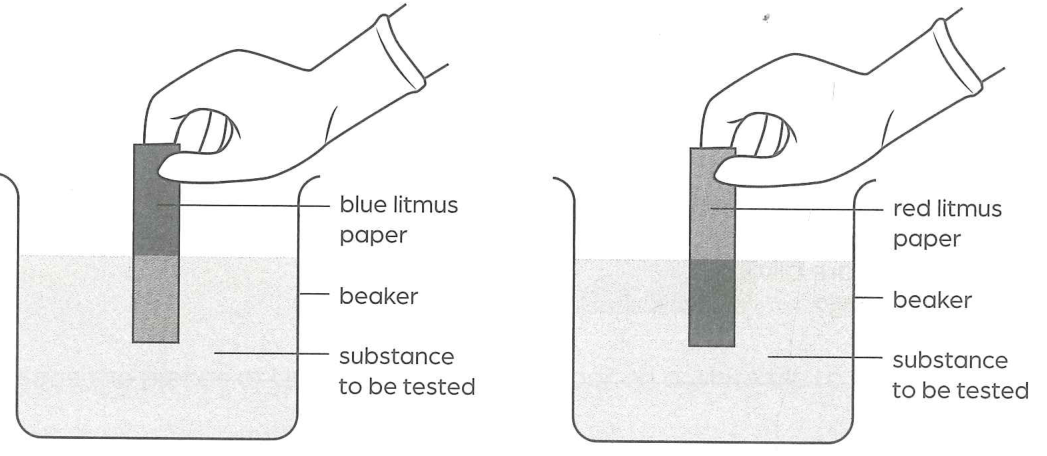
Materials: Safety goggles; gloves; eight beakers with 10 cm³ of each of these substances: distilled water, lemon juice, vinegar, liquid soap, fizzy drink (such as cola), dilute bleach, dilute hydrochloric acid, sodium hydroxide solution; red litmus paper; blue litmus paper.
1. Work in pairs. Put on your safety goggles and gloves.
2. Dip a strip of blue litmus paper into each substance. Then, dip a strip of red litmus paper into the same substance. Use a different strip for each substance.
Caution: Wipe up spills as soon as they happen. If any substance spills on your hands, replace your gloves with a clean pair. Wash your hands after doing this activity.
Some of the substances you tested were acids. One of these acids is lemon juice. Which other substances are acids?
Materials: Safety goggles; gloves; eight beakers with 10 cm³ of each of these substances: distilled water, lemon juice, vinegar, liquid soap, fizzy drink (such as cola), dilute bleach, dilute hydrochloric acid, sodium hydroxide solution; red litmus paper; blue litmus paper.
1. Work in pairs. Put on your safety goggles and gloves.
2. Dip a strip of blue litmus paper into each substance. Then, dip a strip of red litmus paper into the same substance. Use a different strip for each substance.
Caution: Wipe up spills as soon as they happen. If any substance spills on your hands, replace your gloves with a clean pair. Wash your hands after doing this activity.
Some tested substances are acids, including lemon juice. How do you know these substances are acids? Complete this sentence.
Like the lemon juice, they turned ___ litmus paper ___.
Materials: Safety goggles; gloves; eight beakers with 10 cm³ of each of these substances: distilled water, lemon juice, vinegar, liquid soap, fizzy drink (such as cola), dilute bleach, dilute hydrochloric acid, sodium hydroxide solution; red litmus paper; blue litmus paper.
1. Work in pairs. Put on your safety goggles and gloves.
2. Dip a strip of blue litmus paper into each substance. Then, dip a strip of red litmus paper into the same substance. Use a different strip for each substance.
Caution: Wipe up spills as soon as they happen. If any substance spills on your hands, replace your gloves with a clean pair. Wash your hands after doing this activity.
Some of the substances you tested were alkalis. Which of the substances are alkalis?