Cambridge Secondary (7-9). Stage 9. MCE Science. Student Book - Unit 12: Electrical Circuits Next → Do you remember what you learnt about electrical circuits in Stage 7?
Why is it important to understand electrical circuits?
How can this understanding help us to improve safety around the house?
Why are well-designed electrical circuits devices and home appliances better for our environment and our planet?
Light-emitting diodes, or LEDs (Figure 12.11) are becoming common as replacements for incandescent lamps in circuits. Why do you think this is so? In pairs, share your answers.
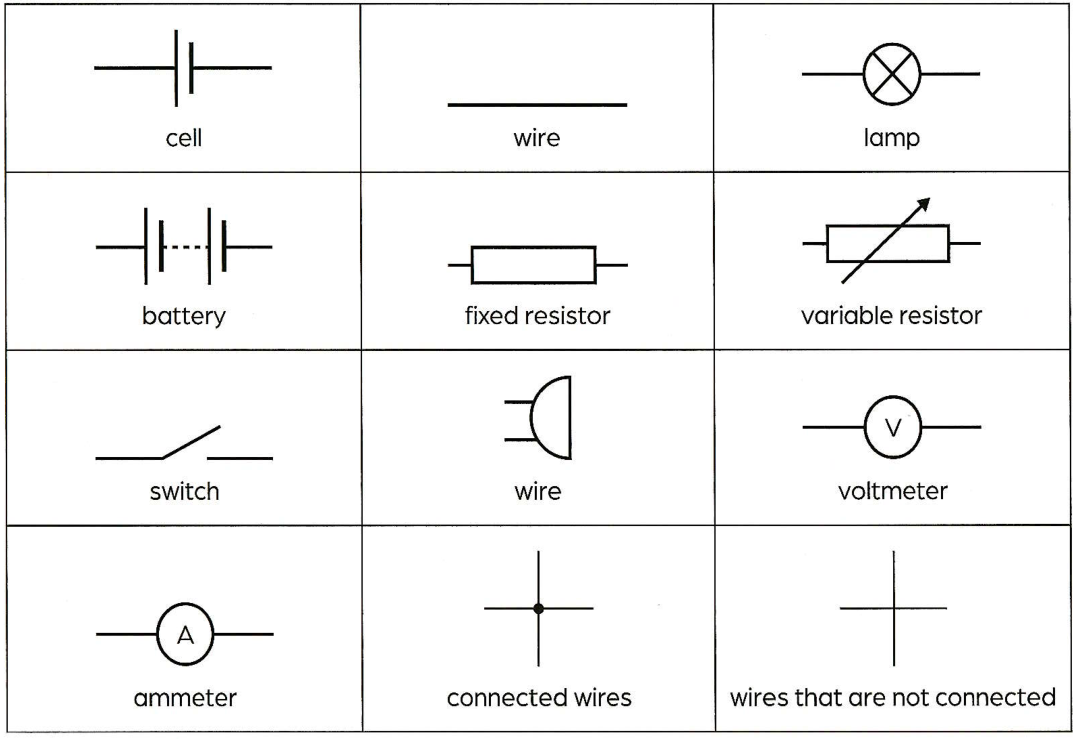
Some common circuit symbols are shown in Figure 12.12. Compare them with the components shown in Figure 12.10.
Figure 12.10 shows a motor, speaker, resistor, buzzer, ammeter and voltmeter.
List the three main components of an electrical circuit.
What is voltage?
Underline the correct word in brackets.
batteries
water
Why is it important for a circuit to be closed for a device to work?
In groups, do this activity to learn more about taking readings to measure current at various points in a series circuit.
In groups, do this activity to learn more about taking readings to measure current at various points in a series circuit.
In groups, do this activity to learn more about taking readings to measure current at various points in a series circuit.
Series circuits
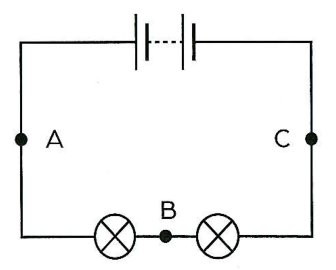
Build the circuit with two lamps in series as shown in Figure 12.19.
Connect an ammeter at points A and B. Record the readings at each point.
Which is the correct statement below?
a Current at A = Current at B = Current at C
b Current at A + Current at C = Current at B
c Current at A + Current at B = Current at C
d Current at A − Current at C = Current at B
Statement a
Statement b
Statement c
Statement d
Present your readings in a table like the one below.
From the experiment, what can you state about the current in a series circuit?
What can you do to make sure that your readings are accurate?
Work in pairs to apply your knowledge of circuits and voltage.
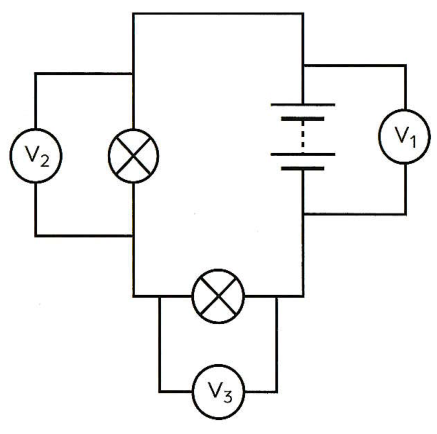
Build the circuit shown in Figure 12.22.
Measure the voltages across the components as shown.
Next →