Skip to content / Đến nội dung
SachHeCam.com

Cambridge Secondary (7-9). Stage 9. MCE Science. Student Book - Unit 8: Rate of Reaction

Question 1

Although they are beautiful, fireworks can have a negative impact on the environment. In what way do you think they impact the environment?

Question 2

Changes are happening all around us all the time. In Stage 7, you learnt that all changes can be classified as either physical or chemical changes. What kind of change occurs when you boil water?

Question 3

How about when you eat and digest your food?

Question 4

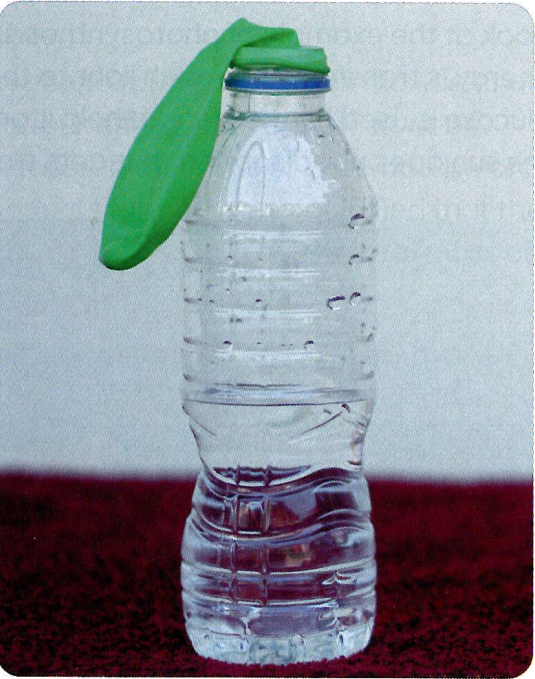
How do we see energy conservation in real life? Carry out the following experiment to find out. Work in pairs. Using a funnel, add 1 tablespoon of baking soda into a balloon. Carefully pour 60 ml of vinegar into a 500-ml plastic bottle. Gently stretch the balloon to open it up, then pull its neck over the rim of the plastic bottle. Be careful not to let the baking soda fall into the bottle yet (Figure 8.6). When ready, lift the balloon such that the baking soda falls into the vinegar.

Question illustration

Observe what happens to the balloon.

Question 5

How do we see energy conservation in real life? Carry out the following experiment to find out. Work in pairs. Using a funnel, add 1 tablespoon of baking soda into a balloon. Carefully pour 60 ml of vinegar into a 500-ml plastic bottle. Gently stretch the balloon to open it up, then pull its neck over the rim of the plastic bottle. Be careful not to let the baking soda fall into the bottle yet (Figure 8.6). When ready, lift the balloon such that the baking soda falls into the vinegar.

Question illustration

Hold the bottle. Does it feel warmer, colder or the same? Why?

Question 6

How do we see energy conservation in real life? Carry out the following experiment to find out. Work in pairs. Using a funnel, add 1 tablespoon of baking soda into a balloon. Carefully pour 60 ml of vinegar into a 500-ml plastic bottle. Gently stretch the balloon to open it up, then pull its neck over the rim of the plastic bottle. Be careful not to let the baking soda fall into the bottle yet (Figure 8.6). When ready, lift the balloon such that the baking soda falls into the vinegar.

Question illustration

Link this back to energy conservation. What energy transfers do you think occur in this experiment?
Question 7

Complete the table by putting a tick (✓) in the correct column.

| Reaction | Physical change | Chemical change |
|:-|:-:|:-:|
| Baking a cake | | |
| Food decaying | | |
| Water boiling | | |
| Photosynthesis | | |

Question 8

Explain what it means for mass to be conserved in a chemical reaction.

Question 9

Think about the reactions around us. If you have a stomach ache and take an antacid for it, would you want the medicine to work quickly or slowly?

Question 10

How about when you accidentally leave your bicycle out in the rain. Would you want it to rust quickly?

Question 11

Recall the fireworks mentioned at the beginning of the chapter. They have a fast rate of reaction. Why do you think this is bad for the environment?

Question 12

Recall the fireworks mentioned at the beginning of the chapter. What other alternatives could be used?

Question 13

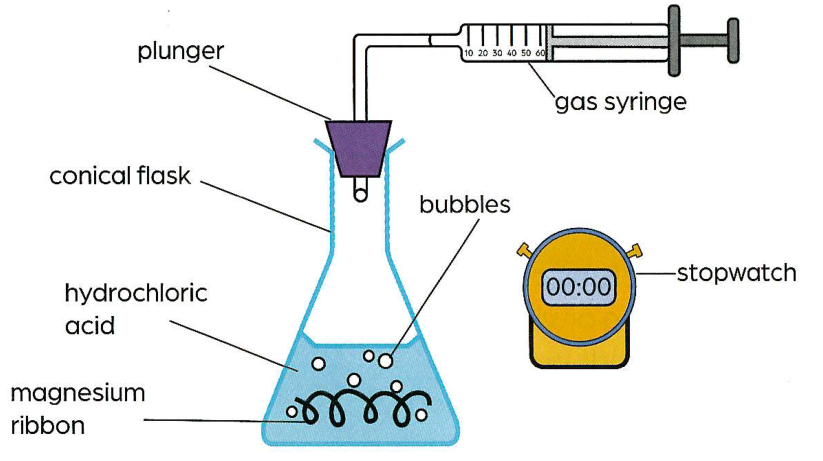
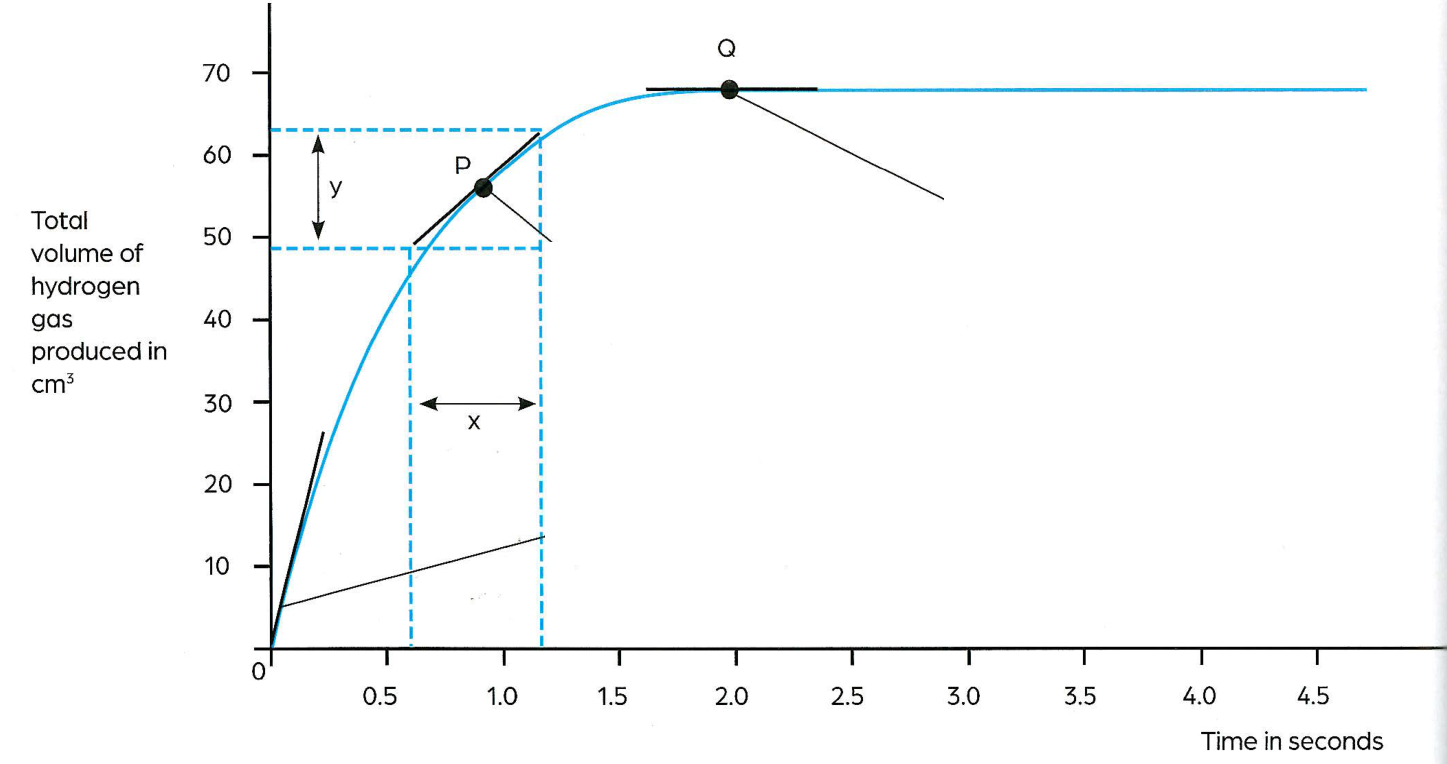
Look at the graph in Figure 8.12. How can you tell that the reaction has stopped at Point Q?

Question illustration

Question 14

What would you notice in the set-up that tells you the reaction has stopped?

Question illustration

Question 15

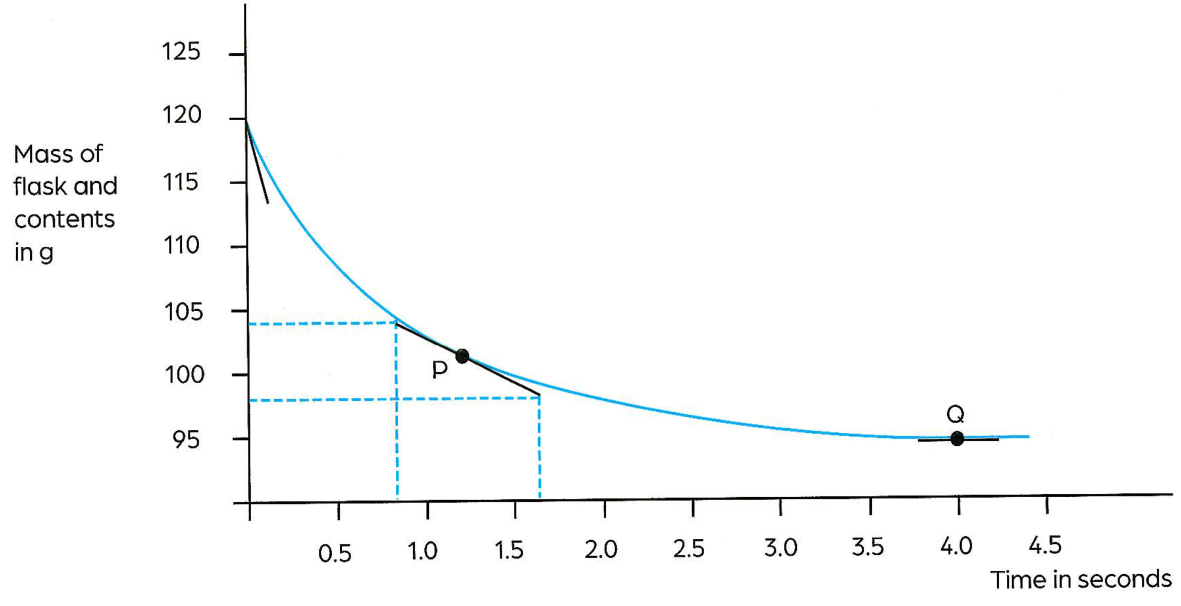
Work in pairs. Study the graph in Figure 8.14. What is the loss in mass from the start of the reaction to point P?

Question illustration

Question 16

Work in pairs. Study the graph in Figure 8.14. What is the loss in mass from point P to point Q?

Question illustration

Question 17

What does the answer in question 2 tell you about the rate of reaction at the beginning and towards the end of the reaction?

Question illustration

Question 19

State two examples of reactions that take place quickly and two examples of reactions that take place slowly.

Question 20

State two methods to measure the rate of reaction.
0
0
GIỎ HÀNG
Empty CartGIỎ CHƯA CÓ GÌQUAY LẠI SHOP