The salt that we use is produced in different ways — salt mining, pumping water into underground salt beds and solar evaporation. What kind of impact do these methods have on the environment?
While the word ‘salt’ might make you think of the shaker on your dinner table, that’s just one example of a salt. Sodium chloride (NaCl), the chemical name for table salt, is the most common type we use for cooking. What other types of salts are there?
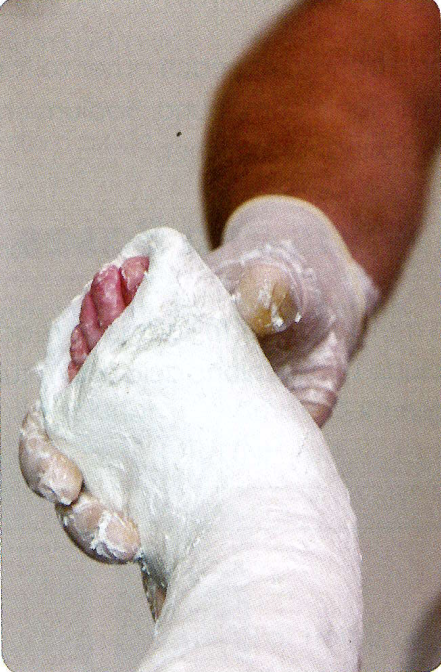
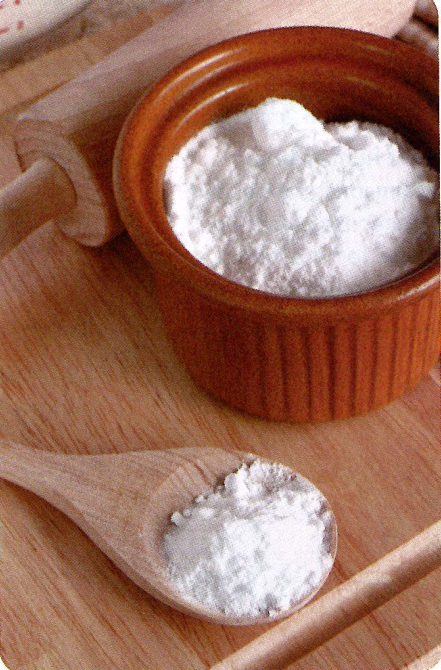
Look at Figure 7.1. Have you seen any of these salts in use?
The figure shows ammonium nitrate in fertilisers, a plaster cast, and sodium hydrogen carbonate (baking soda) used in baking and cooking. The fertiliser photograph is described here rather than reproduced because its bags display commercial logos.
Work in pairs. Select three salts that are widely used at home or in industries and find out about their uses. Suggest acid–base combinations to produce these salts and write the word equations. You may use the internet or other sources of information to help you. Share your answers with the class.
Copper sulfate is prepared by reacting dilute sulfuric acid with copper carbonate. What would you observe when sulfuric acid was added to copper carbonate? Explain your answer. In pairs, discuss your answers.
Copper sulfate is prepared by reacting dilute sulfuric acid with copper carbonate. Why is there a need to add excess copper carbonate? In pairs, discuss your answers.
Copper sulfate is prepared by reacting dilute sulfuric acid with copper carbonate. Excess copper carbonate is added before the mixture is filtered. Why is the mixture filtered? In pairs, discuss your answers.
Copper sulfate is prepared by reacting dilute sulfuric acid with copper carbonate. Excess copper carbonate is added, and the salt solution is later concentrated and crystallised. What would you obtain if the mixture was not filtered? In pairs, discuss your answers.
Work in groups to produce crystals of sodium chloride. Follow these steps.
1. Add several teaspoons of table salt to a jar of water. Stir until all the salt dissolves. Repeat this until no more salt will dissolve in the water.
2. Pour the saltwater into an evaporation dish.
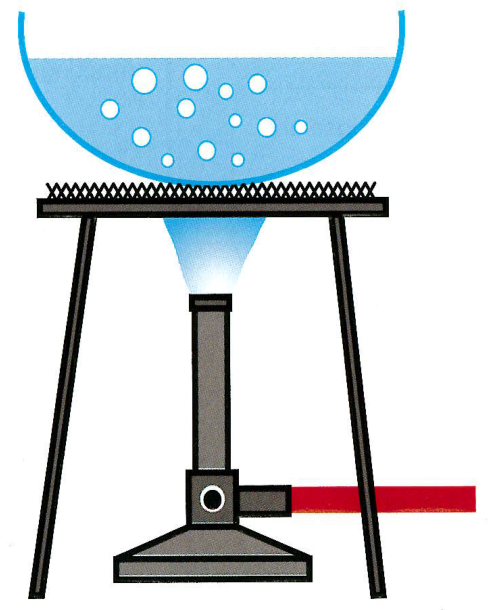
3. Place the evaporation dish on a tripod stand and heat it over a Bunsen burner.
4. Wait for the water to boil and evaporate.
5. When most of the water has evaporated, turn off the Bunsen burner.
6. Leave the evaporation dish to cool.
7. What do you observe after a while?
**Caution (from the book)**
- Be careful when heating the evaporation dish.
- Wear safety goggles.
- Do not touch the evaporation dish when it is hot. It may burn you.
**Additional safety guidance:** Carry out heating only under teacher supervision.
Can the methods you have learnt in this chapter be used to prepare sodium chloride from the reaction between sodium hydroxide and hydrochloric acid? Explain why.