Skip to content / Đến nội dung
SachHeCam.com

Cambridge Secondary (7-9). Stage 8. MCE Science. Student Book - Unit 14: Planetary Systems

Question 1

When you look up in the sky, what can you see?

Question 2

Do you think you can see everything that is in the Universe?

Question 3

As space travel improves and humans start mining operations in space, will it improve the Earth’s environment?

Question 4

A merry-go-round has a platform and horses that rotate around a central hub. We can use this analogy to describe the Solar System. But how can we describe our home galaxy, the Milky Way?

Question 5

Many galaxies have a round or spiral shape. Why do you think this is so? In pairs, share your ideas.

Question 6

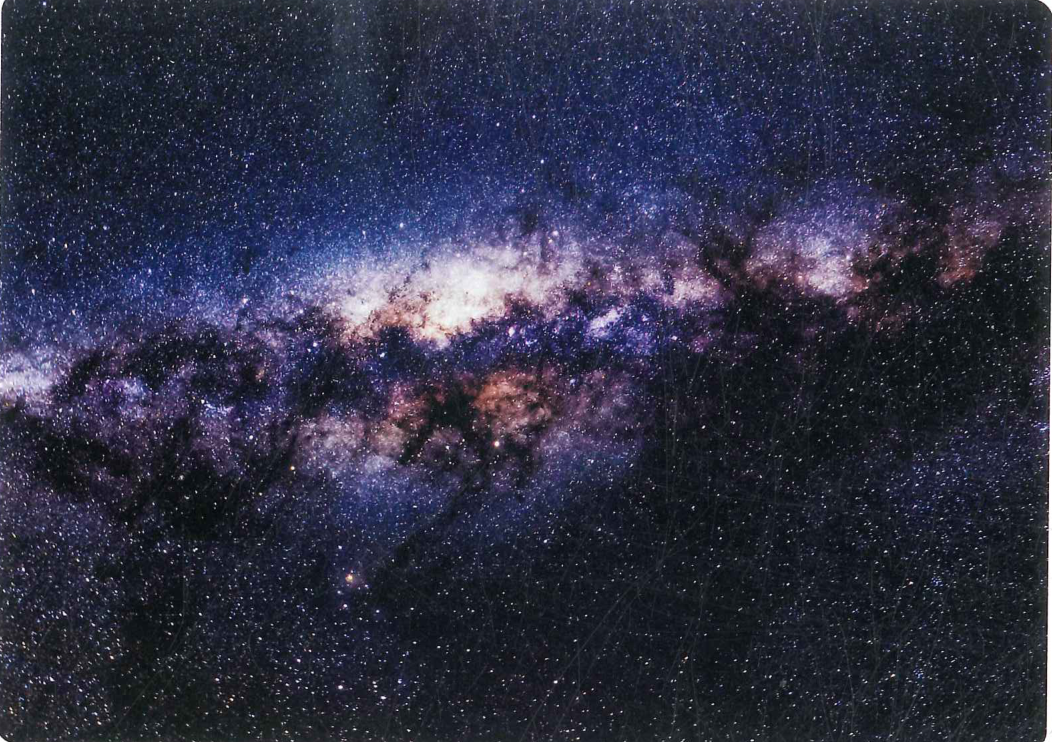
Our galaxy has different names in different parts of the world. It is called the Milky Way in Europe and by some Americans. It is called the ‘Silver River’ in China and ‘Backbone of the Night’ in southern Africa. Look at Figure 14.7. Why do you think it has these names? In pairs, share your answers.

Question illustration

Question 7

Telescopes allow us to look at very distant celestial objects and galaxies. But what we see is not what really exists. What does this mean?

Question 8

Telescopes allow us to look at very distant celestial objects and galaxies. But what we see is not what really exists. Why is looking deep into space sometimes compared to time travel?

Question 9

In small groups, build a model of a galaxy. Decide on which materials you will use and how you will construct your model.

Question 10

In small groups, build a model of a galaxy. Make your model.

Question 11

In small groups, build a model of a galaxy. Share your model with another group. Give feedback on the models.

Question 12

In small groups, build a model of a galaxy. Based on feedback, discuss how you can improve your model.

Question 15

In Stage 7, you learnt about the objects in space that can orbit a star. Do you remember what they are?

Question 16

In Stage 7, you learnt about the objects in space that can orbit a star. Why do they orbit a star?

Question 17

In our Solar System, the planets travel around the Sun in elliptical paths. Will you see them in the same positions in the sky all the time?

Question 18

You cannot always see all the planets in the night sky. This week, find out which stars are visible in the sky where you live. Find out what time they will come into view (rise) and when they will stop being visible (set). Observe the planets with a pair of binoculars or a telescope.

Question 19

Which planet appears to be the brightest? Find out why.

Question 20

Which planet appears to be red? Find out why.
0
0
GIỎ HÀNG
Empty CartGIỎ CHƯA CÓ GÌQUAY LẠI SHOP