We burn fuels for cooking and to obtain heat. However, nearly three billion people around the world do not have access to clean fuels. Many communities use firewood and animal manure as fuels. When these fuels burn, they release large amounts of air pollutants into the atmosphere.
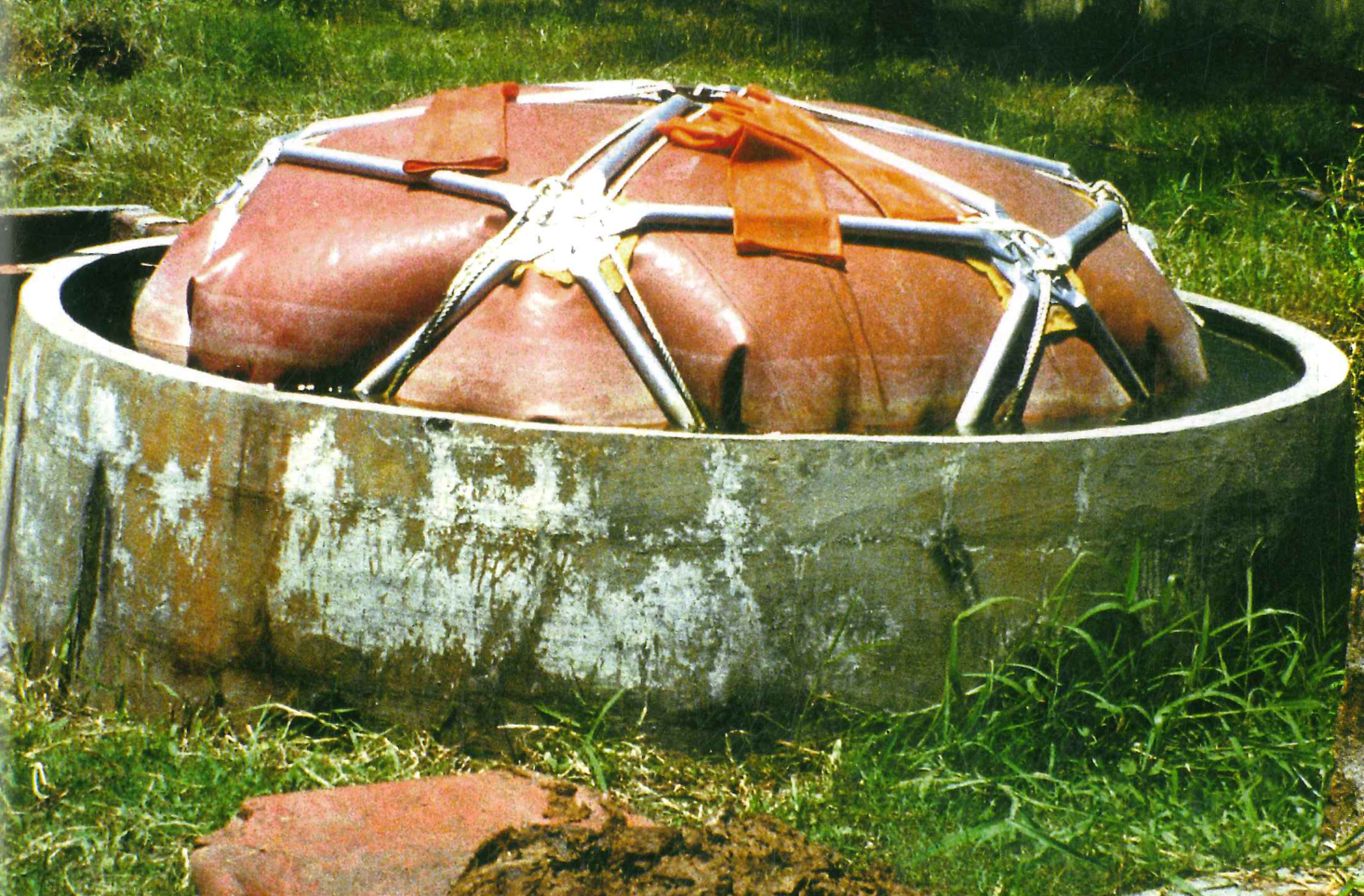
The photograph shows a biogas digester. Biogas digesters are simple containers filled with bacteria that break down organic materials, such as crop waste and animal manure. This process produces biogas.
How can the use of biogas digesters help reduce poverty and global warming?
Biogas (Figure 7.3) can be burnt for cooking, heating and lighting. It can also be used as fuel for vehicles or to generate electricity. The remaining solids from making biogas can be used as fertilisers to make crops grow better.
Look back at the question on the chapter opener. How can the use of biogas digesters help reduce poverty and global warming?
Are reactions of metals with acids exothermic?
Carry out this investigation in small groups and write short reports summarising the experiment and findings.
1 Read through the instructions for this investigation (see steps 2 to 5 below).
2 Place some zinc granules in a test tube.
3 Put this test tube in a test tube rack.
4 Fill another test tube with dilute sulfuric acid until it is one-quarter full.
5 Feel the test tube. Record if it feels warm or cold.
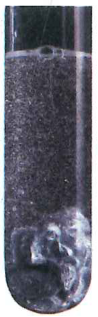
6 Carefully add the acid to the zinc granules in the test tube (Figure 7.6). What do you observe?
7 Touch the outside of the test tube carefully. Has any change in temperature taken place? How can you tell?
8 Is this an exothermic reaction? Explain how you know this.
9 Does this reaction form only one product? Explain your answer.
10 Write a word equation for the reaction.
Caution: Sulfuric acid is corrosive and can cause burns upon contact. Wear goggles and gloves when handling sulfuric acid. To avoid burns, cautiously touch only the outside of the test tube to detect any temperature changes.
Answer part 5: Feel the test tube. Record if it feels warm or cold.
Are reactions of metals with acids exothermic?
Carry out this investigation in small groups and write short reports summarising the experiment and findings.
1 Read through the instructions for this investigation (see steps 2 to 5 below).
2 Place some zinc granules in a test tube.
3 Put this test tube in a test tube rack.
4 Fill another test tube with dilute sulfuric acid until it is one-quarter full.
5 Feel the test tube. Record if it feels warm or cold.
6 Carefully add the acid to the zinc granules in the test tube (Figure 7.6). What do you observe?
7 Touch the outside of the test tube carefully. Has any change in temperature taken place? How can you tell?
8 Is this an exothermic reaction? Explain how you know this.
9 Does this reaction form only one product? Explain your answer.
10 Write a word equation for the reaction.
Caution: Sulfuric acid is corrosive and can cause burns upon contact. Wear goggles and gloves when handling sulfuric acid. To avoid burns, cautiously touch only the outside of the test tube to detect any temperature changes.
Answer part 6: Carefully add the acid to the zinc granules in the test tube (Figure 7.6). What do you observe?
Are reactions of metals with acids exothermic?
Carry out this investigation in small groups and write short reports summarising the experiment and findings.
1 Read through the instructions for this investigation (see steps 2 to 5 below).
2 Place some zinc granules in a test tube.
3 Put this test tube in a test tube rack.
4 Fill another test tube with dilute sulfuric acid until it is one-quarter full.
5 Feel the test tube. Record if it feels warm or cold.
6 Carefully add the acid to the zinc granules in the test tube (Figure 7.6). What do you observe?
7 Touch the outside of the test tube carefully. Has any change in temperature taken place? How can you tell?
8 Is this an exothermic reaction? Explain how you know this.
9 Does this reaction form only one product? Explain your answer.
10 Write a word equation for the reaction.
Caution: Sulfuric acid is corrosive and can cause burns upon contact. Wear goggles and gloves when handling sulfuric acid. To avoid burns, cautiously touch only the outside of the test tube to detect any temperature changes.
Answer part 7: Touch the outside of the test tube carefully. Has any change in temperature taken place? How can you tell?
Are reactions of metals with acids exothermic?
Carry out this investigation in small groups and write short reports summarising the experiment and findings.
1 Read through the instructions for this investigation (see steps 2 to 5 below).
2 Place some zinc granules in a test tube.
3 Put this test tube in a test tube rack.
4 Fill another test tube with dilute sulfuric acid until it is one-quarter full.
5 Feel the test tube. Record if it feels warm or cold.
6 Carefully add the acid to the zinc granules in the test tube (Figure 7.6). What do you observe?
7 Touch the outside of the test tube carefully. Has any change in temperature taken place? How can you tell?
8 Is this an exothermic reaction? Explain how you know this.
9 Does this reaction form only one product? Explain your answer.
10 Write a word equation for the reaction.
Caution: Sulfuric acid is corrosive and can cause burns upon contact. Wear goggles and gloves when handling sulfuric acid. To avoid burns, cautiously touch only the outside of the test tube to detect any temperature changes.
Answer part 8: Is this an exothermic reaction? Explain how you know this.
Are reactions of metals with acids exothermic?
Carry out this investigation in small groups and write short reports summarising the experiment and findings.
1 Read through the instructions for this investigation (see steps 2 to 5 below).
2 Place some zinc granules in a test tube.
3 Put this test tube in a test tube rack.
4 Fill another test tube with dilute sulfuric acid until it is one-quarter full.
5 Feel the test tube. Record if it feels warm or cold.
6 Carefully add the acid to the zinc granules in the test tube (Figure 7.6). What do you observe?
7 Touch the outside of the test tube carefully. Has any change in temperature taken place? How can you tell?
8 Is this an exothermic reaction? Explain how you know this.
9 Does this reaction form only one product? Explain your answer.
10 Write a word equation for the reaction.
Caution: Sulfuric acid is corrosive and can cause burns upon contact. Wear goggles and gloves when handling sulfuric acid. To avoid burns, cautiously touch only the outside of the test tube to detect any temperature changes.
Answer part 9: Does this reaction form only one product? Explain your answer.
Are reactions of metals with acids exothermic?
Carry out this investigation in small groups and write short reports summarising the experiment and findings.
1 Read through the instructions for this investigation (see steps 2 to 5 below).
2 Place some zinc granules in a test tube.
3 Put this test tube in a test tube rack.
4 Fill another test tube with dilute sulfuric acid until it is one-quarter full.
5 Feel the test tube. Record if it feels warm or cold.
6 Carefully add the acid to the zinc granules in the test tube (Figure 7.6). What do you observe?
7 Touch the outside of the test tube carefully. Has any change in temperature taken place? How can you tell?
8 Is this an exothermic reaction? Explain how you know this.
9 Does this reaction form only one product? Explain your answer.
10 Write a word equation for the reaction.
Caution: Sulfuric acid is corrosive and can cause burns upon contact. Wear goggles and gloves when handling sulfuric acid. To avoid burns, cautiously touch only the outside of the test tube to detect any temperature changes.
Answer part 10: Write a word equation for the reaction.
Are reactions of metals with acids exothermic?
Carry out this investigation in small groups and write short reports summarising the experiment and findings.
1 Read through the instructions for this investigation (see steps 2 to 5 below).
2 Place some zinc granules in a test tube.
3 Put this test tube in a test tube rack.
4 Fill another test tube with dilute sulfuric acid until it is one-quarter full.
5 Feel the test tube. Record if it feels warm or cold.
6 Carefully add the acid to the zinc granules in the test tube (Figure 7.6). What do you observe?
7 Touch the outside of the test tube carefully. Has any change in temperature taken place? How can you tell?
8 Is this an exothermic reaction? Explain how you know this.
9 Does this reaction form only one product? Explain your answer.
10 Write a word equation for the reaction.
Caution: Sulfuric acid is corrosive and can cause burns upon contact. Wear goggles and gloves when handling sulfuric acid. To avoid burns, cautiously touch only the outside of the test tube to detect any temperature changes.
Review your classmates’ reports and give each other feedback.
Work in pairs or in small groups. Read through the instructions for these investigations (see steps 2 and 3).
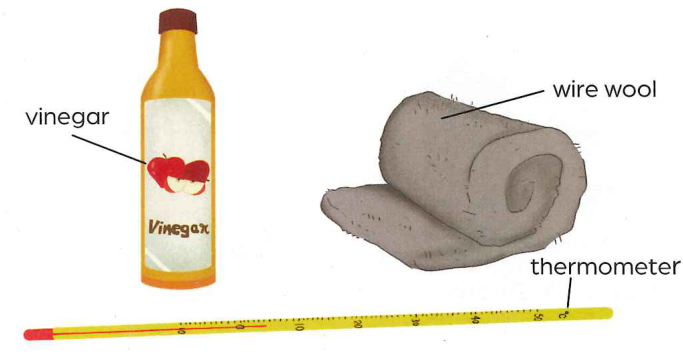
2 Use the materials shown in Figure 7.8 for this investigation.
a Half-fill a beaker with vinegar (ethanoic acid).
b Measure and record the temperature of the vinegar.
c Place a piece of wire wool (made of iron) in the beaker. Make sure it is covered by the vinegar.
d After 10 minutes, push the thermometer gently into the wire wool. Measure and record the temperature of the wire wool.
e What changes do you observe?
f Why does the temperature of the wire wool rise?
g Where does the energy come from?
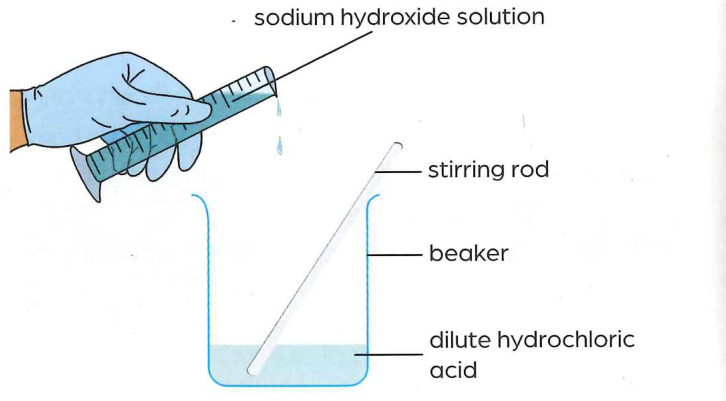
3 Use the materials shown in Figure 7.9 for this investigation.
a Add 10 cm³ of dilute hydrochloric acid in a beaker.
b Measure the temperature of the dilute hydrochloric acid using a thermometer.
c Slowly add 10 cm³ of dilute sodium hydroxide solution to the dilute acid. Stir the mixture gently using a stirring rod.
d Measure the temperature of the mixture. What do you observe?
Caution: Sodium hydroxide is corrosive and can cause severe burns. It is an irritant to the skin and eyes. Wear goggles and gloves when handling this solution.
Answer part 2b: Measure and record the temperature of the vinegar.
Work in pairs or in small groups. Read through the instructions for these investigations (see steps 2 and 3).
2 Use the materials shown in Figure 7.8 for this investigation.
a Half-fill a beaker with vinegar (ethanoic acid).
b Measure and record the temperature of the vinegar.
c Place a piece of wire wool (made of iron) in the beaker. Make sure it is covered by the vinegar.
d After 10 minutes, push the thermometer gently into the wire wool. Measure and record the temperature of the wire wool.
e What changes do you observe?
f Why does the temperature of the wire wool rise?
g Where does the energy come from?
3 Use the materials shown in Figure 7.9 for this investigation.
a Add 10 cm³ of dilute hydrochloric acid in a beaker.
b Measure the temperature of the dilute hydrochloric acid using a thermometer.
c Slowly add 10 cm³ of dilute sodium hydroxide solution to the dilute acid. Stir the mixture gently using a stirring rod.
d Measure the temperature of the mixture. What do you observe?
Caution: Sodium hydroxide is corrosive and can cause severe burns. It is an irritant to the skin and eyes. Wear goggles and gloves when handling this solution.
Answer part 2d: After 10 minutes, push the thermometer gently into the wire wool. Measure and record the temperature of the wire wool.