Skip to content / Đến nội dung
SachHeCam.com

Cambridge Secondary (7-9). Stage 8. MCE Science. Student Book - Unit 5: Mixtures and Solubility

Question 1

Some substances, such as chemicals, dissolve easily in water. Many household cleaning products have ingredients that could be harmful to plants and animals if they end up in wastewater. What do you think these harmful effects could be?

Question 2

Some substances, such as chemicals, dissolve easily in water. Many household cleaning products have ingredients that could be harmful to plants and animals if they end up in wastewater. What could we do to prevent this from happening?

Caution: Remember to be safe in the kitchen and never mix ingredients unless you are certain that it is safe to do so.

Question 3

Why is purity important for safety?

1 Say the medicine you take has the wrong dose of the active ingredient. What would happen?

In pairs, discuss your answers.

Question 4

Why is purity important for safety?

2 Think of other reasons why it is important that we know the purity of a mixture.

In pairs, discuss your answers.

Question 5

Work in pairs. Choose two different mixtures you encounter daily, such as a salad or a soda. List the components of each mixture.

Record your findings and share them with the class.

Question 6

Work in pairs. Choose two different mixtures you encounter daily, such as a salad or a soda. How can you tell if the mixture is homogeneous or heterogeneous?

Record your findings and share them with the class.

Question 7

Work in pairs. Choose two different mixtures you encounter daily, such as a salad or a soda. Are the components of the mixtures easily separated? How would you separate them?

Record your findings and share them with the class.

Question 8

Work in pairs. Choose two different mixtures you encounter daily, such as a salad or a soda. Do you think these mixtures have a high or low purity? Explain your reasoning.

Record your findings and share them with the class.

Question 9

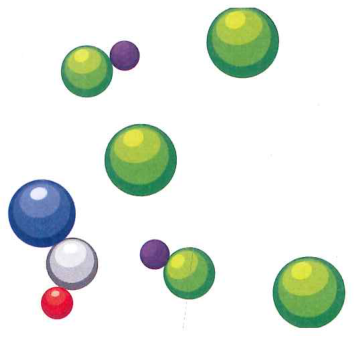
Study the diagrams, a to d. Classify each as a compound, an element or a mixture.

Classify diagram a.

Question illustration

Question 10

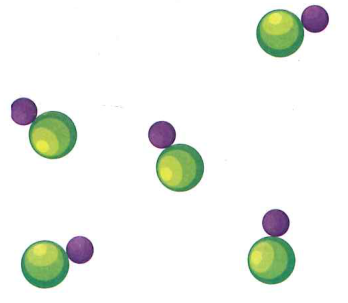
Study the diagrams, a to d. Classify each as a compound, an element or a mixture.

Classify diagram b.

Question illustration

Question 11

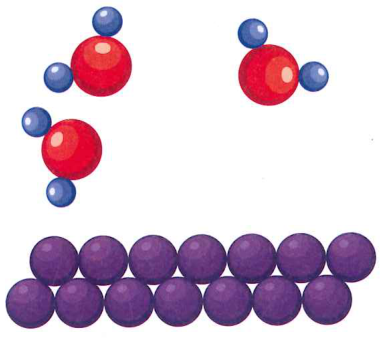
Study the diagrams, a to d. Classify each as a compound, an element or a mixture.

Classify diagram c.

Question illustration

Question 12

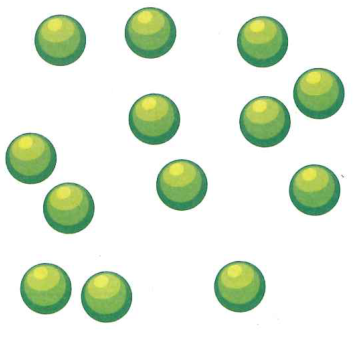
Study the diagrams, a to d. Classify each as a compound, an element or a mixture.

Classify diagram d.

Question illustration

Question 13

What do we call a substance that dissolves to form a solution?

Question 14

What do we call a substance that dissolves another substance to form a solution?

Question 15

How would you separate a mixture of raisins and peanuts?

Question 16

Now think about how you could separate sugar from water.

Question 17

Would you be able to separate them using the same method? Why or why not? (Compare raisins and peanuts with sugar dissolved in water.)

Question 18

Do you think we can use separation techniques to help the environment? In pairs, discuss your answers.

Question 19

How do you think we can achieve this? In pairs, discuss your answers. (Using separation techniques to help the environment.)

Question 20

In pairs, create a homemade filter to clean some dirty water.

Fill a funnel with stones, sand and paper. Fit the funnel over the mouth of a clean plastic bottle. Pour the dirty water through the layers and allow the water to collect in the bottle. Observe what happens.

Do not drink the filtered water as harmful bacteria may still be in the water.
0
0
GIỎ HÀNG
Empty CartGIỎ CHƯA CÓ GÌQUAY LẠI SHOP