Do you think having increased green spaces in our cities would help towards environmental sustainability? Would this also help some of our body systems to function better?
Humans need body support. Soft-bodied animals, such as jellyfish (Figure 2.3), do not have skeletons made of bones. Jellyfish have liquid and muscles that form their skeleton. Why would a skeleton of liquid not work for humans?
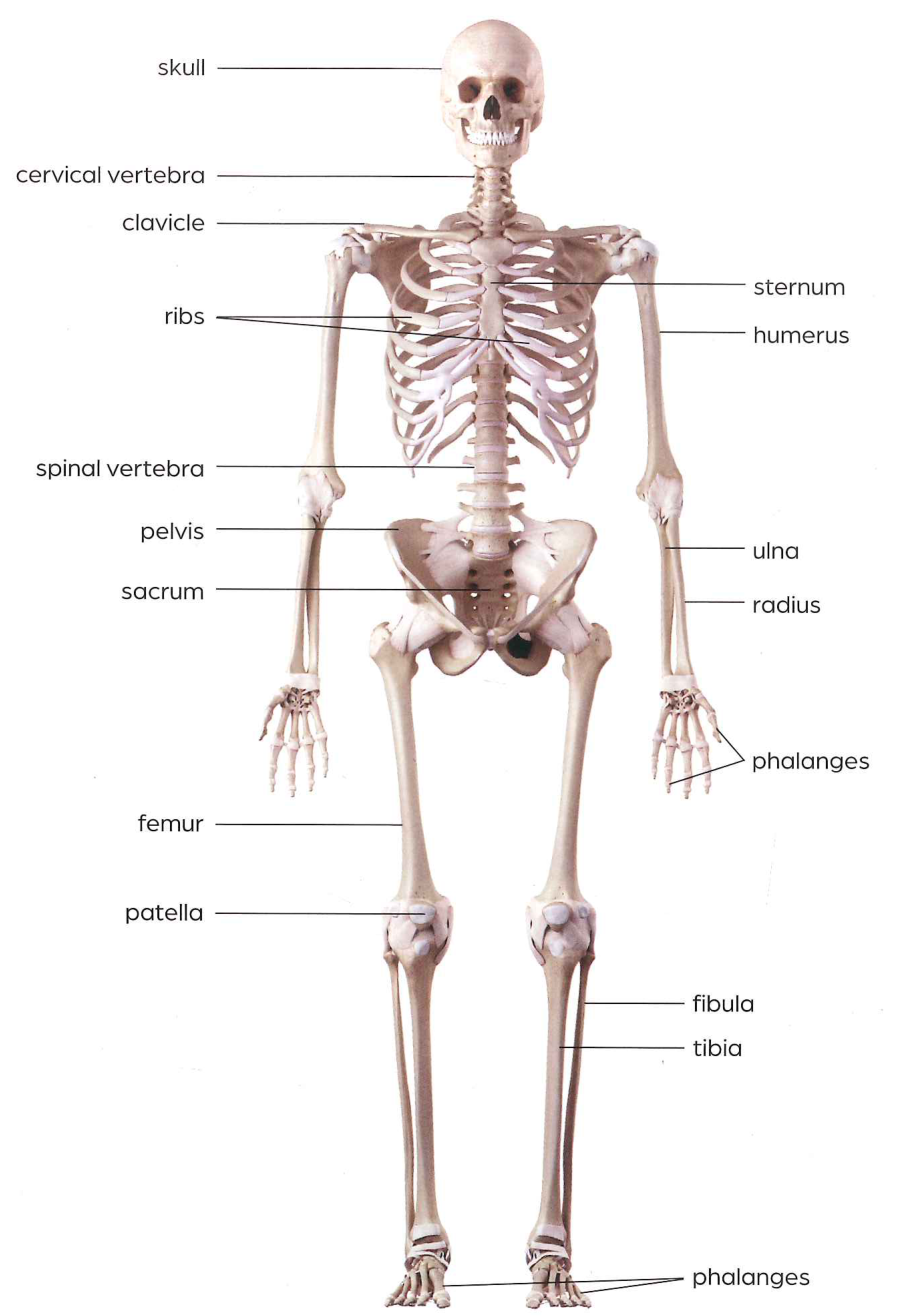
Look again at the diagram of the human skeleton in Figure 2.2. Why do you think the skeleton is made up of so many bones? In pairs, discuss your answers.
Study Figure 2.2. What are the names of the bones in the neck? Do they feel different from the bones in your arms and legs? Share your answers with the class.
Humans have opposable thumbs. This means we can bend and rotate the thumb at the same time. The thumb can touch fingers on the same hand (Figure 2.5). Think about your own thumbs. What other things do they allow you to do in your daily life?
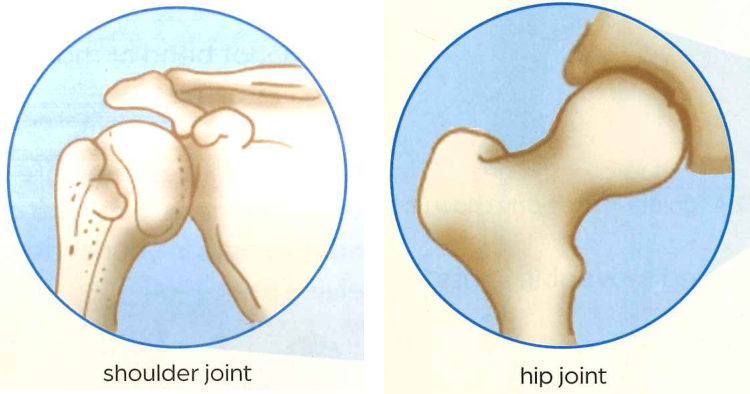
Work in pairs. Look at Figure 2.6 on pages 28 and 29. Identify two places in your body where ball-and-socket joints are found. Describe the movements these joints allow. In pairs, share your findings.
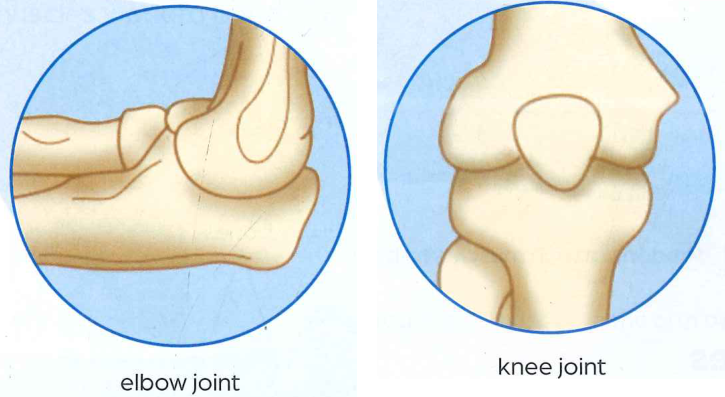
Work in pairs. Look at Figure 2.6 on pages 28 and 29. Identify two places in your body where hinge joints are found. Describe the movements these joints allow. In pairs, share your findings.