How can bears live through the winter without eating? They hibernate! This means their body processes greatly slow down, but they still need energy to stay alive. Where do they get this energy from? In pairs, discuss your answers.
How can bears live through the winter without eating? They hibernate! This means their body processes greatly slow down, but they still need energy to stay alive. How is it stored in their bodies? In pairs, discuss your answers.
How can bears live through the winter without eating? They hibernate! This means their body processes greatly slow down, but they still need energy to stay alive. What happens when hibernation ends? In pairs, discuss your answers.
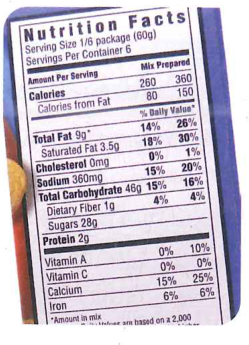
Work on your own. Choose five food items that your household buys regularly. Look at the food label on the packaging of each item. An example is shown in Figure 1.12. How much fat does each item contain? Share your findings with the class.
Work on your own. Choose five food items that your household buys regularly. Look at the food label on the packaging of each item. An example is shown in Figure 1.12. How much carbohydrate does each item contain? Share your findings with the class.
Work on your own. Choose five food items that your household buys regularly. Look at the food label on the packaging of each item. An example is shown in Figure 1.12. How much protein does each item contain? Share your findings with the class.
Work on your own. Choose five food items that your household buys regularly. Look at the food label on the packaging of each item. An example is shown in Figure 1.12. What quantities of vitamins and minerals does each item contain? Share your findings with the class.
Choose five food items that your household buys regularly and look at the food label on each package. How does the information displayed allow you to compare different foods? Share your findings with the class.
Think about how a plant wilts when it does not have enough water. Humans do not wilt. But how does your body feel when you do not have enough water? Think about how important water is for the processes of your body.